
Garage and home workshop equipment guides
Workshop Machines
Choose machines by the operations you actually perform: accurate drilling, curved cuts, surface preparation, edge shaping, or finishing. Compare capacity, setup, support, dust control, and the room each machine needs before buying.
Affiliate disclosure: As an Amazon Associate, WorkshopGearGuide may earn from qualifying purchases made through links on this page, at no additional cost to you.
Quick Answer: Which Workshop Machine Should You Buy?
Repeatable holes: a drill press with the required spindle travel and workholding. Curved cuts: a bandsaw sized for your material and blade choice. Rough lumber: understand why a jointer establishes a flat reference face while a planer sets thickness. Edge shaping and finish prep: choose a grinder or appropriate sander only after defining the material, abrasive, and extraction needs. Do not buy a machine simply because it fits on a bench.
Match the machine to the operation
Four Machine Families, Four Different Jobs
A drill press, bandsaw, planer, and sander are not interchangeable upgrades. Start with the task you cannot perform reliably using existing tools; then compare the machine’s real working envelope and the space required to feed material safely.
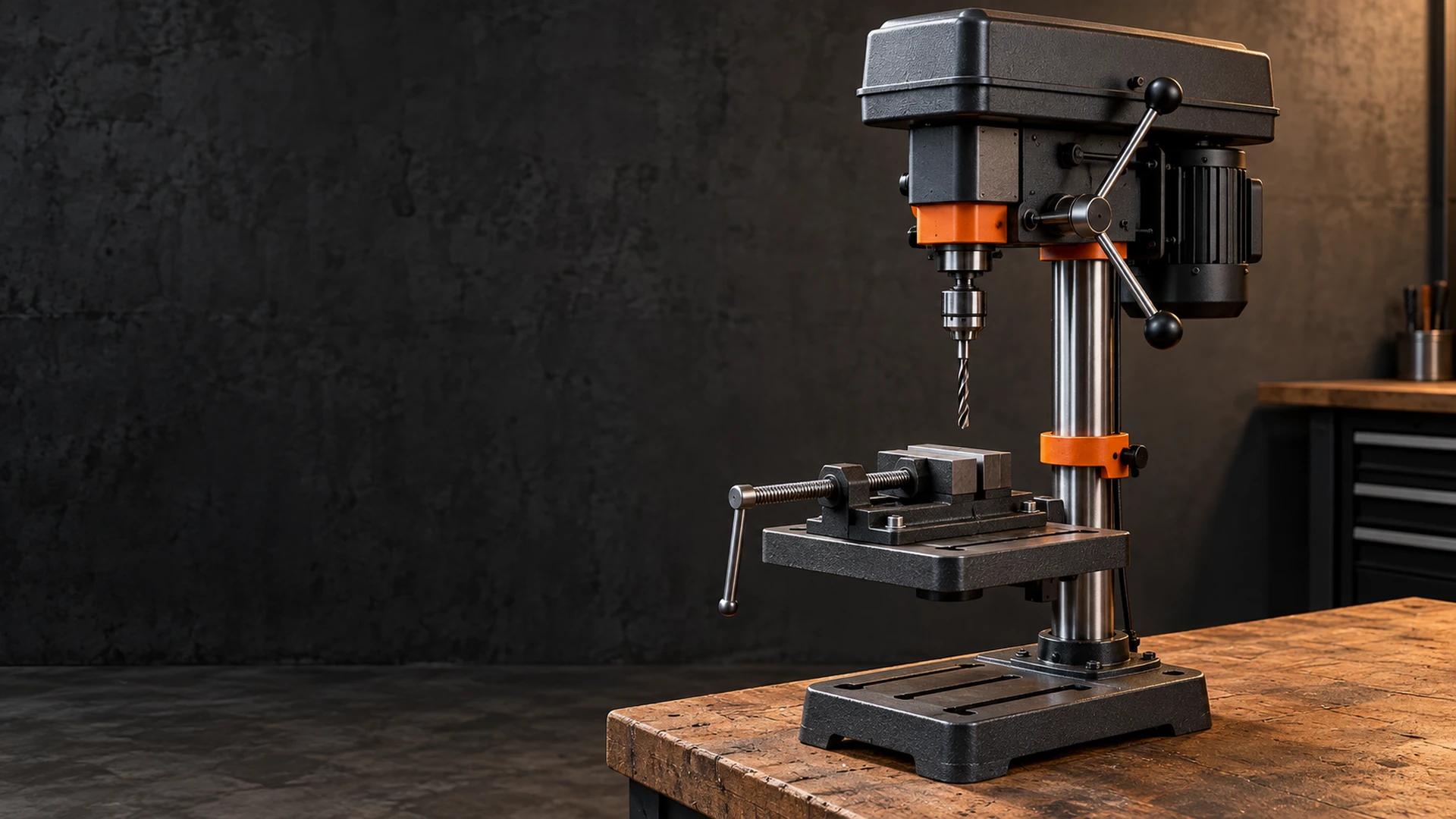
Drill presses: controlled boring
For repeatable perpendicular holes, compare spindle travel, chuck capacity, table adjustment, speed range, and clamping options. A benchtop model saves floor area; a floor model may offer more clearance.
Explore Benchtop Drill Presses →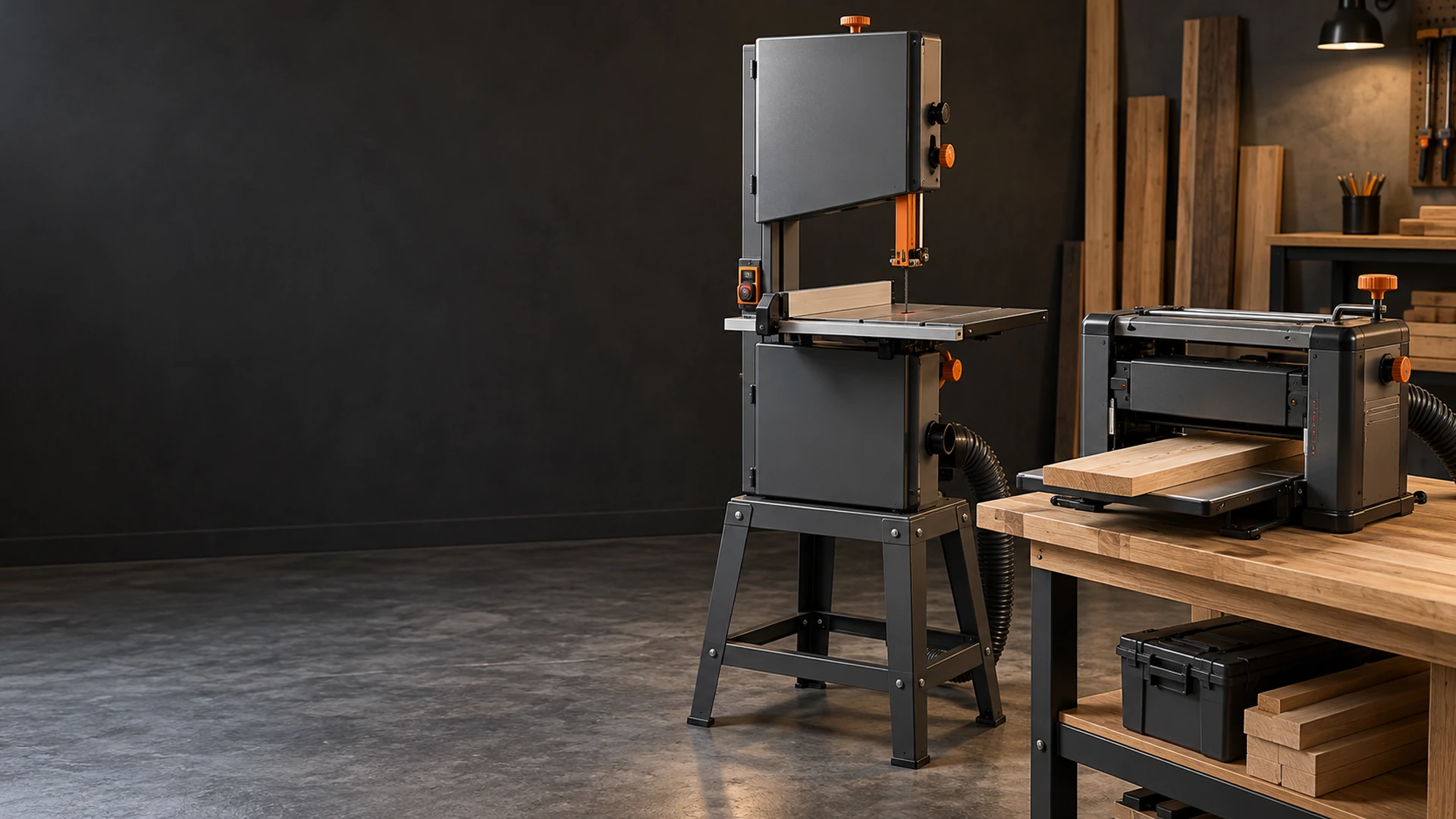
Bandsaws: curves and resawing
Evaluate throat capacity and cutting height separately. Blade width, guides, tensioning, and the ability to support long stock can matter more than a large advertised motor rating.
Explore Benchtop Bandsaws →Jointers and planers: stock preparation
A jointer makes a reference face or edge; a thickness planer makes the opposite face parallel at a chosen thickness. Neither alone reliably fixes every kind of twisted rough board.
Explore Benchtop Planers →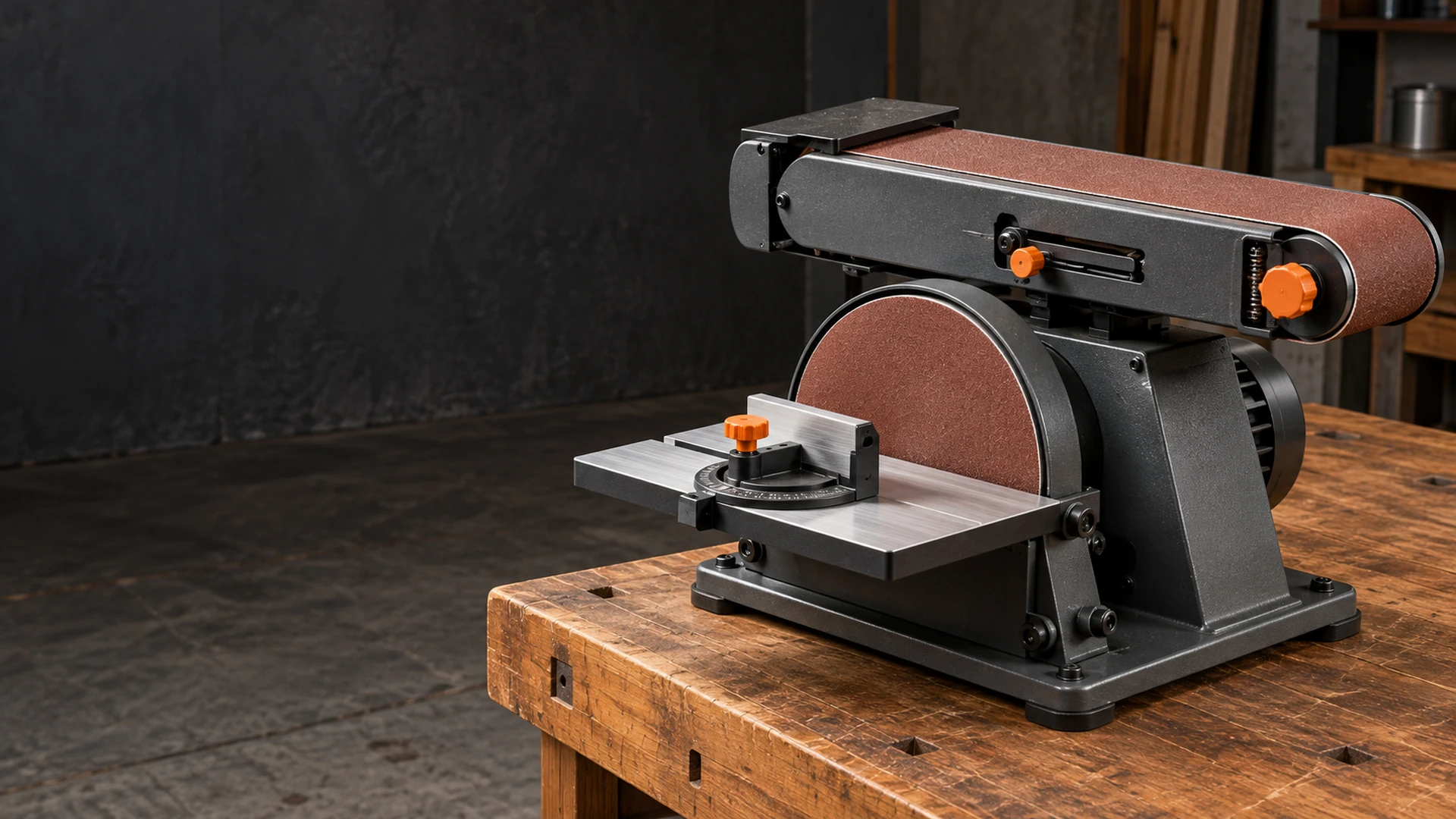
Sanders and grinders: finishing work
A belt/disc sander shapes and smooths; an oscillating spindle sander follows interior curves; a bench grinder serves appropriate grinding and sharpening tasks. Match abrasive and guarding to the job.
Explore Combination Belt and Disc Sanders →Practical machine-buying checks
Six Checks Before You Bring a Machine Home
A compact machine may still require long infeed and outfeed clearance, a solid stand, and dust extraction. Use these checks to rule out unsuitable models before comparing features.
Browse the complete collection
Workshop Machine Buying Guides
Fourteen dedicated guides, grouped by machining operation and the accessories that make equipment usable. Follow the specific guide for the task, rather than comparing unrelated machines.
Drill presses and precision work
Boring capacity, accurate positioning and secure workholding
Saws and stock dimensioning
Cutting curves and preparing boards to consistent dimensions
Sanding, grinding and polishing
Surface shaping, abrasive selection and finishing workflows
Stands and machine mobility
Supporting machines securely and reconfiguring tight shops
A practical workshop plan
Plan Your Machine Workflow in Five Steps
1. List the cuts and operations
Write down the materials, dimensions, and frequency of tasks you cannot complete accurately with your current tools. A machine should remove a real bottleneck, not duplicate equipment.
2. Mock up the material path
Use tape on the floor to mark the machine, operator position, and the full board or workpiece path. Check doors, nearby benches, and room to handle offcuts.
3. Design the support and workholding
Confirm whether the machine needs a dedicated stand, vise, table extension, featherboard, or infeed support. Never treat holding small stock by hand as an acceptable substitute for appropriate fixtures.
4. Match utilities before delivery
Read the exact model manual for circuit requirements, dust or chip extraction, blade or abrasive specifications, and assembly space. Keep accessible emergency stopping and service clearance.
5. Commission one machine at a time
Assemble and secure the machine, check guards and adjustments, and learn the manufacturer’s safe operating procedures before processing project stock. Plan a clean-up and maintenance routine.
For dust control and layout decisions, see the dust collection hub and garage workshop setup hub.
Choose by the operation you need to improve
Need accurately placed holes? Start with benchtop drill presses and drill press vises. Working with rough boards? Compare jointers and planers by the surface each creates. Need curves? Review bandsaws and blade options.
Common questions
Workshop Machine FAQs
Should I buy a drill press or bandsaw first?
Buy for the operation you repeat. A drill press improves controlled hole placement and depth; a bandsaw handles curved cuts and certain resawing tasks. Neither is a general substitute for the other. Consider whether you have safe workholding and room for stock.
Is a benchtop planer the same as a jointer?
No. A jointer establishes a flat reference face or straight edge; a thickness planer brings the opposite face to a parallel thickness. A planer alone can reproduce a board’s existing warp if the board is not supported or prepared appropriately.
What matters more on a bandsaw: throat size or cutting height?
They describe different limits. Throat size governs clearance between the blade and frame, while cutting height limits the thickness of stock that fits under the upper guide assembly. Match both to the work, then check blade selection and guide setup.
Can a drill press vise replace clamps for every job?
No. A vise is useful for many small workpieces, but shape, size, and operation determine the correct fixture. Secure the workpiece and fixture according to the machine manual; do not hand-hold stock that may catch and rotate.
Do I need a dust collector for a small benchtop machine?
It depends on the material and operation, but size alone does not remove the dust hazard. Plan effective source capture compatible with the machine, particularly for sanding and planing, and use other controls and protective equipment as appropriate.
Is it safe to put a heavy machine on a universal mobile stand?
Only when the base is compatible with the machine’s dimensions, weight, center of gravity, and fastening requirements. Check the base and machine manuals and ensure it locks securely before operation.
Continue building the workshop
Related Workshop Equipment Hubs
Workshop Machines
Explore hub →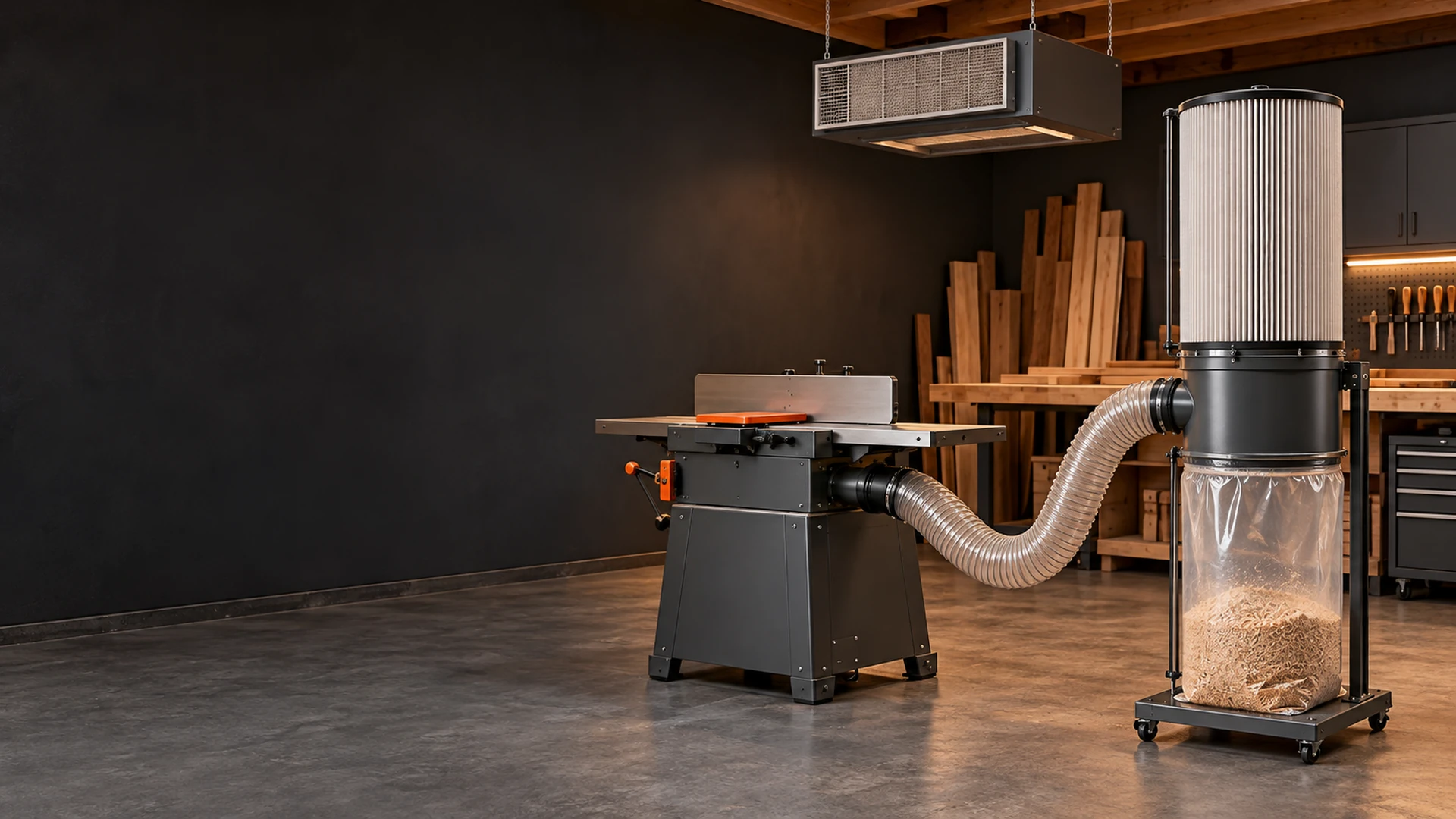
Dust Collection & Air Quality
Explore hub →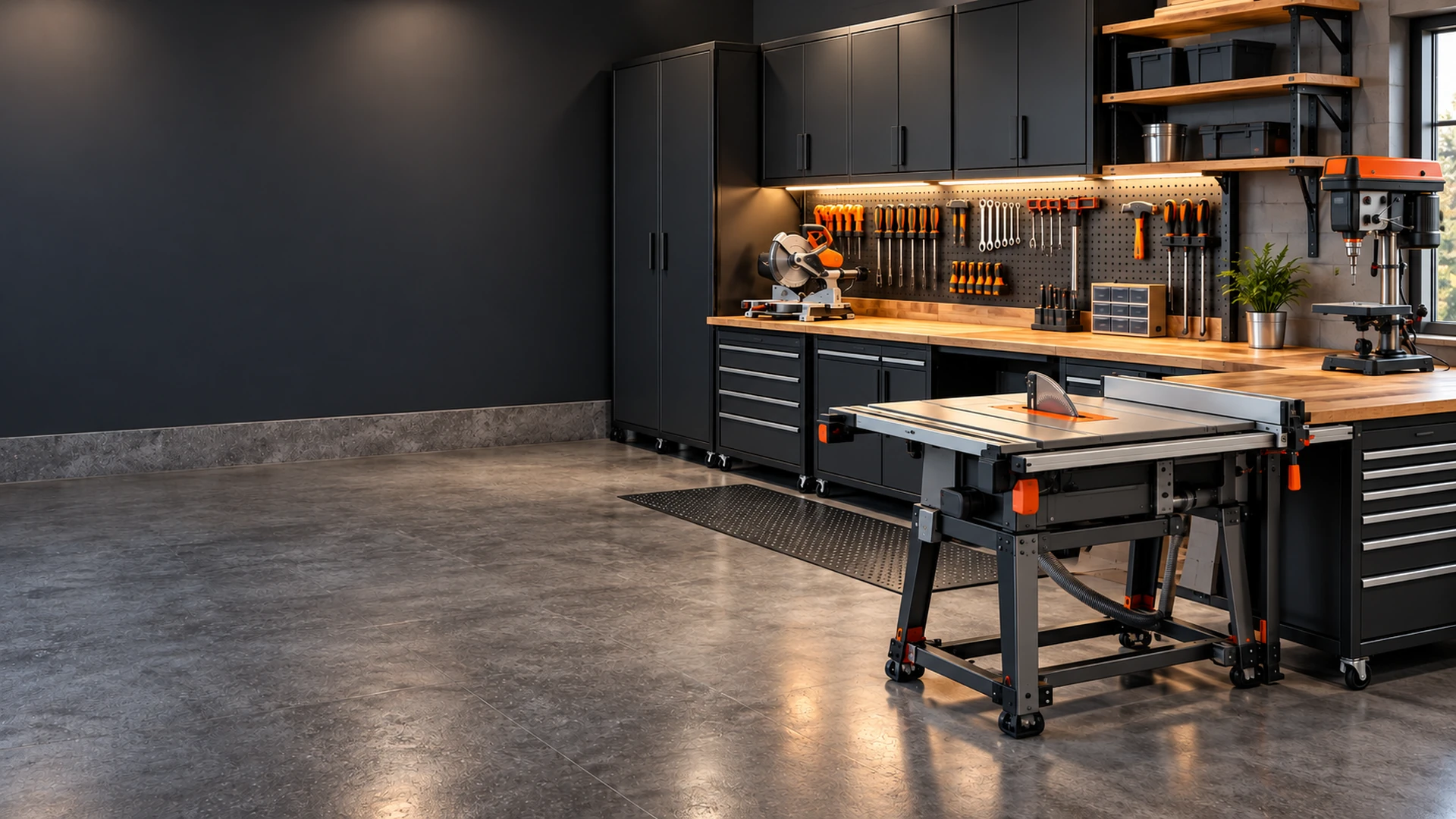
Garage & Workshop Setup
Explore hub →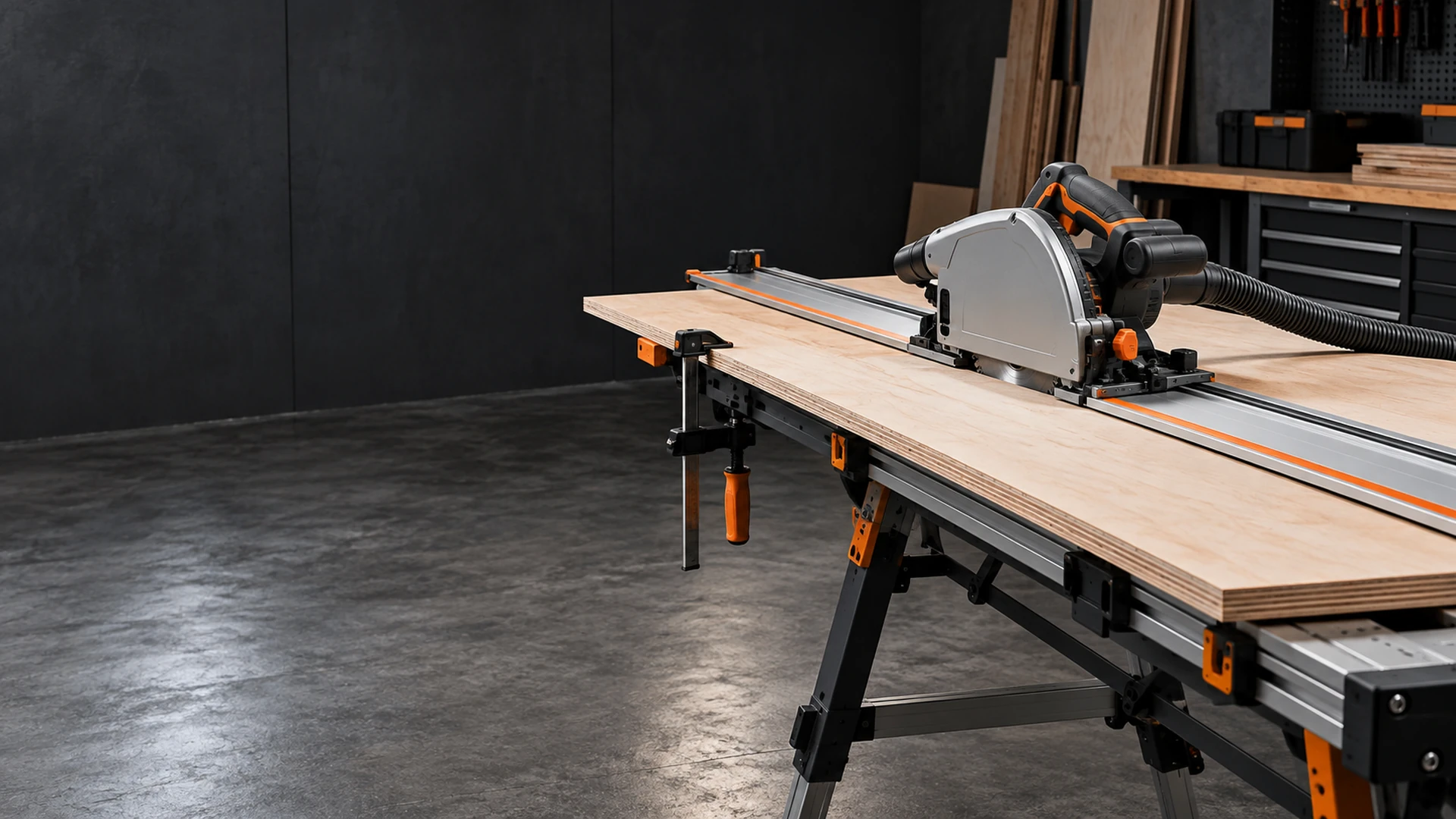
Precision Cutting Systems
Explore hub →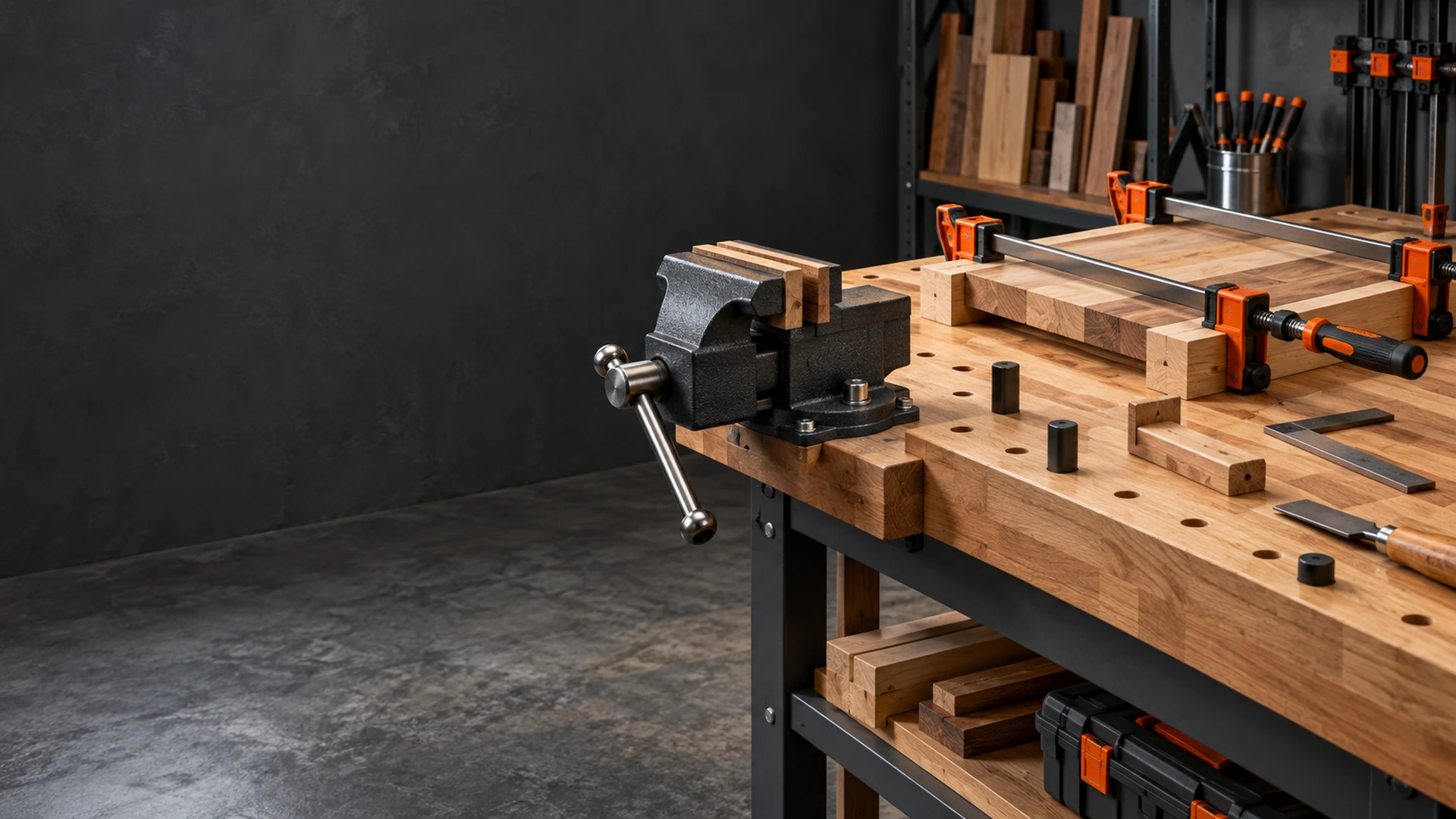
Workholding & Accessories
Explore hub →