
STRAIGHT CUTS, GUIDE RAILS & WORK SUPPORT
Precision Cutting Systems
Build a cutting setup around the materials you handle: track saws for sheet goods, guide systems for existing circular saws, and stable stands or outfeed for repeatable cuts.
Affiliate disclosure: As an Amazon Associate, WorkshopGearGuide may earn from qualifying purchases made through links on this page, at no additional cost to you.
Quick Answer: Which Precision Cutting Setup Fits Your Workshop?
Breaking down plywood: a track saw with a compatible rail and full-sheet support makes long straight cuts easier to manage. Already own a circular saw: compare guide systems before buying another saw. Repeated cabinet-width rips: examine parallel guides and stop settings. Stationary crosscuts: a miter saw stand can improve stock support. Table-saw work: prioritize safe outfeed space and blade guarding.
Start with the cutting task
Four Cutting Setups for Different Jobs
Accuracy starts with stable work support and a guided tool that fits the material. A plunge-cut track saw, circular-saw guide, repeatable rail accessory, and stationary cutting support solve different problems.
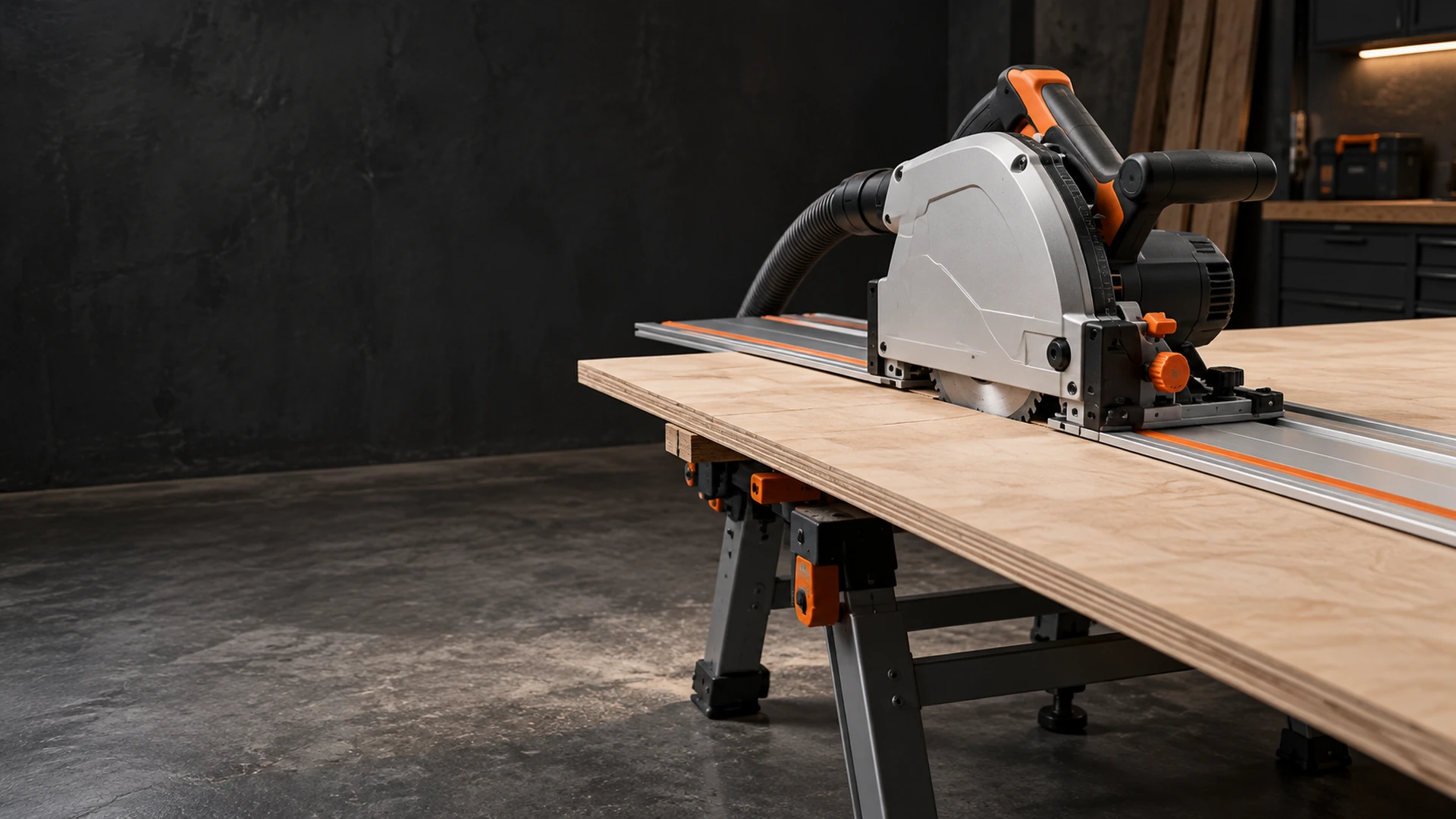
Track saw and rail
A plunge-cut saw running on a compatible rail suits sheet goods and long straight cuts. Check cutting capacity, rail length, dust extraction, and spare strip availability.
Compare rolling tool chests →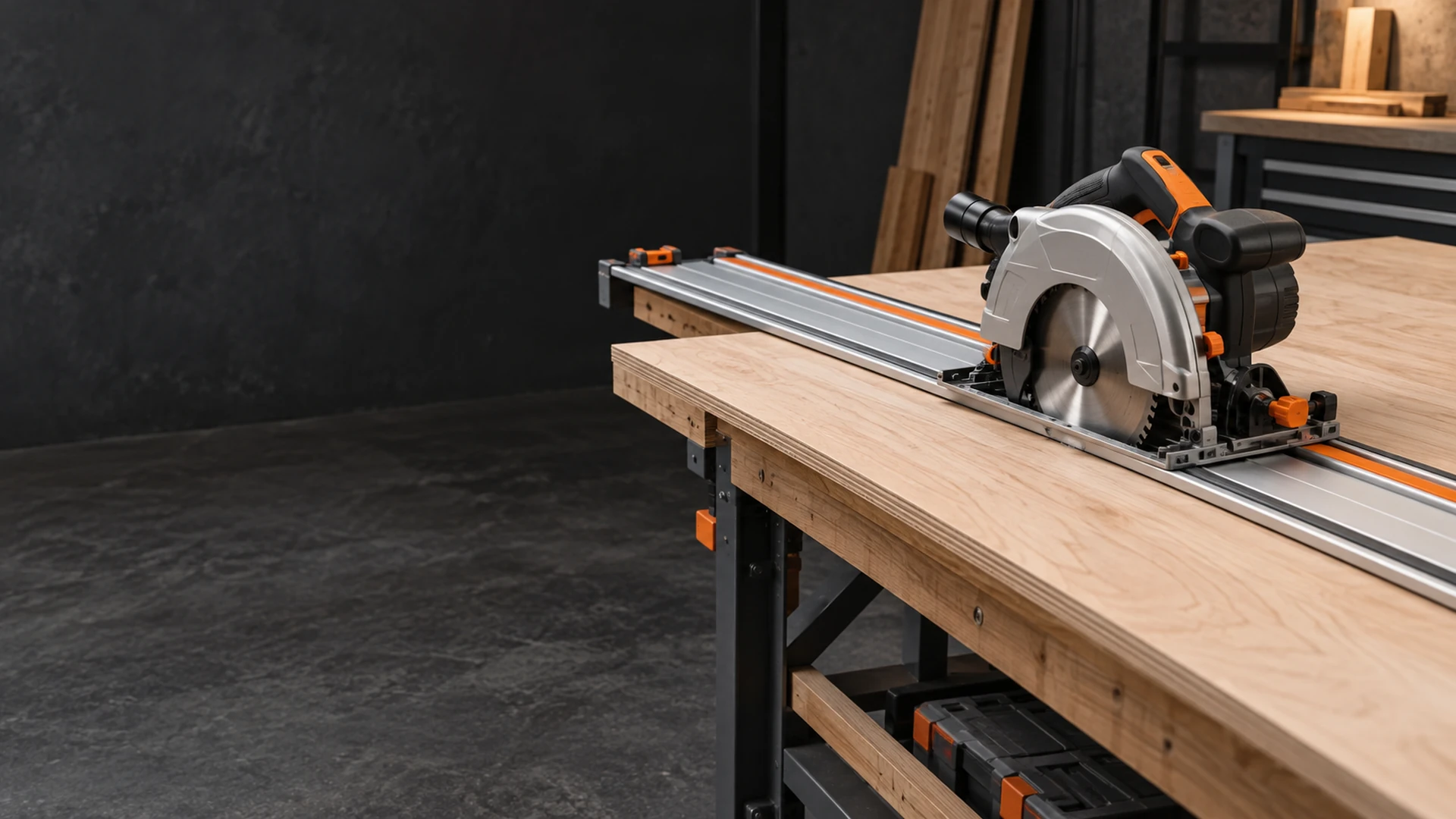
Circular saw guide systems
Use a straight-edge or guided base with a compatible circular saw. Account for the blade-to-guide offset and secure the guide before cutting.
Compare modular storage →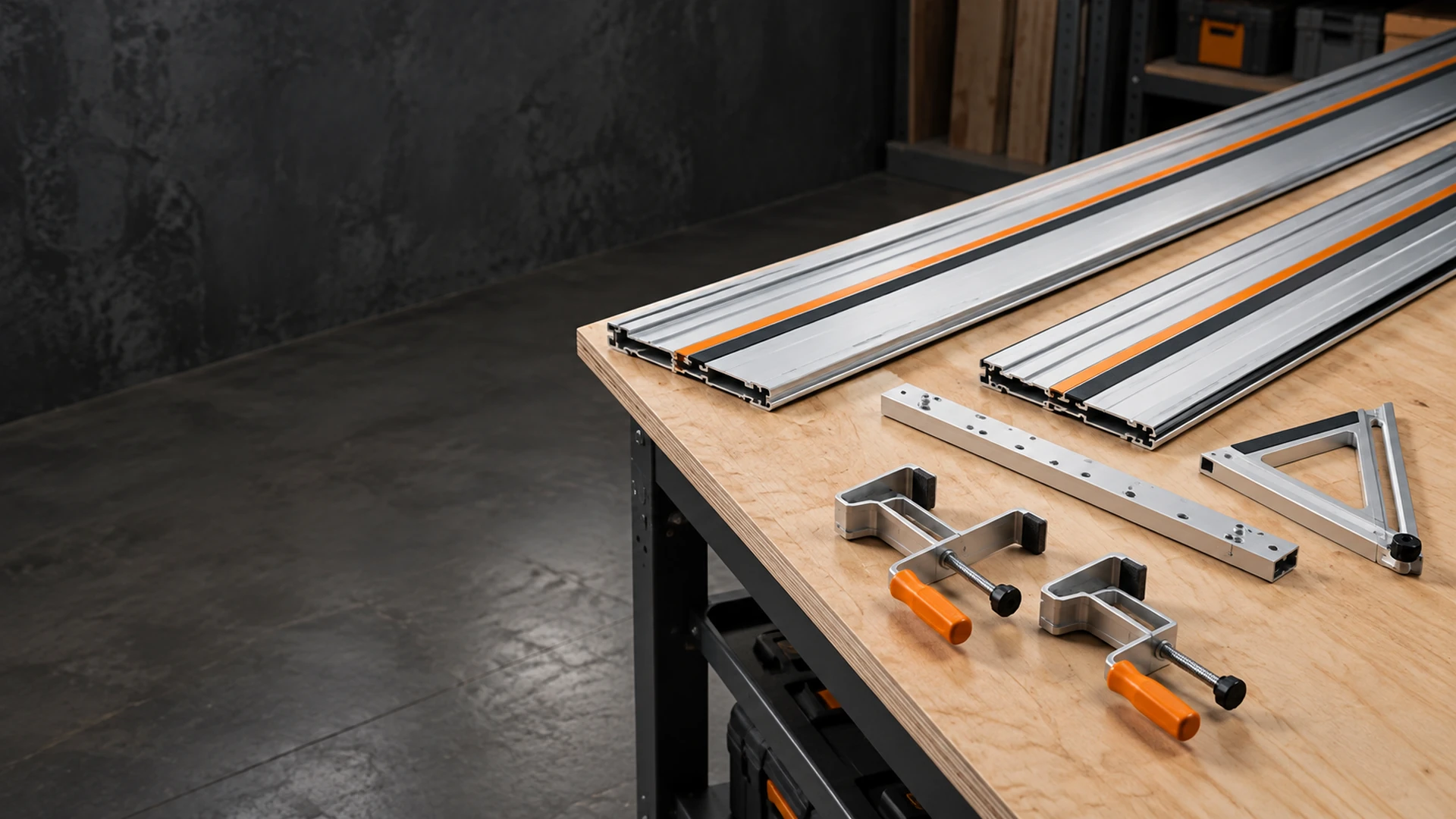
Repeatable rail accessories
Parallel guides, clamps, and connectors can improve repeatability, but compatibility depends on rail profiles and accessory generations.
Compare wall racks →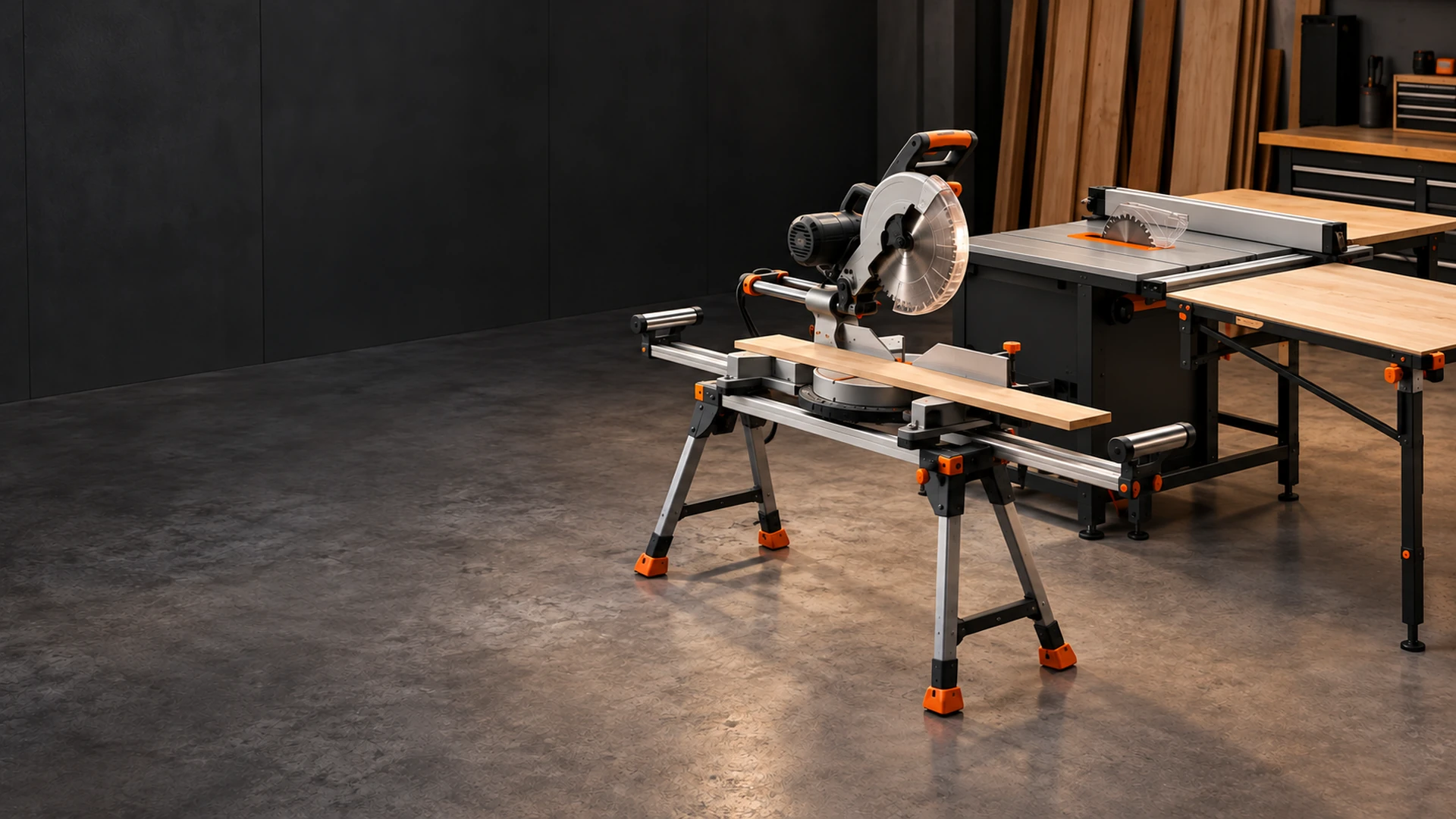
Miter stands and outfeed
Long stock needs stable support on both sides of a cut. Evaluate folding stands, roller height, outfeed surfaces and the space required to move material.
Compare cutting accessories →Before you purchase
Six Checks That Prevent Cutting-System Mismatches
Check the whole workflow—not just the saw. Rail length, blade clearance, work support and compatible accessories can determine whether the setup actually saves time.
Explore the complete cutting collection
Precision Cutting Buying Guides
Ten focused guides organized by cutting tools, rail compatibility, repeatability accessories and workshop support. Each addresses a different buying decision.
Track saws and rail fundamentals
Start with the core guided-cutting system.
Repeatability and rail accessories
Check fit before mixing brands and generations.
Alternative guided cuts
Compare using a saw you already own with a track saw.
Stationary saw support
Improve safe handling of longer boards and sheet material.
Plan for repeatable accuracy
Build Your Cutting Workflow in Five Steps
1. Identify the longest regular cut
Measure common sheet and board dimensions, then choose rail and support length for that real task.
2. Plan material staging
Create a flat area for full sheets and a safe route for offcuts. Do not rely on a narrow unsupported edge.
3. Confirm rail compatibility
Check the specific saw, clamps, connectors and parallel guides before building around one rail ecosystem.
4. Establish a repeatable reference
Calibrate the anti-chip edge and check squareness using scrap before cutting finished panels.
5. Maintain blade and guide
Inspect blade condition, clean rail glide strips and replace damaged splinter strips as instructed.
For broader planning, see the garage workshop setup and workbenches and workstations hubs.
Choose by the Cut You Need to Make
Cutting full sheets in a small shop? Compare track saws for home workshops. Want to keep your existing saw? Explore circular saw guides. Need repeated equal-width parts? Start with parallel guides. Cutting long trim or boards? Review miter saw stands.
Common questions
Precision Cutting Systems FAQs
Is a track saw better than a table saw for plywood?
For breaking down full sheets in limited space, a track saw on supported material can be easier to stage. A table saw can be more efficient for repeatable narrow rips when adequate infeed, outfeed and guarding are available.
Can I use one brand of track saw on another brand’s rail?
Some combinations work, but compatibility is model-specific. Verify the exact saw base, rail profile, anti-tip mechanism and manufacturer compatibility chart rather than assuming universal fit.
How long should a track saw guide rail be?
Choose a rail that covers your longest regular cut plus the entry and exit travel the saw needs. Check usable cutting capacity, not only the rail’s labeled length.
Do track saw rails need clamps?
Some rails have anti-slip backing, but workpiece finish, cut orientation and tool instructions may still call for clamps. Secure the workpiece and follow the saw and rail manufacturers’ instructions.
What causes a guided cut to drift or splinter?
A worn anti-chip strip, incorrect blade, loose connector, damaged rail, unsupported panel or incorrect technique can contribute. Inspect and calibrate the system before cutting finished stock.
What is the safest way to support a full sheet during a cut?
Use a stable cutting surface or manufacturer-approved supports that keep both pieces controlled throughout the cut. Keep hands clear of the blade path and follow the saw manual.
Continue building the workshop
Related Workshop Equipment Hubs
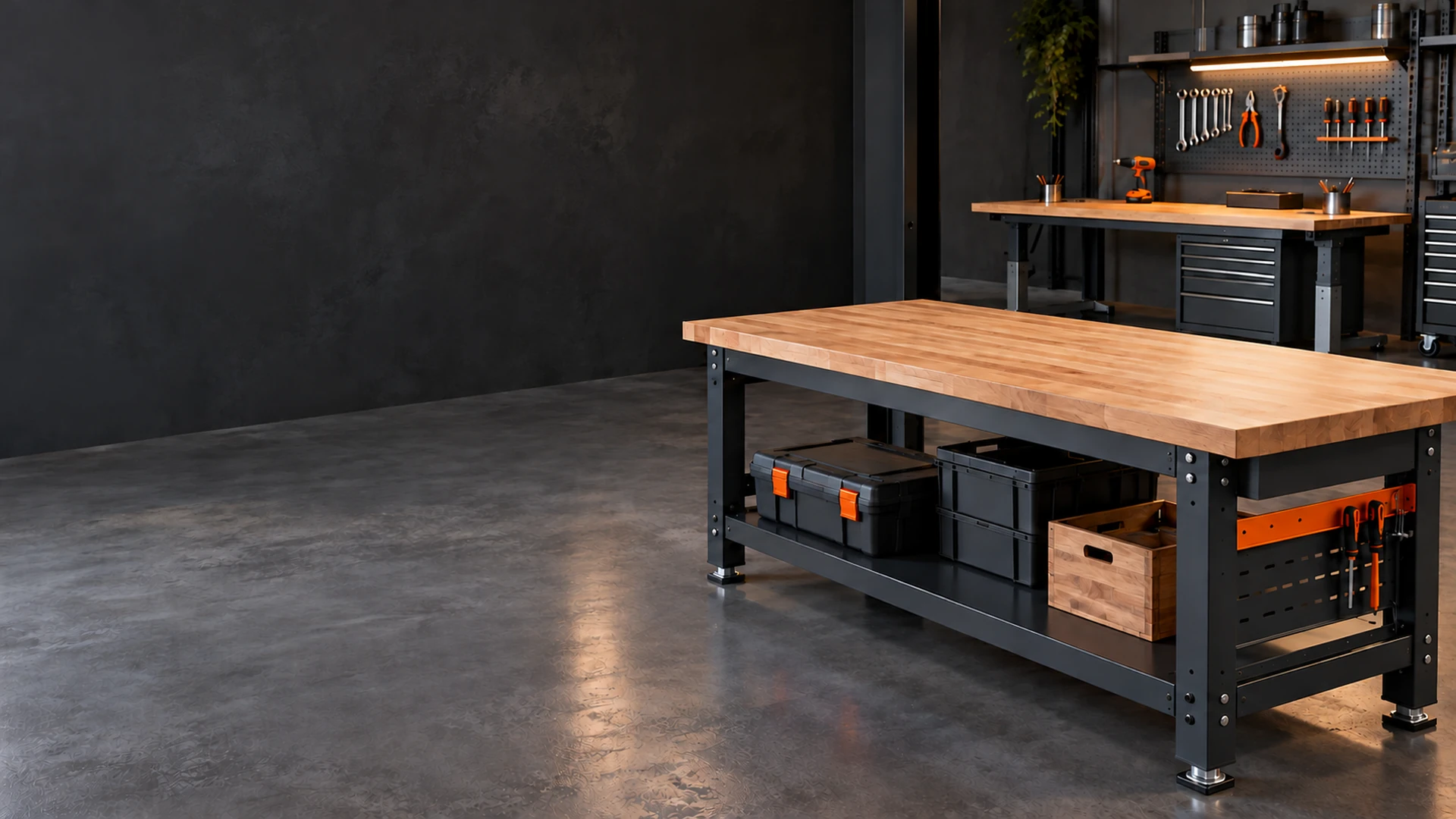
Workbenches & Workstations
Explore hub →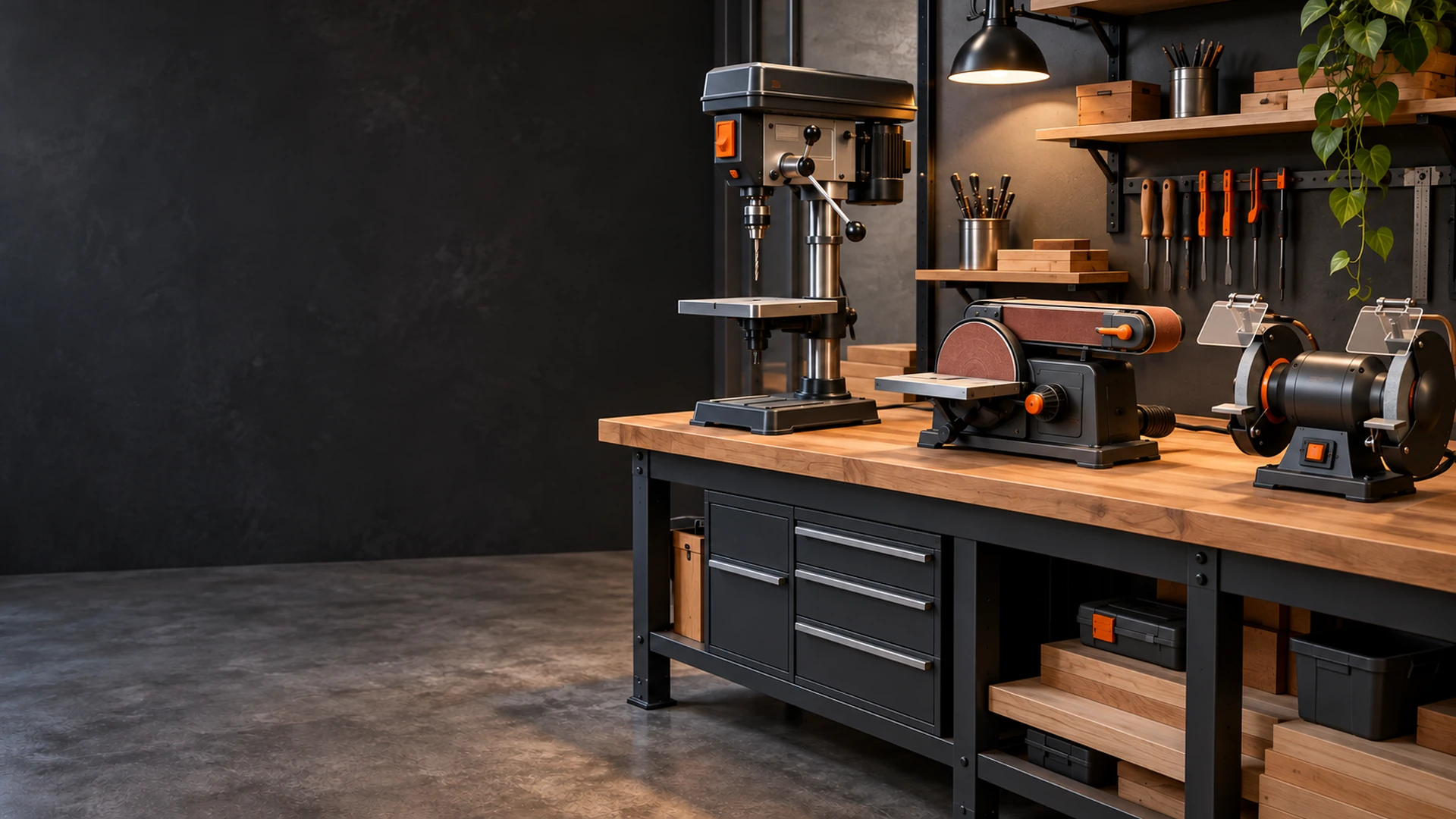
Workshop Machines
Explore hub →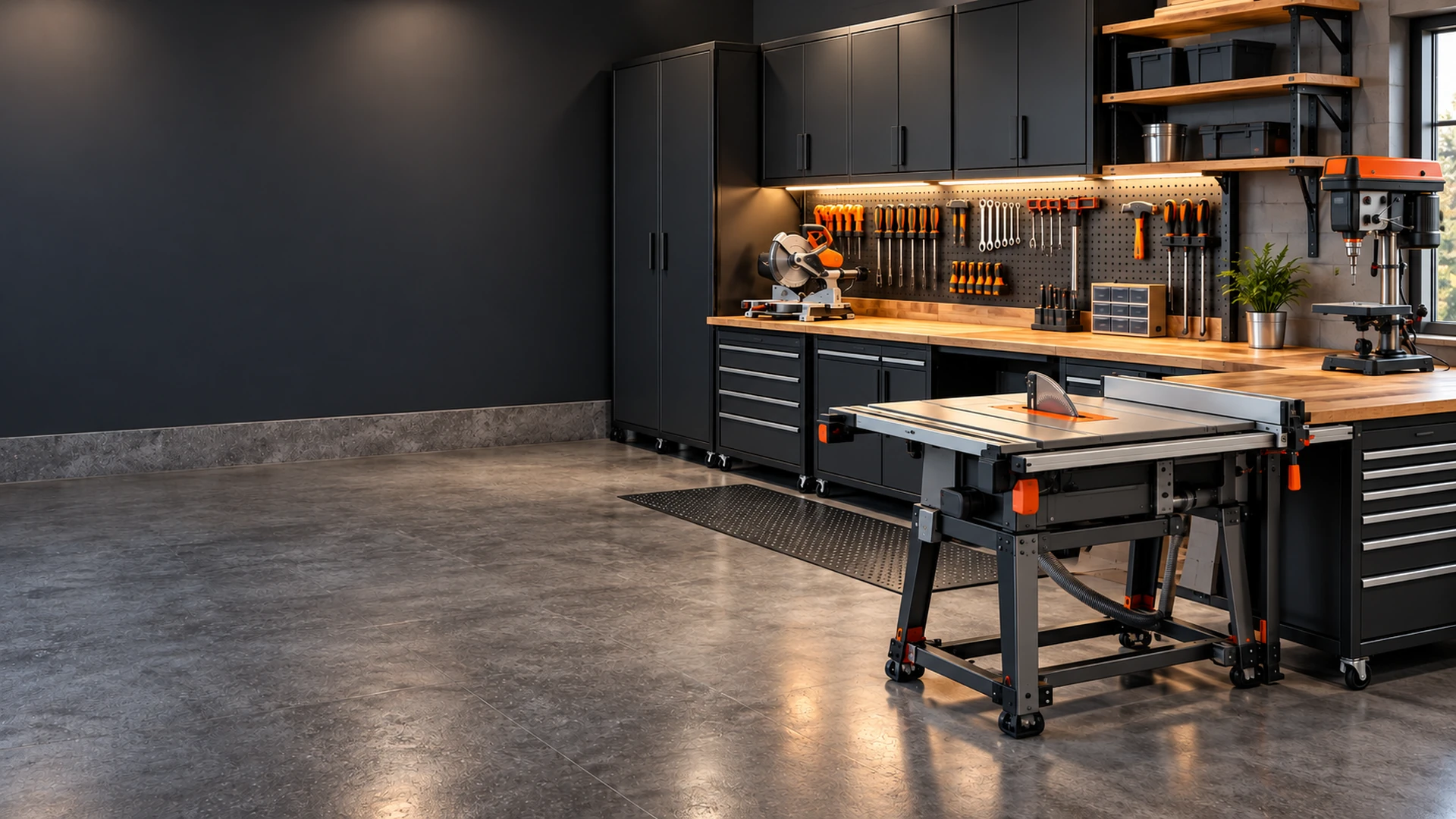
Garage & Workshop Setup
Explore hub →
Tool Storage & Organization
Explore hub →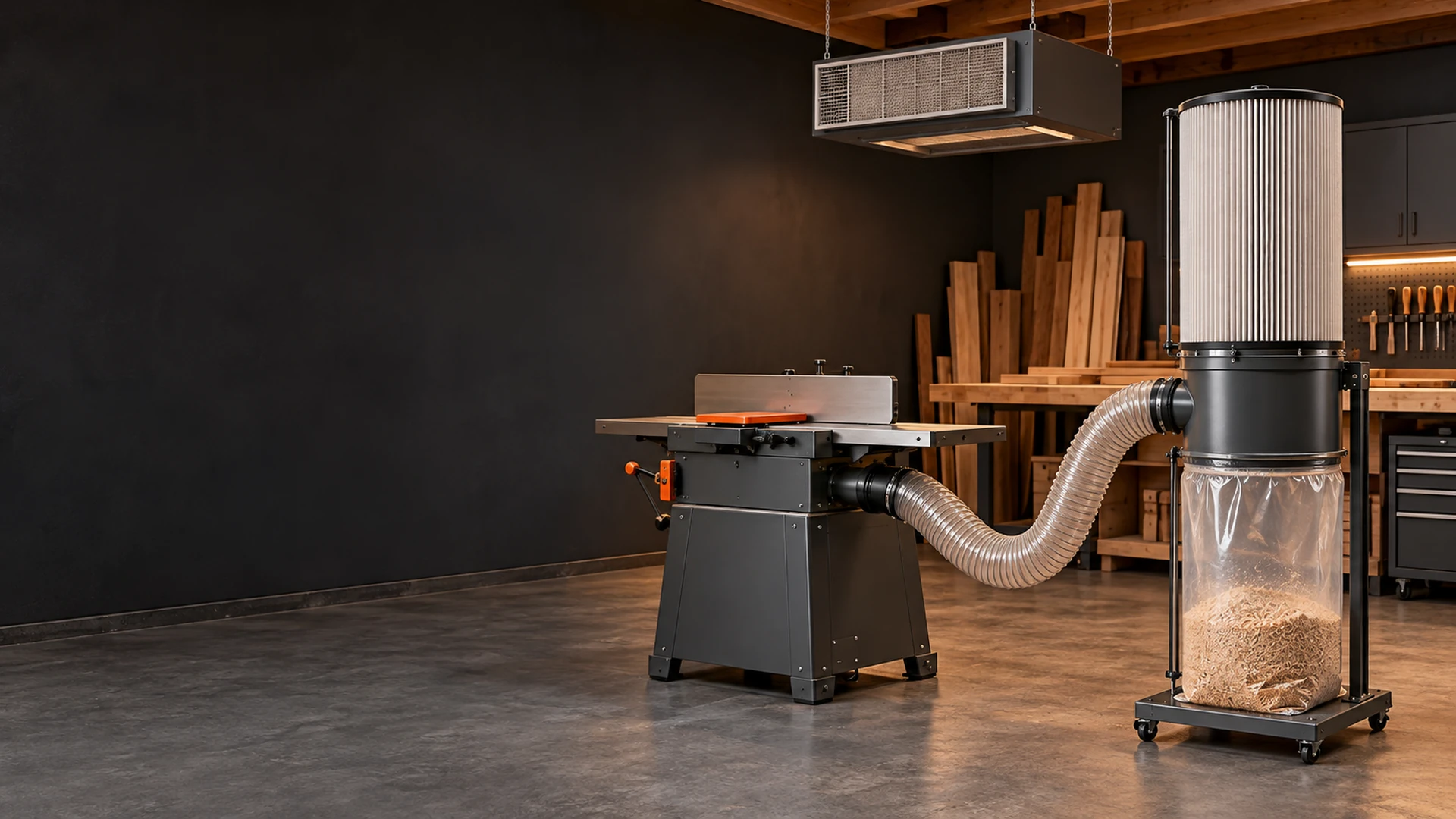
Dust Collection & Air Quality
Explore hub →