WORKSHOP PROTECTION, AIRFLOW & COMFORT
Workshop Safety & Climate Control
Build a safer, more comfortable workshop with suitable respiratory and hearing protection, better ventilation, and climate equipment chosen for your actual hazards and space.
Affiliate disclosure: As an Amazon Associate, WorkshopGearGuide may earn from qualifying purchases made through links on this page, at no additional cost to you.
Quick Answer: What Safety Equipment Should a Workshop Have?
Start with the hazard, not the gadget. Control dust and fumes at their source, select respiratory and hearing protection for the exposure, and manage temperature and moisture without introducing combustion or electrical risks. A monitor can flag changing conditions, but it cannot certify that air is safe.
Match protection to the exposure
Four Safety Priorities That Solve Different Problems
Each category addresses a different exposure. Choose controls and equipment based on the actual work, materials and environment—not a single all-purpose safety purchase.
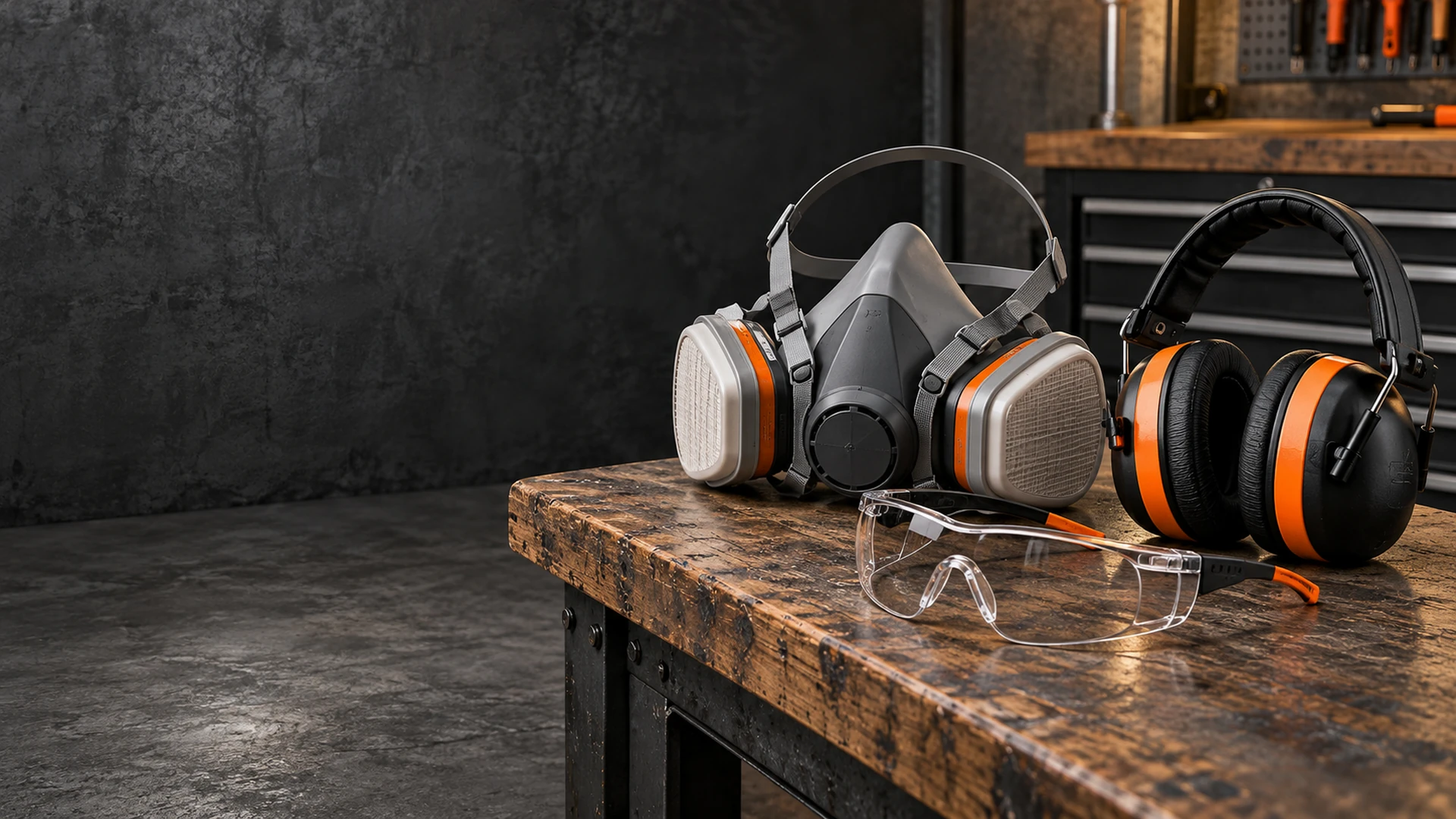
Respiratory protection
Select a properly fitting, suitable respirator for the contaminants and concentrations involved. Filter cartridges and disposable masks are not interchangeable.
Read the buying guide →Noise exposure
Compare hearing protectors by fit, comfort and appropriate attenuation. Protect hearing before prolonged cutting, grinding or compressed-air work.
Read the buying guide →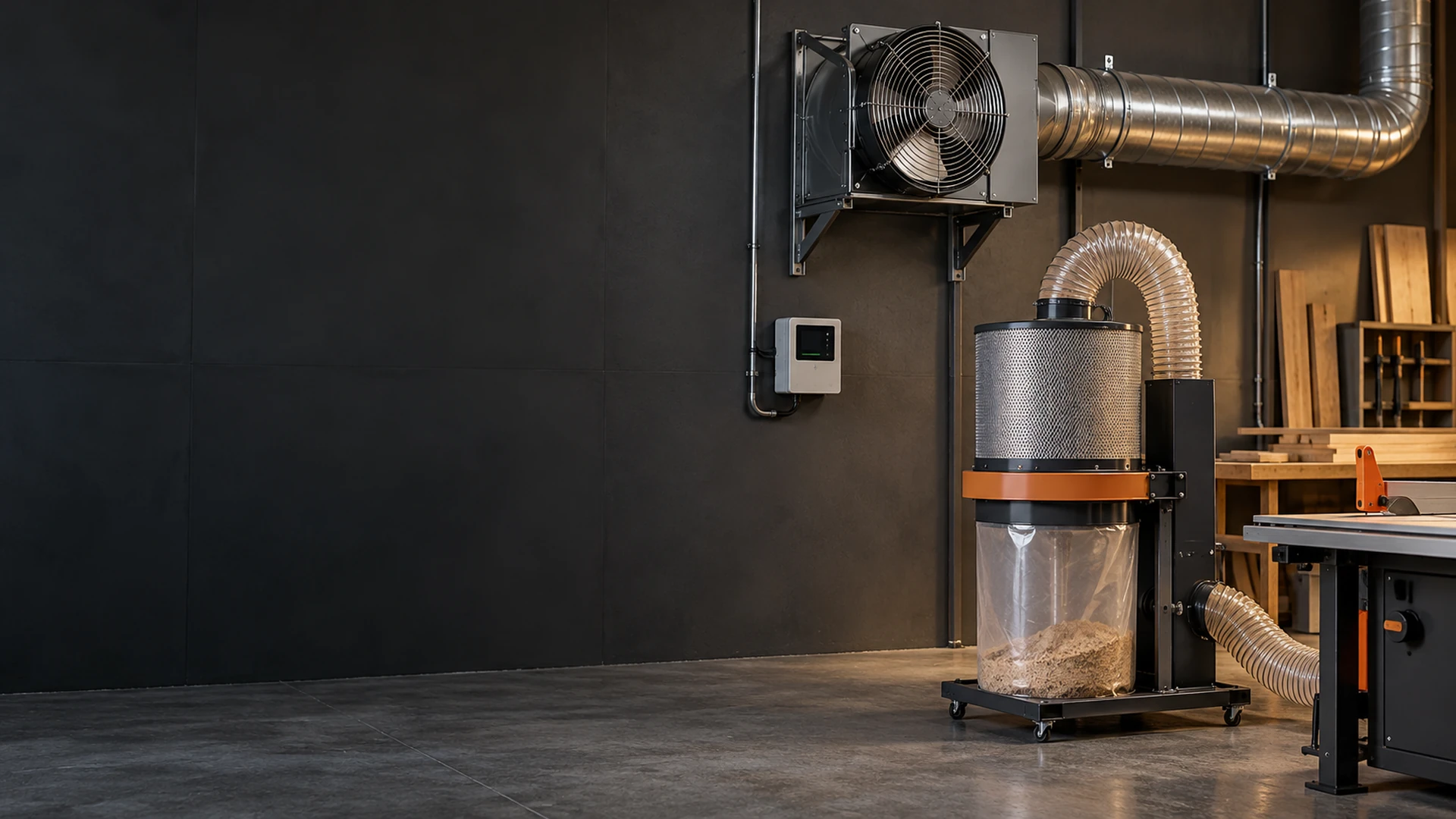
Air movement and monitoring
Ventilation fans and air monitors have different jobs. Ventilation must move contaminated air safely; consumer sensors have limits.
Read the buying guide →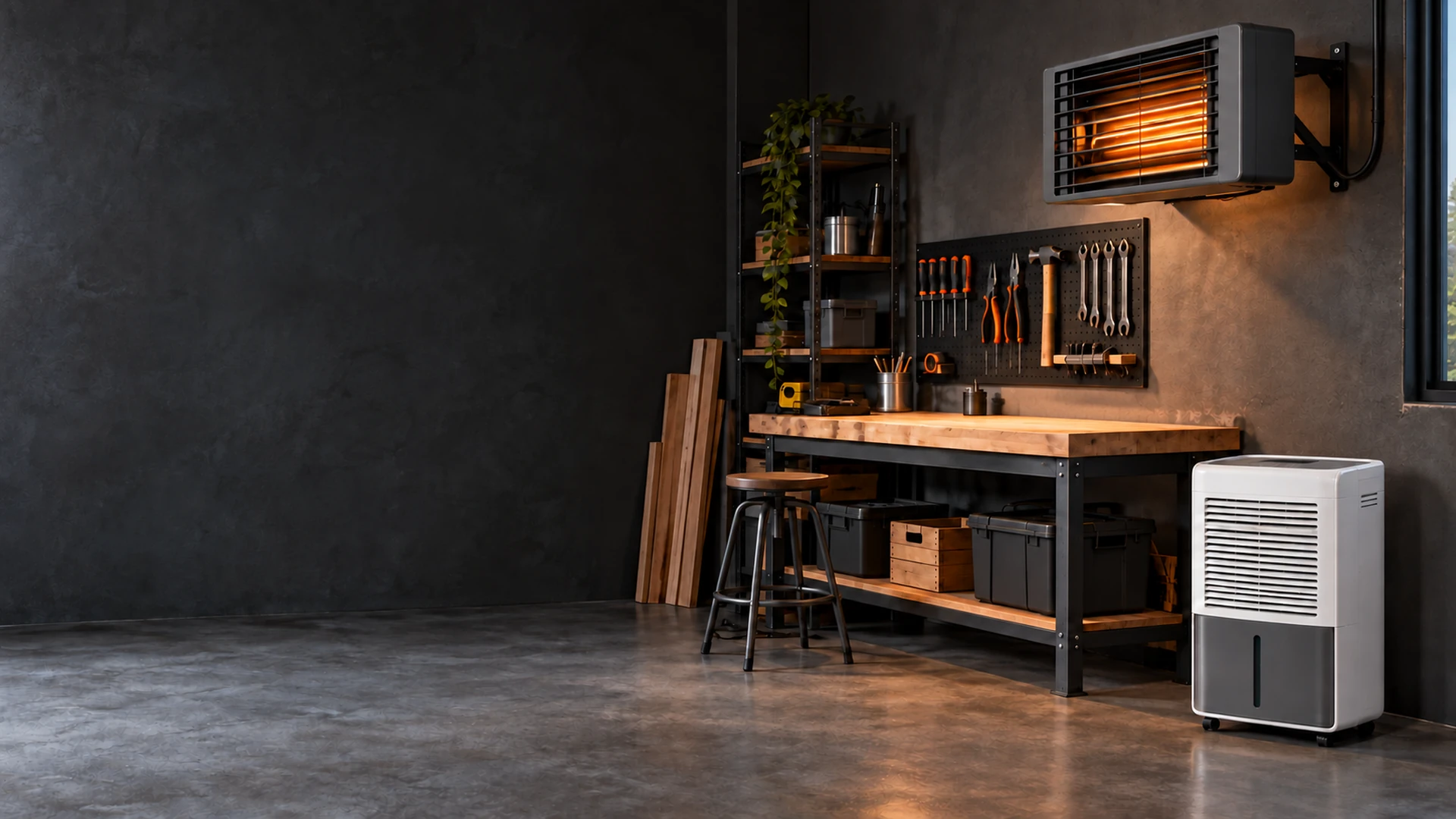
Heat and moisture control
Size heating and dehumidification for the room, insulation and moisture load while checking electrical and combustion safety.
Read the buying guide →Check before you buy
Six Checks Before Buying Workshop Safety Equipment
Match products to hazards, space constraints, and documented ratings. The wrong filter, ventilation direction or heater can create a false sense of security.
Explore the detailed buying guides
All 6 Workshop Safety & Climate Buying Guides
Choose the specialist guide for the exposure or comfort problem you need to solve. Each guide focuses on different product requirements and tradeoffs.
Air monitoring & ventilation
Understand what sensors can and cannot detect, then plan appropriate air exchange.
Respiratory & hearing protection
Match personal protective equipment to dust, fumes and noise exposure.
Workshop heating
Compare heat sources and installation constraints before buying.
Moisture & condensation control
Control humidity after addressing leaks and ventilation.
A safer setup in five steps
Build a Practical Workshop Safety Plan in Five Steps
1. List tasks and exposures
Identify dust, fumes, vapors, noise, heat and moisture sources for each tool and material. Read equipment instructions and product safety data.
2. Reduce hazards at the source
Use suitable machine guards, dust capture, safer processes and local exhaust before relying on personal protection alone.
3. Choose and maintain PPE
Match respirators and hearing protection to exposures, fit them correctly, and replace filters or damaged components according to instructions.
4. Design airflow and climate
Plan exhaust paths, fresh-air replacement, heater clearances and dehumidifier drainage for the actual room and climate.
5. Check performance and revisit
Inspect equipment and watch for recurring condensation, visible dust or symptoms. Consumer air monitors are supplementary, not proof of safe exposure.
Coordinate ventilation with the dust collection hub and power planning with the lighting and electrical hub.
Choose protection by the risk you need to control
For airborne dust and particles, begin with suitable respiratory protection. For loud equipment, compare hearing protection. For stale air or fumes, assess the source and ventilation options rather than relying on a consumer monitor alone.
Common questions
Workshop Safety & Climate FAQs
Can a consumer air-quality monitor tell me if workshop air is safe?
No. Consumer monitors measure selected pollutants or proxies and may miss hazardous dust or vapors. Exposure assessment and source controls are needed for occupational hazards.
Is an N95 mask enough for woodworking or finishing?
It depends on the material and exposure. A properly fitted particulate respirator may help with some dust, but particulate filters do not protect against solvent vapors. Match the protection to the hazard.
How do I choose hearing protection for a loud workshop?
Consider the noise level, time exposed, proper fit and comfortable wear. More attenuation is not automatically better if it prevents hearing essential warnings.
Should a garage workshop use an electric or fuel-burning heater?
Electric heat avoids indoor combustion emissions, but still needs adequate circuit capacity and safe clearances. Fuel-burning equipment has additional exhaust, carbon-monoxide and ventilation concerns.
Will a dehumidifier replace workshop ventilation?
No. A dehumidifier removes moisture but does not capture dust or remove all fumes. Use ventilation and source capture where needed, and correct leaks or water intrusion first.
Where should I place a workshop ventilation fan?
Place it based on the contaminant source, airflow path, makeup air and safe exhaust location. A fan that simply stirs dust around the room is not a substitute for source capture.
Continue building the workshop
Related Workshop Equipment Hubs
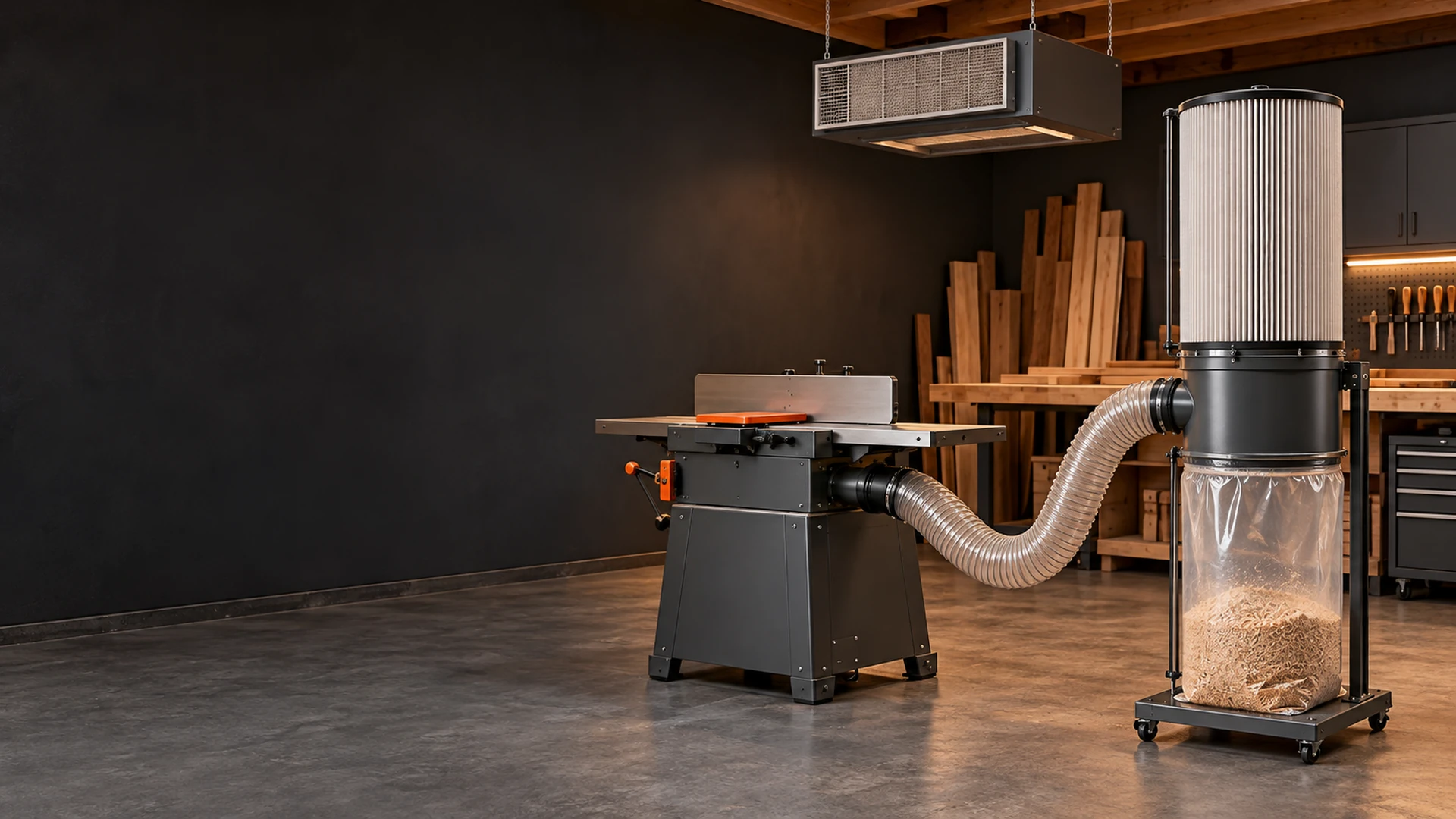
Dust Collection & Air Quality
Explore hub →
Lighting & Electrical
Explore hub →
Garage & Workshop Setup
Explore hub →
Workbenches & Workstations
Explore hub →
Workshop Machines
Explore hub →