Source capture, filtration & cleaner workshop air
Dust Collection & Air Quality
Match the right extraction system to the dust you generate. Learn when a shop vacuum, tool-connected extractor, high-volume collector or ambient air filter belongs in your workshop—and where each falls short.
Affiliate disclosure: As an Amazon Associate, WorkshopGearGuide may earn from qualifying purchases made through links on this page, at no additional cost to you.
Quick Answer: Start by Capturing Dust at Its Source
Stationary machines making chips: consider a dedicated dust collector matched to the machine ports and duct runs. Handheld sanding and fine dust: look for a compatible tool-triggered dust extractor with effective filtration. General cleanup: a shop vacuum handles debris, but is not automatically a substitute for a fine-dust extractor. Dust already airborne: room air filtration can supplement—not replace—source capture and suitable respiratory protection.
Four distinct jobs
Choose the System That Matches the Dust
A collector designed to move chips through large ducting is not interchangeable with a portable extractor connected to a sander. Separate source capture, separation and ambient cleanup before you compare products.
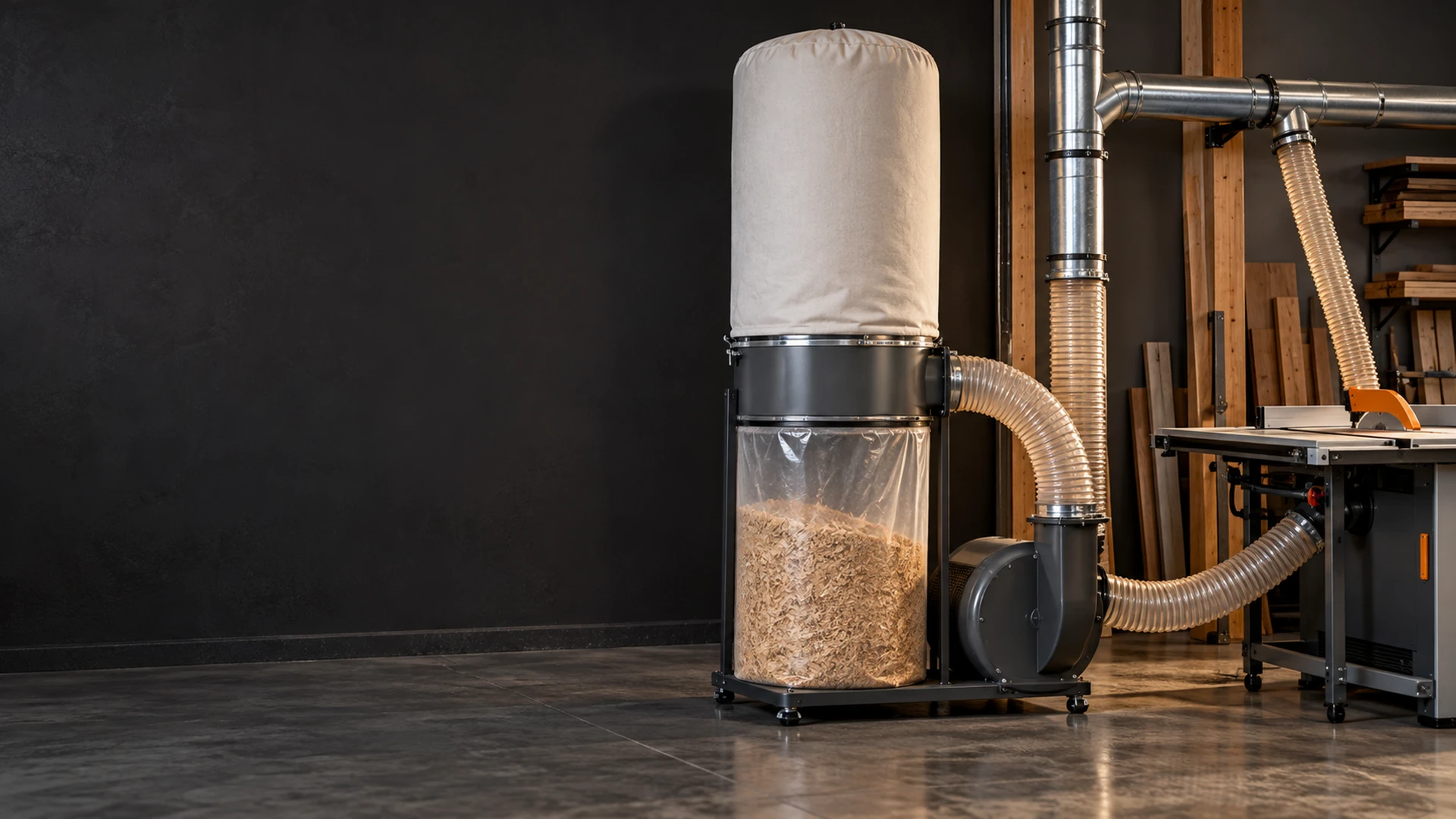
Stationary-machine collectors
For table saws, jointers and planers, prioritize the required airflow at the tool after duct losses, collection-port geometry and safe collector placement.
Explore workshop dust collectors →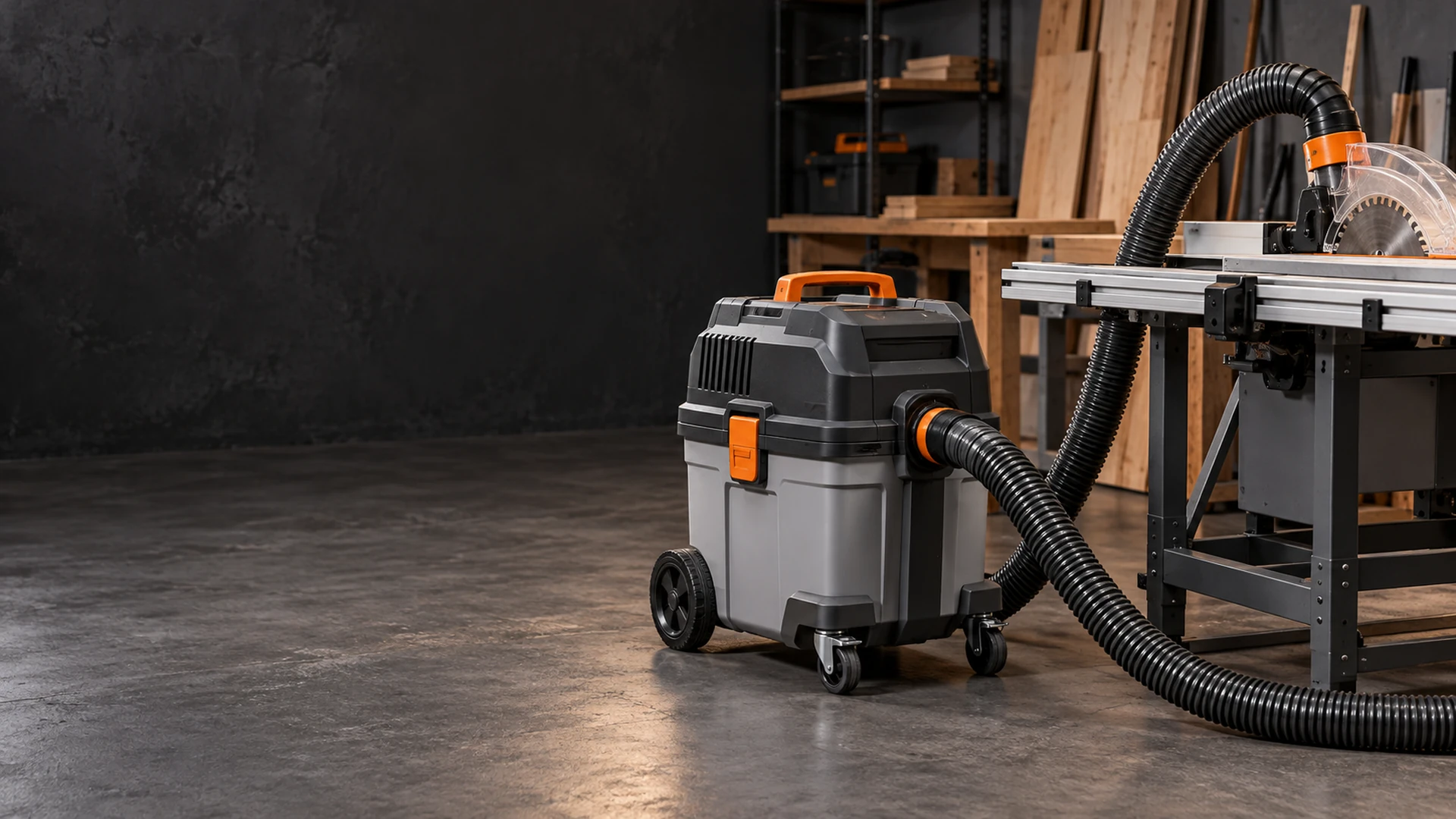
Portable tool dust extractors
For sanding and drilling, compare the tool port adapter, automatic start, filter cleaning and fine-particle containment rather than tank size alone.
Explore dust extractors for sanders →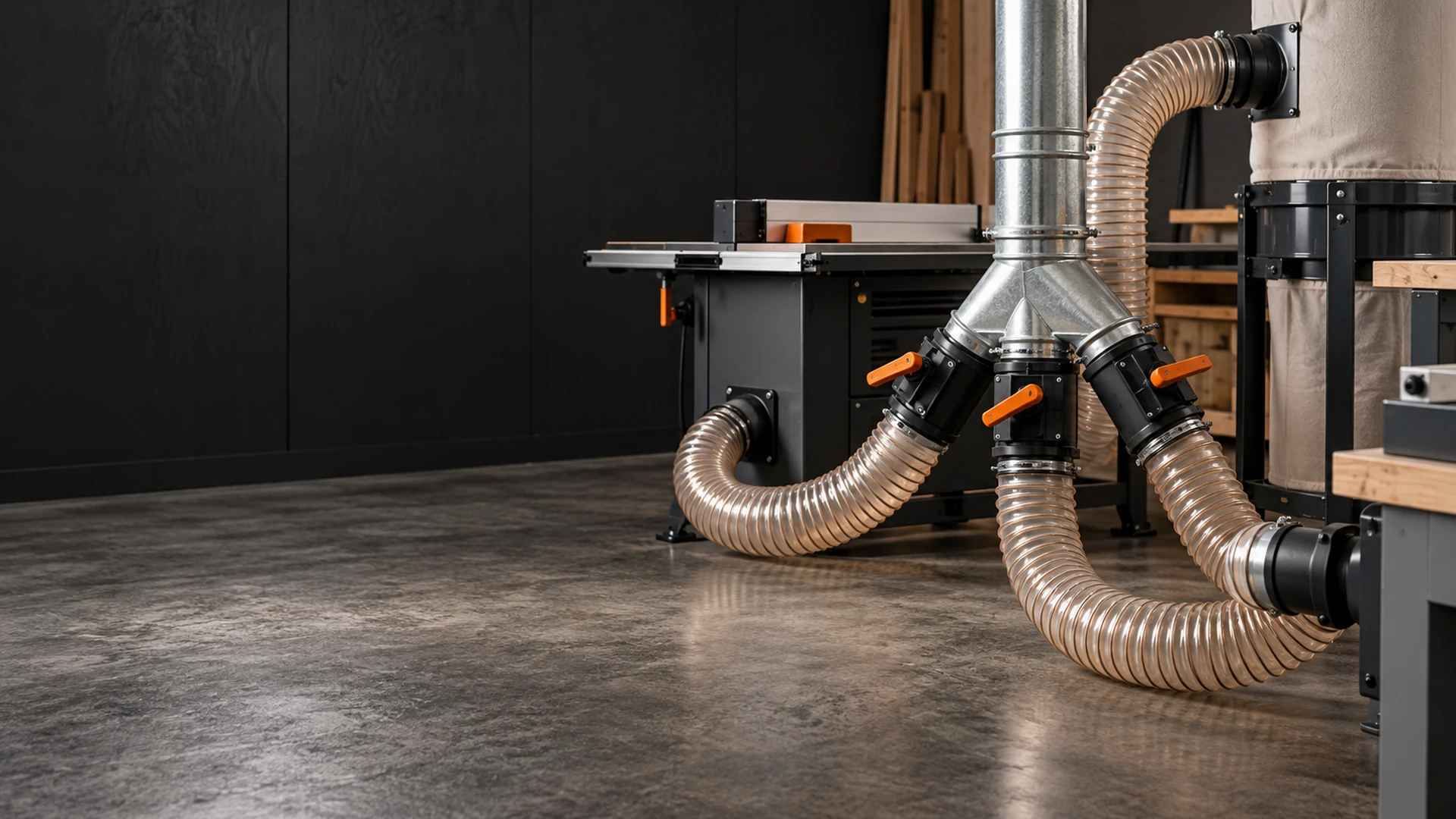
Cyclone pre-separation
A properly matched separator can keep much of the larger debris out of the vacuum filter, but adds resistance and does not replace final filtration.
Explore cyclone dust separators →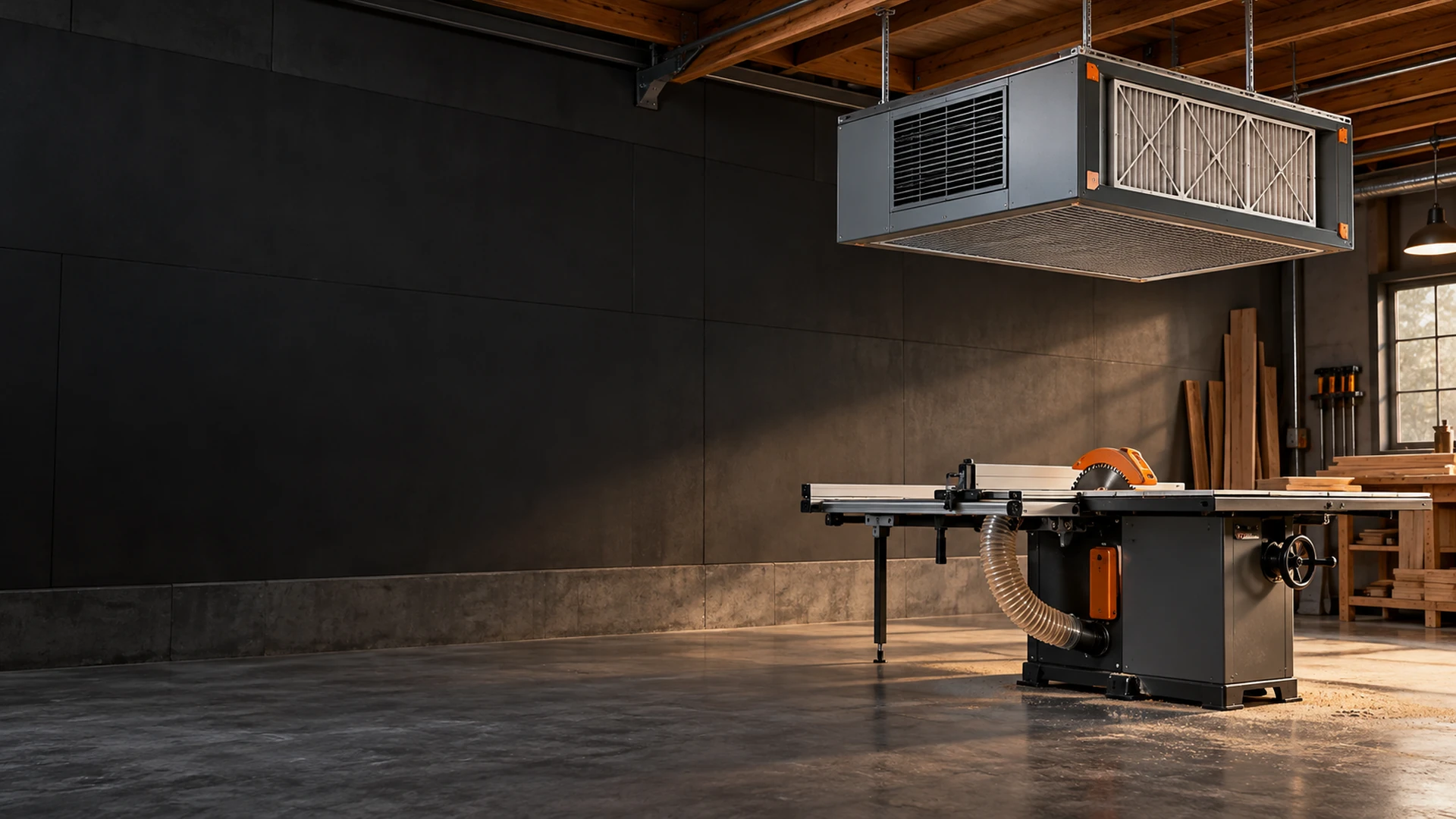
Ambient air filtration
Ceiling or portable filtration addresses residual airborne particles; verify room coverage, filter replacement and airflow without treating it as source capture.
Explore workshop air filtration systems →Before choosing equipment
Six Compatibility Checks That Matter More Than Marketing
Airflow claims alone do not describe collection at a running tool. Restrictions, filter loading and how dust enters the hood all affect real capture.
Complete topic directory
All 14 Dust Collection & Air Quality Guides
Follow the guide that matches your tool and the specific control problem: collection hardware, point-of-use extraction, duct components or system sizing.
Collectors, vacuums and extractors
Select equipment based on the dust-producing tool and filtration needs.
Point-of-use capture and separation
Capture dust close to drilling, sanding and work surfaces.
Hoses, fittings and duct controls
Plan the actual flow path and compatible connections.
Air quality and system planning
Understand ambient filtration and compare systems before sizing.
Build a practical control plan
Plan Dust Collection in Five Steps
1. List each dust-producing operation
Record the machine, material, port size and whether it creates heavy chips or respirable fine dust. A table saw and random-orbit sander need different capture strategies.
2. Prioritize source capture
Choose compatible shrouds, hoods and extraction at the point of generation first. OSHA identifies local exhaust ventilation as a primary wood-dust control.
3. Check the complete airflow path
Trace each hose, branch, bend, reducer and filter. Account for restrictions before choosing a fan or vacuum; use the system sizing guide for a structured approach.
4. Add ambient filtration where appropriate
A room filter can reduce particles that escape capture, but EPA advises that filtration supplements source control and ventilation rather than replacing them.
5. Plan safe cleanup and upkeep
Use suitable vacuum methods instead of blowing dust into the air. Maintain filters and ducts, empty containers safely and review combustible-dust and material-specific hazards before installation.
Choose by the dust source—not the biggest advertised number
For a planer or jointer, begin with dedicated dust collectors and the machine’s required airflow. For a hand sander, compare sander extractors and filter performance. For a multi-machine layout, consult the system sizing guide before purchasing duct components.
Common questions
Dust Collection & Air Quality FAQs
Will a shop vacuum work as a dust collector for a planer?
Usually not as a direct substitute. Planers often move substantial chips and may need high-volume airflow through larger ports. Compare the machine’s specified extraction requirement with the full system, including hose restrictions.
Does a HEPA filter make any vacuum safe for fine sanding dust?
No. Effective containment also depends on seals, bypass leakage, filter condition, tool shroud and how the dust is emptied. Check the manufacturer’s intended use and material-specific requirements.
Should I buy an air filtration unit before source extraction?
Start with effective capture where dust is generated. Ambient filtration may help with particles that escape, but it does not replace local exhaust or appropriate respiratory protection.
What does a cyclone separator actually improve?
It can remove a large portion of chips and coarse debris before they reach the final filter, often reducing clogging and emptying frequency. It does not guarantee fine-particle filtration and introduces additional flow resistance.
Can one collector serve several machines through blast gates?
Possibly, if the collector, duct sizing and branch layout are designed for the intended simultaneous use. A blast gate controls a branch but cannot create missing airflow or fix an undersized fan.
Can I use the same dust system for wood, metal and concrete dust?
Do not assume so. Combustible metal dust, silica-containing materials and wood dust have different hazards and equipment requirements. Follow material-specific safety guidance and the collector manufacturer’s approved applications.
Continue building the workshop
Related Workshop Equipment Hubs
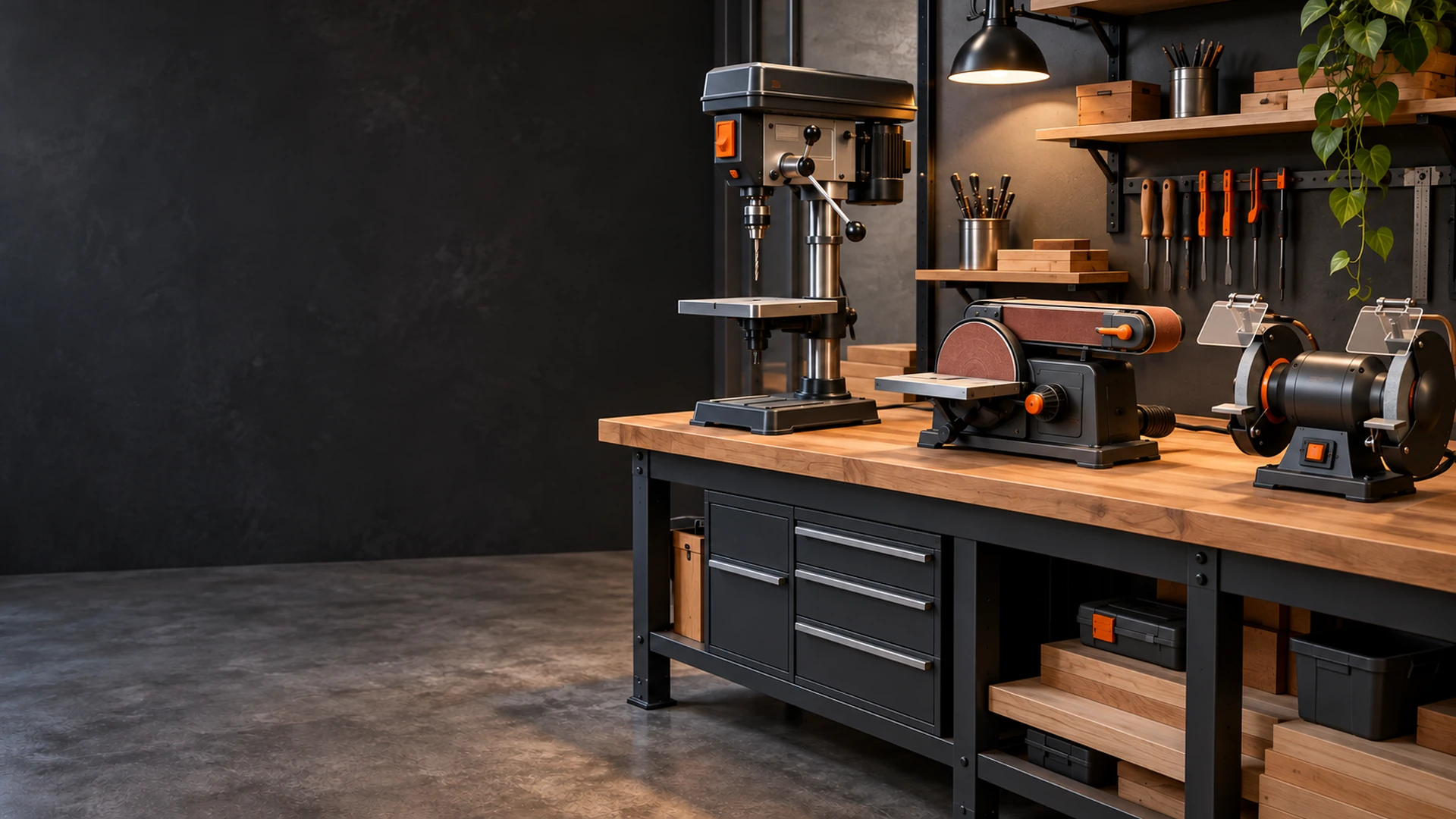
Workshop Machines
Explore hub →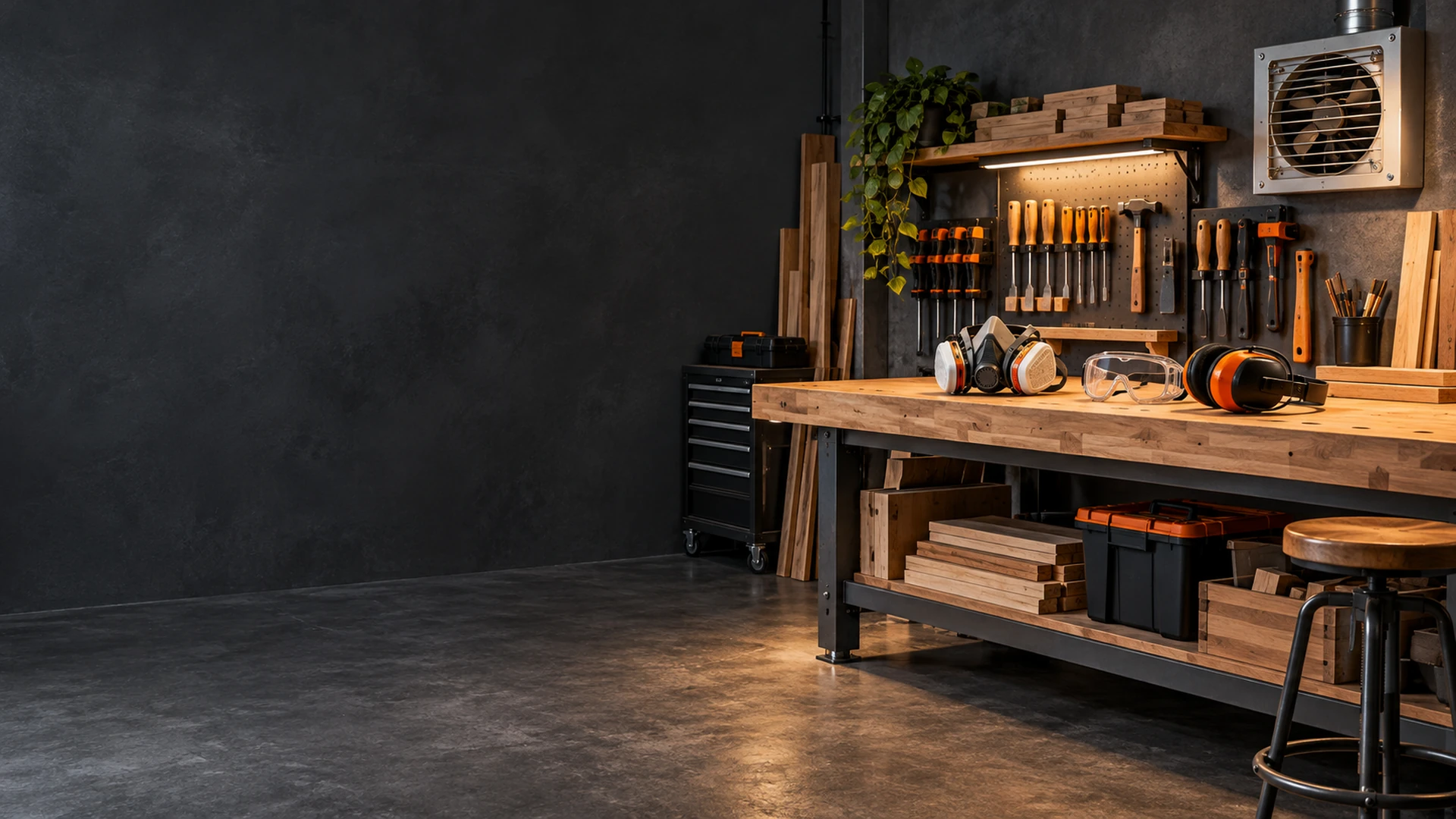
Safety & Climate Control
Explore hub →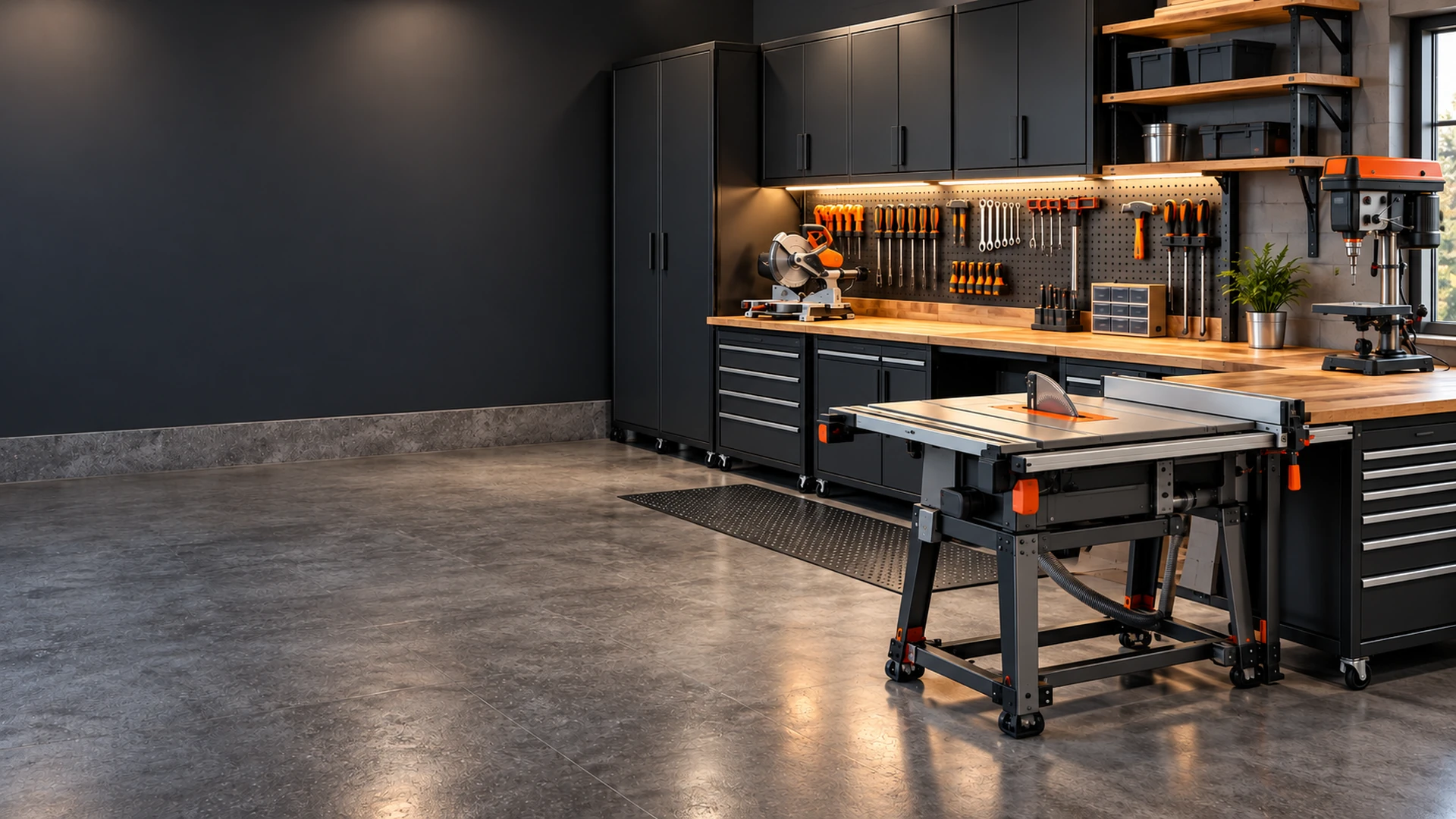
Garage & Workshop Setup
Explore hub →
Air Compressors & Pneumatics
Explore hub →
Precision Cutting Systems
Explore hub →