Air supply, pneumatic tools & workshop setup
Air Compressors & Pneumatics
Choose an air system by delivered airflow, working pressure and how long your tools run—not tank gallons alone. Compare quiet and portable compressors, hose management, regulators, moisture control and compatible fittings.
Affiliate disclosure: As an Amazon Associate, WorkshopGearGuide may earn from qualifying purchases made through links on this page, at no additional cost to you.
Quick Answer: Which Compressor Setup Fits Your Tools?
Occasional brad nailing and inflation: a portable compressor can work if its delivered SCFM at the tool’s required pressure is sufficient. Continuous sanding or spraying: calculate sustained air demand first; a larger tank cannot compensate for inadequate pump output. Shared garage: compare published sound ratings at comparable distances and duty cycles. Wet air or inconsistent tool performance: inspect hose pressure loss, regulators and filtration before replacing the compressor.
Start with the air demand
Four Air-System Decisions That Change What You Should Buy
The compressor, distribution hardware and air treatment solve different problems. Select the pump for airflow, then build the downstream system around the tools and work environment.
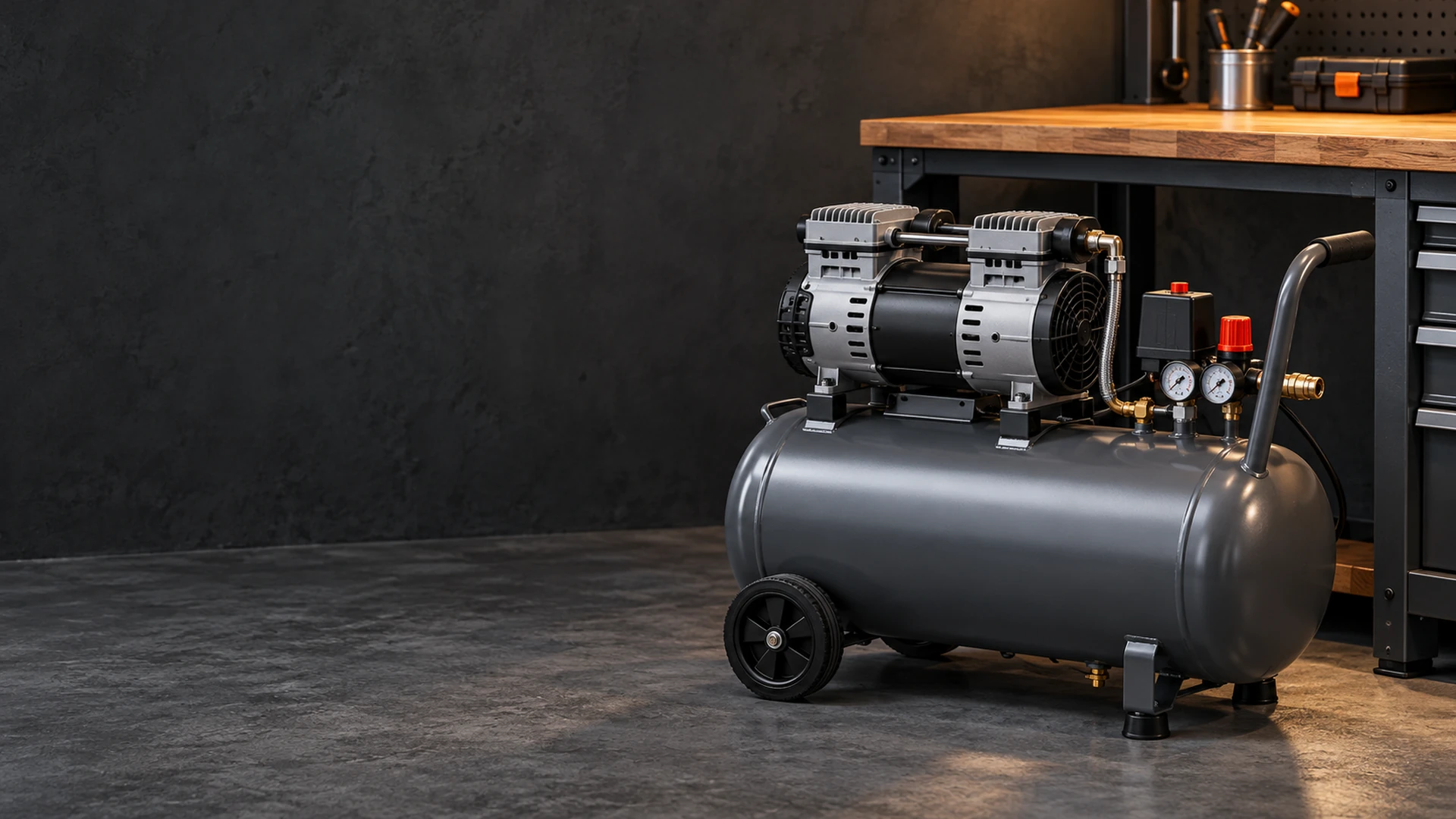
Quiet compressors for shared spaces
Compare measured sound ratings, SCFM at operating pressure and refill behavior. A quieter unit still needs enough sustained airflow for the job.
Read the buying guide →Portable compressors for intermittent work
For nailers, inflators and mobile tasks, compare carry weight, recovery rate, cord requirements and usable output rather than tank size alone.
Read the buying guide →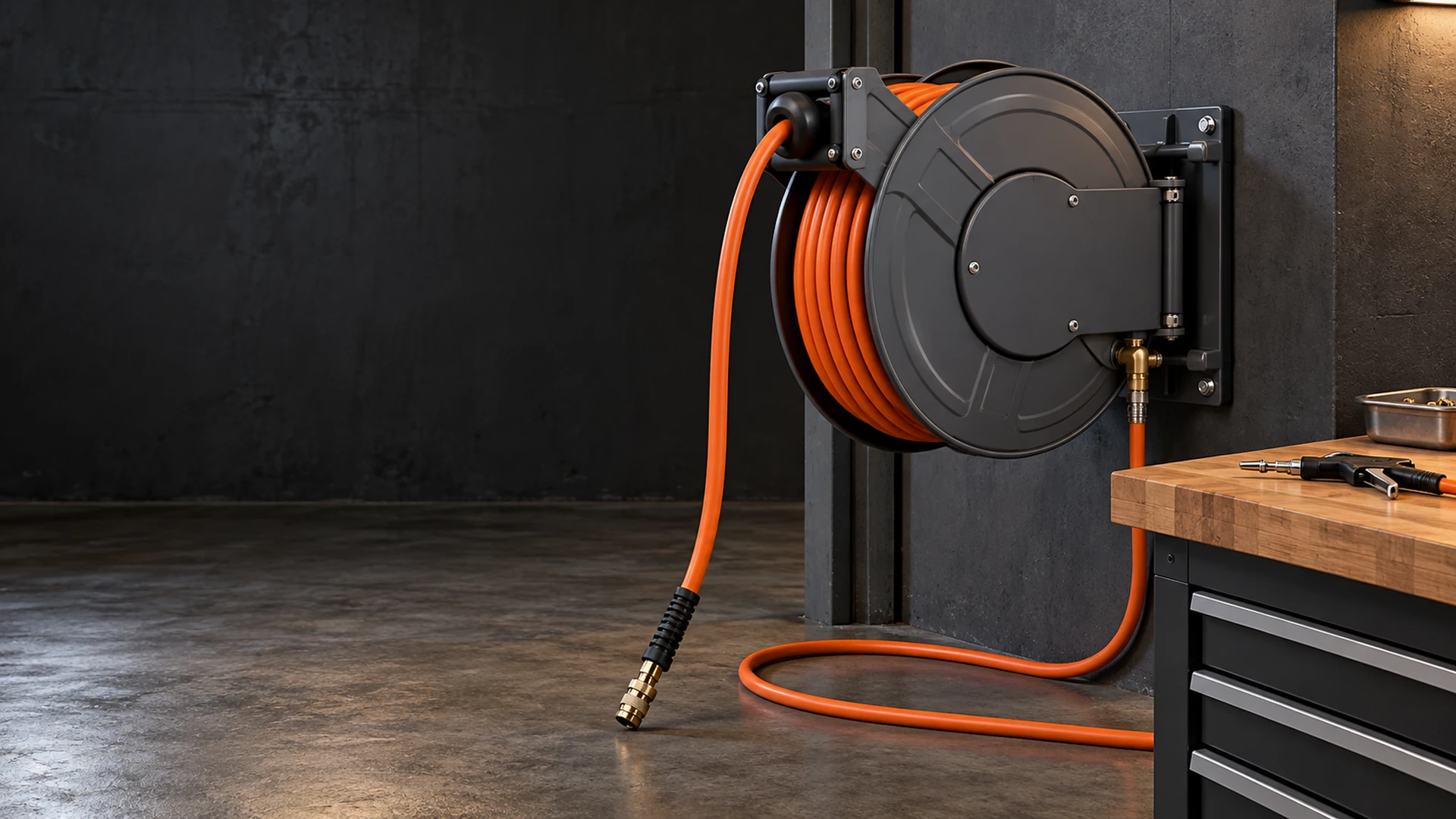
Hose reels and air delivery
Long, narrow hoses and restrictive couplers can reduce pressure at the tool. Choose reel capacity and hose bore for the actual run.
Read the buying guide →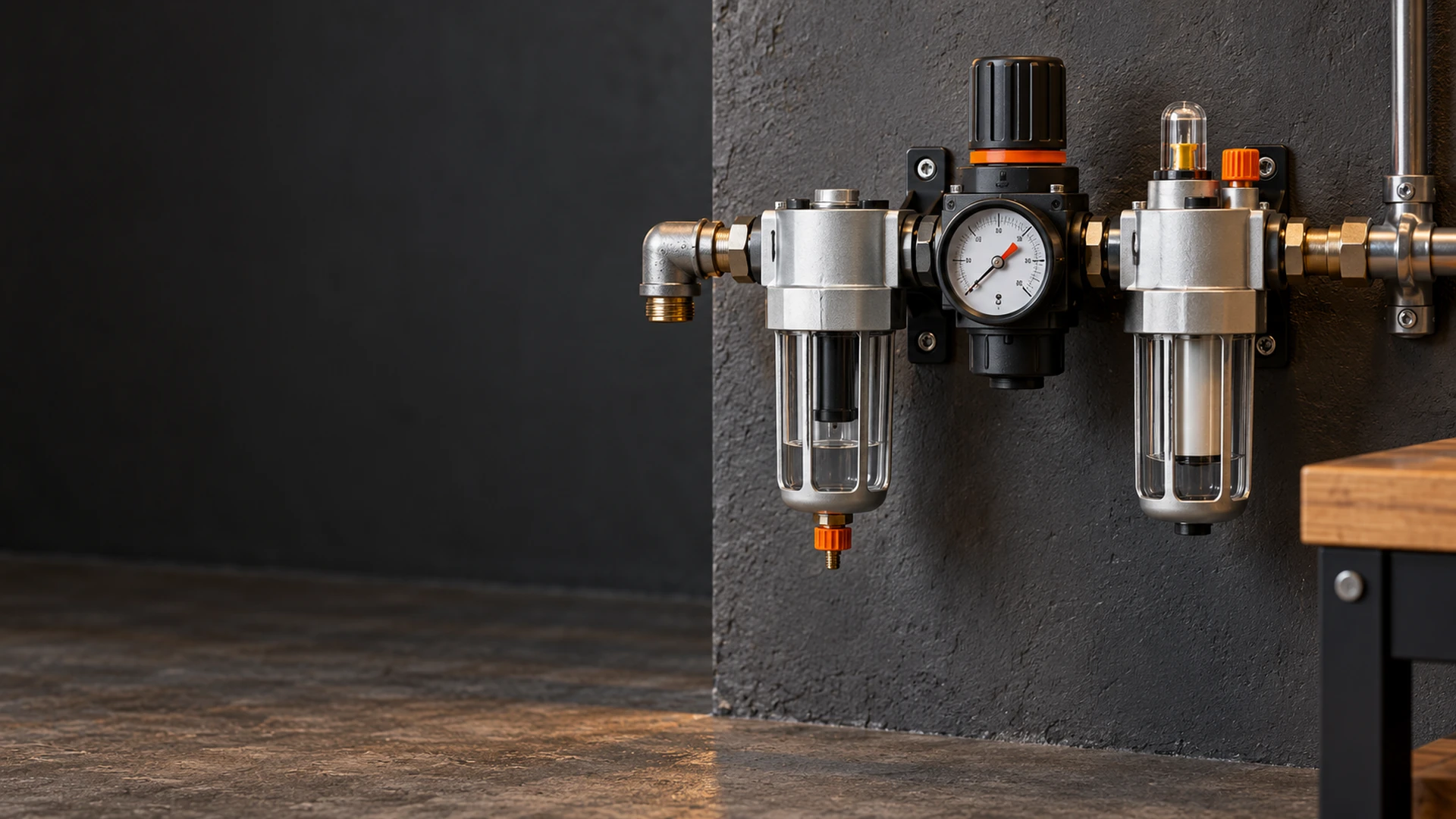
Dry, regulated air at the point of use
Regulators set tool pressure; separators and dryers address moisture. Their placement and maintenance depend on the application.
Read the buying guide →Before you order equipment
Six Specifications That Prevent a Bad Compressor Purchase
An air system must supply the tool at the required pressure, for the required duration, through real hoses and fittings. These checks catch mismatches that marketing horsepower and tank labels miss.
Browse the complete collection
Air Compressor & Pneumatic Buying Guides
Ten focused guides covering compressor selection, air delivery, pressure control and moisture treatment. Each addresses a different purchase or setup decision.
Choosing the compressor
Match compressor output and format to the tasks you perform.
Hoses and reels
Route air cleanly and reduce trips, tangles and pressure loss.
Pressure and air quality
Manage regulator settings, condensate and filtration needs.
Connections and sizing
Check compatibility and understand airflow versus storage.
A practical compressed-air plan
Build a Reliable Workshop Air Setup in Five Steps
1. Inventory the tools and usage pattern
List every pneumatic tool, its required PSI and air consumption, and whether it runs in bursts or continuously. For simultaneous tools, estimate combined demand.
2. Size for delivered airflow
Use the compressor’s delivered SCFM at the required pressure and confirm its duty-cycle limits. Treat receiver gallons as a buffer, not as an airflow rating.
3. Check the electrical and physical location
Confirm the outlet and circuit requirements, cooling clearance, vibration, access to the drain and safe hose routing. Avoid enclosing the pump without approved ventilation.
4. Choose hose bore, reel and couplers
Account for the longest run and the flow rate. Restrictive fittings and narrow hoses can starve tools even when the tank gauge looks adequate.
5. Add regulation and moisture treatment
Set pressure according to the tool manual, drain the tank, and add a separator or dryer when the process requires it. Verify filter flow and maintenance intervals.
For broader planning, see the garage workshop setup and workbenches and workstations hubs.
Choose by the pneumatic problem you need to solve
Need a compact all-purpose unit? Start with home-workshop compressors. A quiet shared garage? Compare quiet models. Pressure fluctuations or wet lines? Check regulators and water separators before buying a larger machine.
Common air-system questions
Air Compressor & Pneumatics FAQs
Is a bigger compressor tank enough for an air sander?
Not necessarily. Tank volume can delay a pressure drop, but a sander with sustained air demand needs sufficient delivered SCFM at its operating pressure and an appropriate compressor duty cycle.
What does SCFM at 90 PSI tell me?
It describes standardized airflow delivery at a stated pressure, making it more useful for matching tools than tank gallons or advertised peak horsepower. Compare ratings measured at the same pressure.
Why does my impact wrench feel weak when the tank gauge is full?
Pressure can fall across a long or undersized hose, couplers, regulator or clogged filter while air is flowing. Check the tool inlet pressure under load and confirm the compressor can sustain the required flow.
Do I need a water separator or an air dryer?
A separator helps remove liquid water that has condensed in the line; a dryer reduces moisture vapor further. Paint finishing and moisture-sensitive processes may require more treatment than occasional tire inflation.
Can I use compressed air to clean sawdust off my clothing?
No. Never direct compressed air at your body or clothing. OSHA’s workplace rule for compressed-air cleaning requires less than 30 psi at the nozzle under specified conditions, effective chip guarding and appropriate PPE; vacuuming is often the better approach.
Continue building the workshop
Related Workshop Equipment Hubs
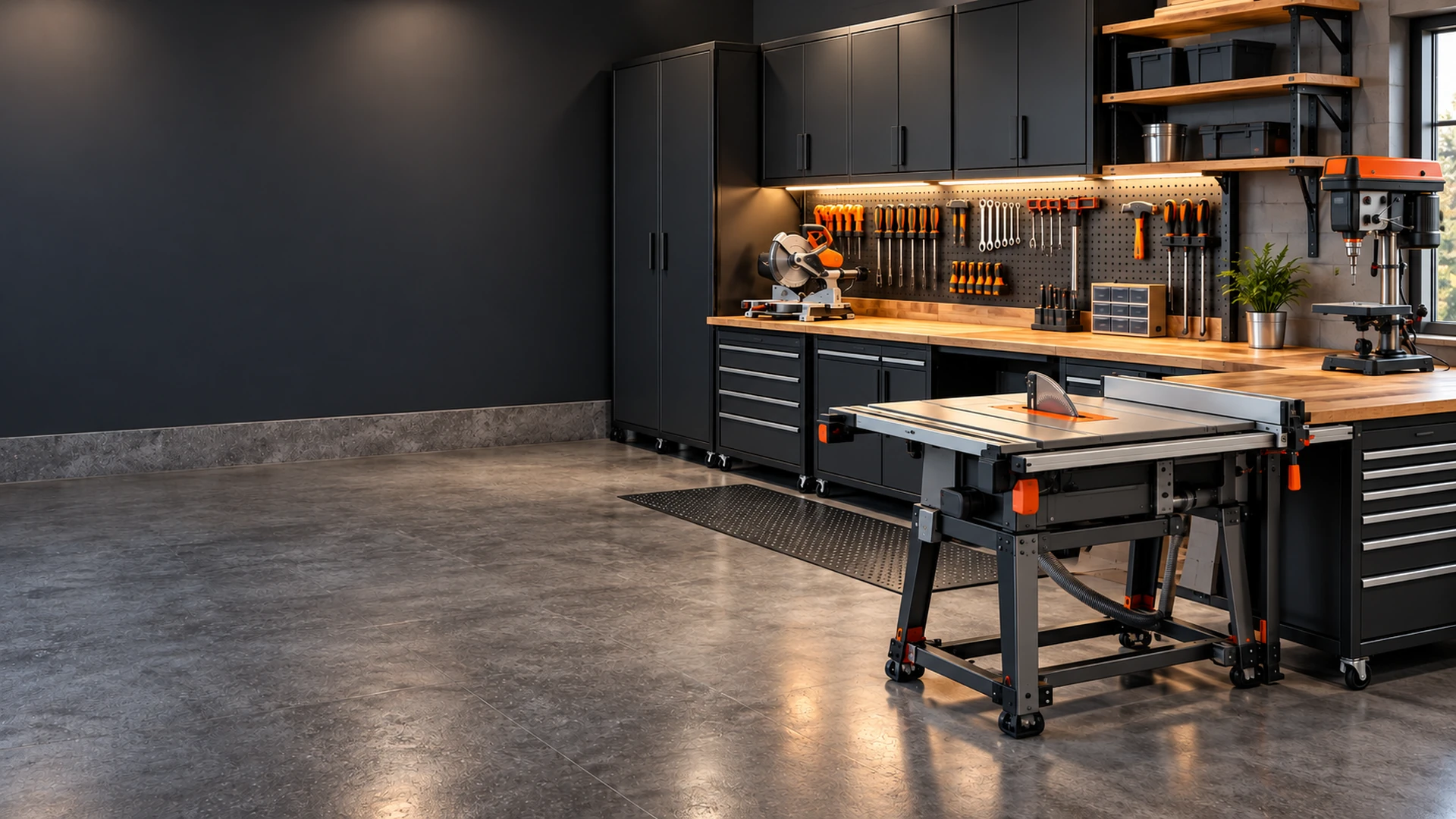
Garage & Workshop Setup
Explore hub →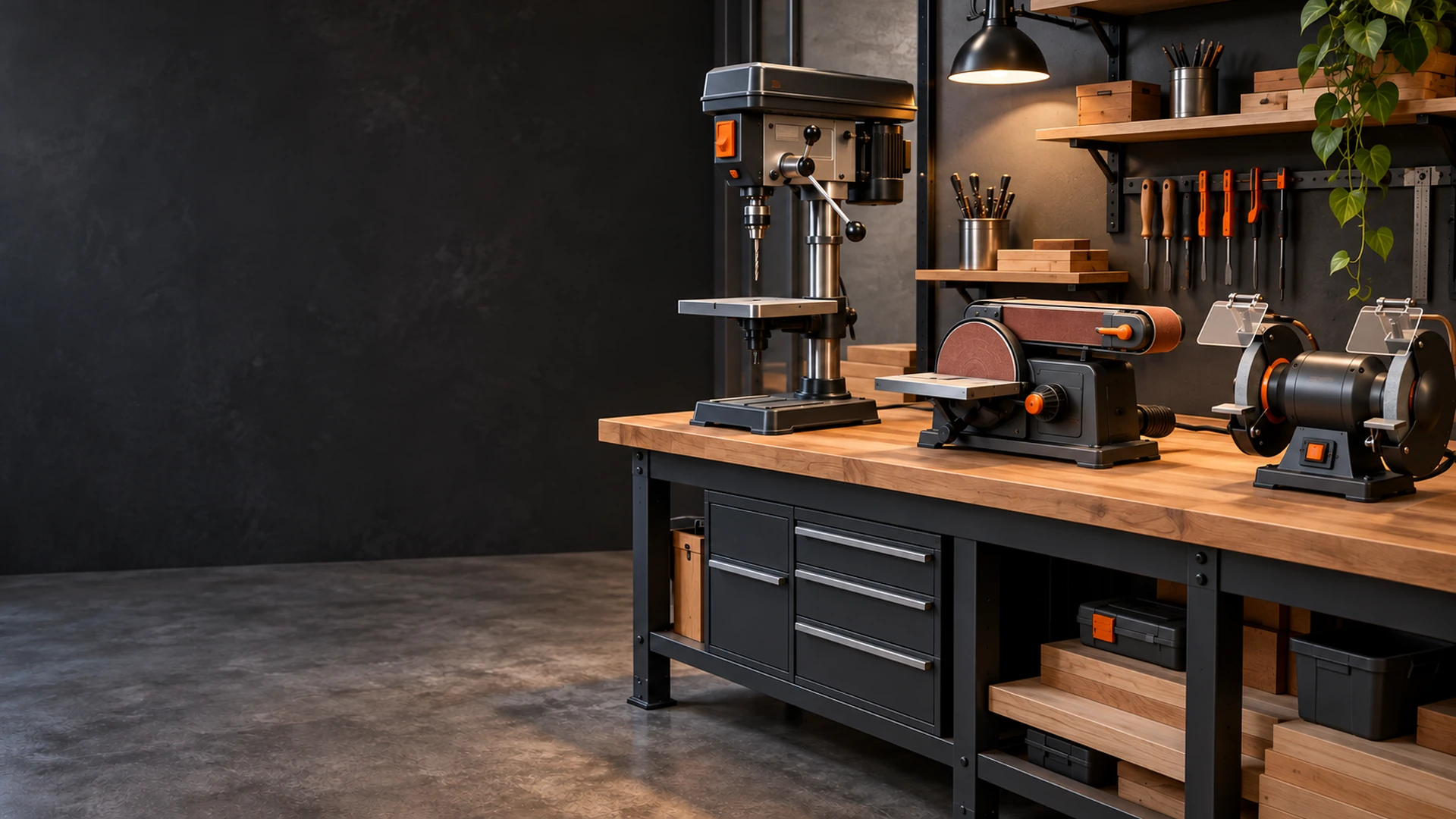
Workshop Machines
Explore hub →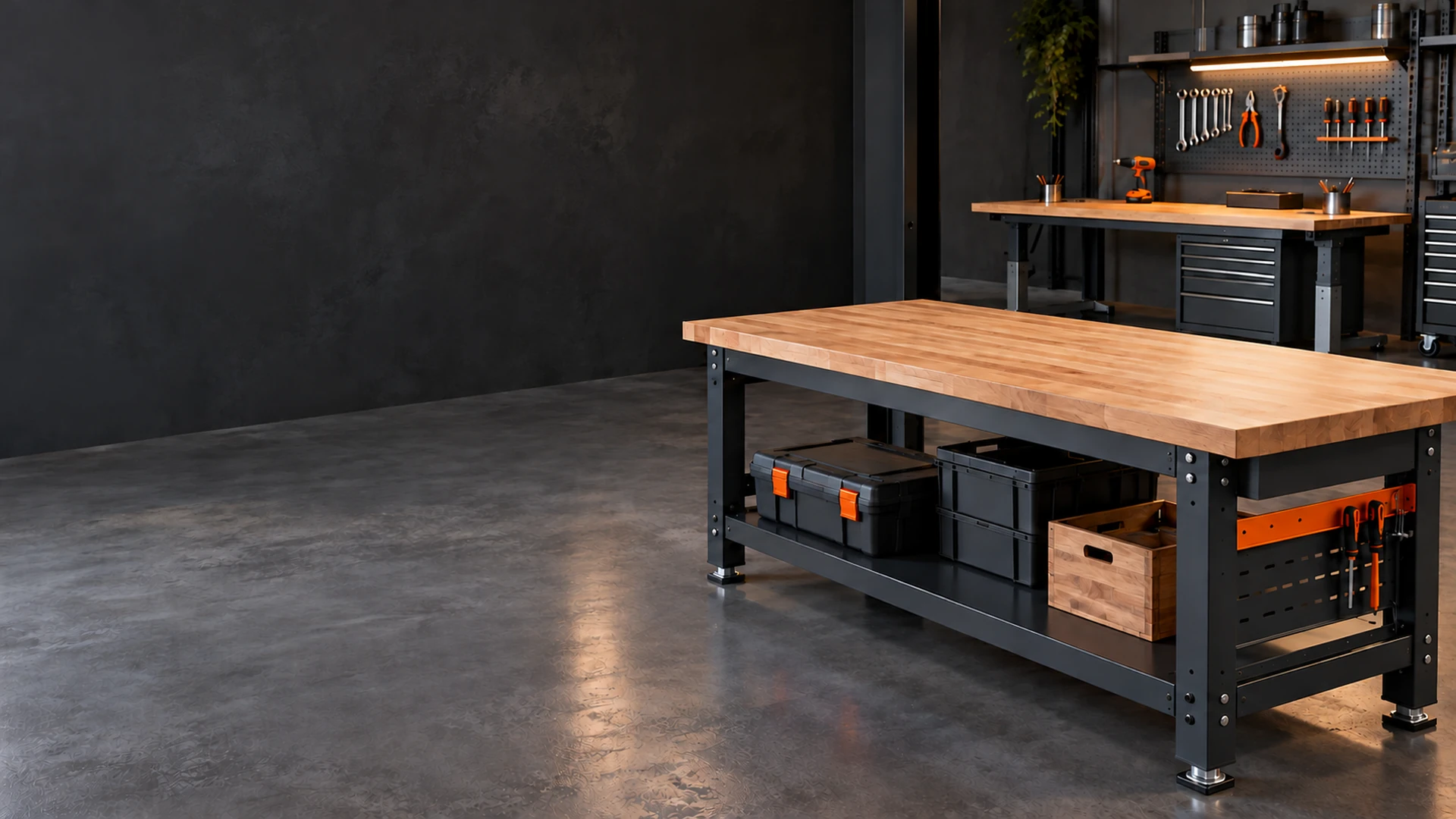
Workbenches & Workstations
Explore hub →
Lighting & Electrical
Explore hub →
Tool Storage & Organization
Explore hub →