
Best Cyclone Dust Separators for Workshop Vacuums
Choose a cyclone pre-separator to keep chips and sawdust out of your shop vacuumuum filter. Compare DIY cones, compact complete kits, and high-capacity drums by fittings and installation needs.
Compare Shop Vac OptionsCompare Six ModelsAffiliate disclosure: As an Amazon Associate, WorkshopGearGuide may earn from qualifying purchases made through qualifying links, at no additional cost to you. Retailer specification links below are provided for verification and are not represented as Amazon offers.
Quick answer
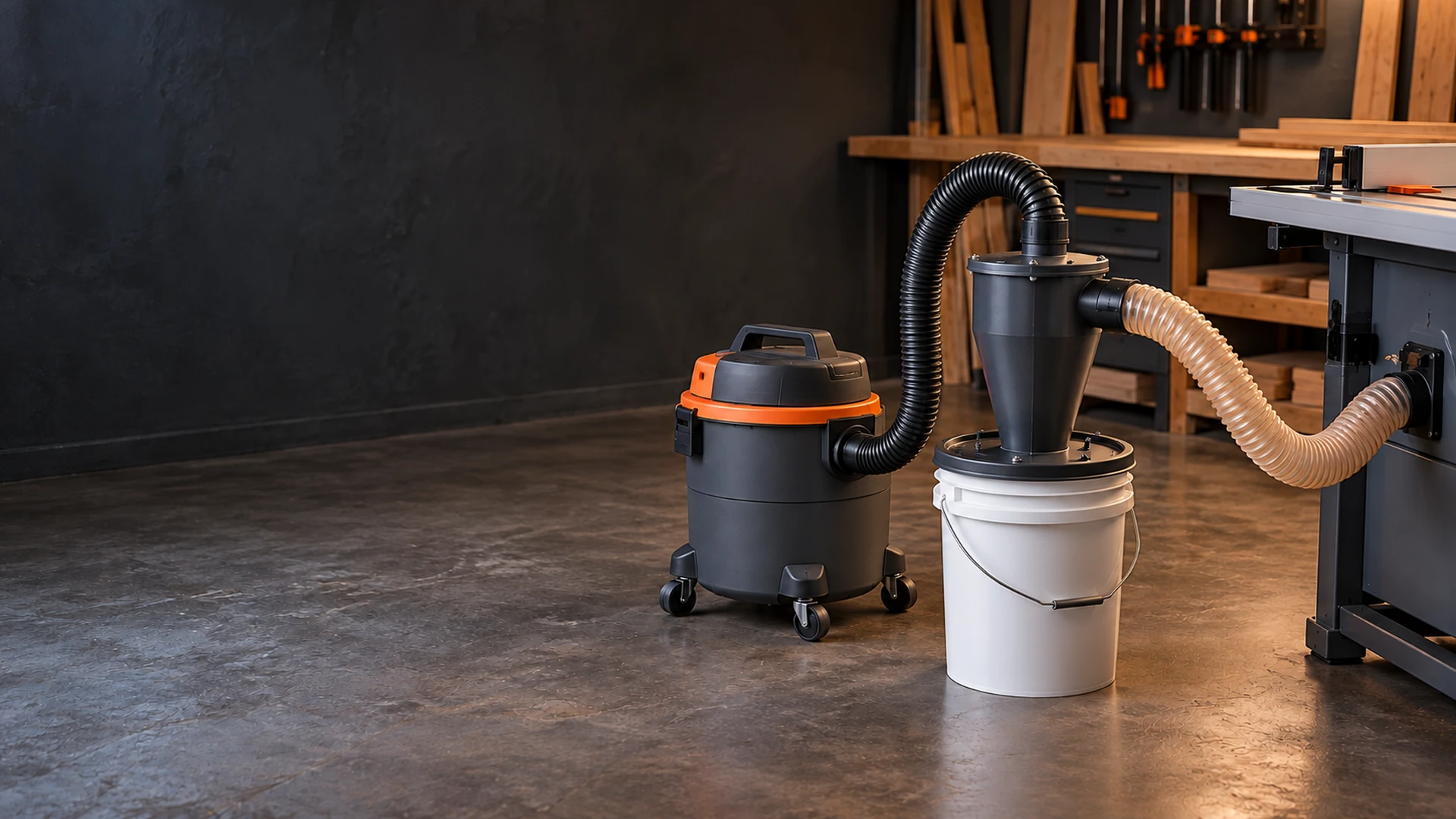
A cyclone separator belongs upstream of a compatible vacuum, where it drops most chips and dust into a separate container before they reach the filter. Choose the Oneida Dust Deputy 2.5 Deluxe 5-Gallon for a ready-made compact system, the DIY model for a custom reinforced bin, or the Low-Pro for limited headroom. A cyclone does not replace certified filtration or adequate airflow.
Compare cyclone dust separators by bin, hose fit and installation
Compare complete kits against cyclone-only parts. A sealed container, matched hoses and adequate vacuum airflow matter more than a manufacturer separation percentage alone.
| Vacuum / capacity | Best workshop task | Collection setup | Main limitation | Shop Options |
|---|---|---|---|---|
| Oneida Dust Deputy 2.5 DIY | DIY cyclone | Custom bin | 2.5-in vacuum hoses | Check Prices |
| Oneida Dust Deputy 2.5 Plus | Bucket upgrade | 5-gal bucket (not included) | 2.5-in vacuum hoses | Check Prices |
| Oneida Dust Deputy 2.5 Deluxe 5-Gallon | Compact complete kit | 5 gal | 2.5-in vacuum hoses | Check Prices |
| Oneida Dust Deputy 2.5 Deluxe 10-Gallon | Medium capacity | 10 gal steel drum | 2.5-in vacuum hoses | Check Prices |
| Oneida Dust Deputy 2.5 Deluxe 17-Gallon | High-capacity kit | 17 gal steel drum | 2.5-in vacuum hoses | Check Prices |
| Oneida Dust Deputy Low-Pro | Under-bench fit | 5 gal or DIY bin | 2.5-in vacuum hoses | Check Prices |
Amazon links are product-category searches. Specific models sold by exclusive retailers may not be available on Amazon; verify model numbers before purchasing.
Six cyclone separator configurations reviewed
These six configurations emphasize installation trade-offs, bin capacity and vacuum compatibility. They are not six independent manufacturer performance tests.
Oneida Dust Deputy 2.5 DIY
Model / configuration: Oneida Dust Deputy 2.5 DIY
Published configuration: Cyclone, gasket, mounting hardware.
Builder supplying an airtight reinforced container. Check hose cuffs and available space before choosing this setup.
Why consider it: Cyclone, gasket, mounting hardware.
Trade-off: Requires custom bin, sealed lid and hose adapters.
Best suited to: Builder supplying an airtight reinforced container.
Oneida Dust Deputy 2.5 Plus
Model / configuration: Oneida Dust Deputy 2.5 Plus
Published configuration: Cyclone, molded lid and hose.
Owners with an existing compatible five-gallon bucket. Check hose cuffs and available space before choosing this setup.
Why consider it: Cyclone, molded lid and hose.
Trade-off: Bucket, dolly and vacuum must be sourced separately.
Best suited to: Owners with an existing compatible five-gallon bucket.
Oneida Dust Deputy 2.5 Deluxe 5-Gallon
Model / configuration: Oneida Dust Deputy 2.5 Deluxe 5-Gallon
Published configuration: Clear bucket, casters and hose.
Small shops wanting a complete wheeled pre-separator. Check hose cuffs and available space before choosing this setup.
Why consider it: Clear bucket, casters and hose.
Trade-off: Taller assembly needs space beside the vacuum.
Best suited to: Small shops wanting a complete wheeled pre-separator.
Product specifications: Oneida Dust Deputy 2.5 Deluxe 5-Gallon
Oneida Dust Deputy 2.5 Deluxe 10-Gallon
Model / configuration: Oneida Dust Deputy 2.5 Deluxe 10-Gallon
Published configuration: Steel drum, dolly and hose.
Longer cleanup sessions without frequent bin emptying. Check hose cuffs and available space before choosing this setup.
Why consider it: Steel drum, dolly and hose.
Trade-off: More floor space and weight than a five-gallon kit.
Best suited to: Longer cleanup sessions without frequent bin emptying.
Product specifications: Oneida Dust Deputy 2.5 Deluxe 10-Gallon
Oneida Dust Deputy 2.5 Deluxe 17-Gallon
Model / configuration: Oneida Dust Deputy 2.5 Deluxe 17-Gallon
Published configuration: Steel drum, casters and hose.
High debris volume in a shop-vac based system. Check hose cuffs and available space before choosing this setup.
Why consider it: Steel drum, casters and hose.
Trade-off: Large footprint; vacuum still determines usable suction.
Best suited to: High debris volume in a shop-vac based system.
Product specifications: Oneida Dust Deputy 2.5 Deluxe 17-Gallon
Oneida Dust Deputy Low-Pro
Model / configuration: Oneida Dust Deputy Low-Pro
Published configuration: Low-profile cyclonic lid.
Shops with restricted vertical clearance. Check hose cuffs and available space before choosing this setup.
Why consider it: Low-profile cyclonic lid.
Trade-off: Check chosen DIY versus Deluxe kit contents.
Best suited to: Shops with restricted vertical clearance.
Six checks before buying a cyclone separator
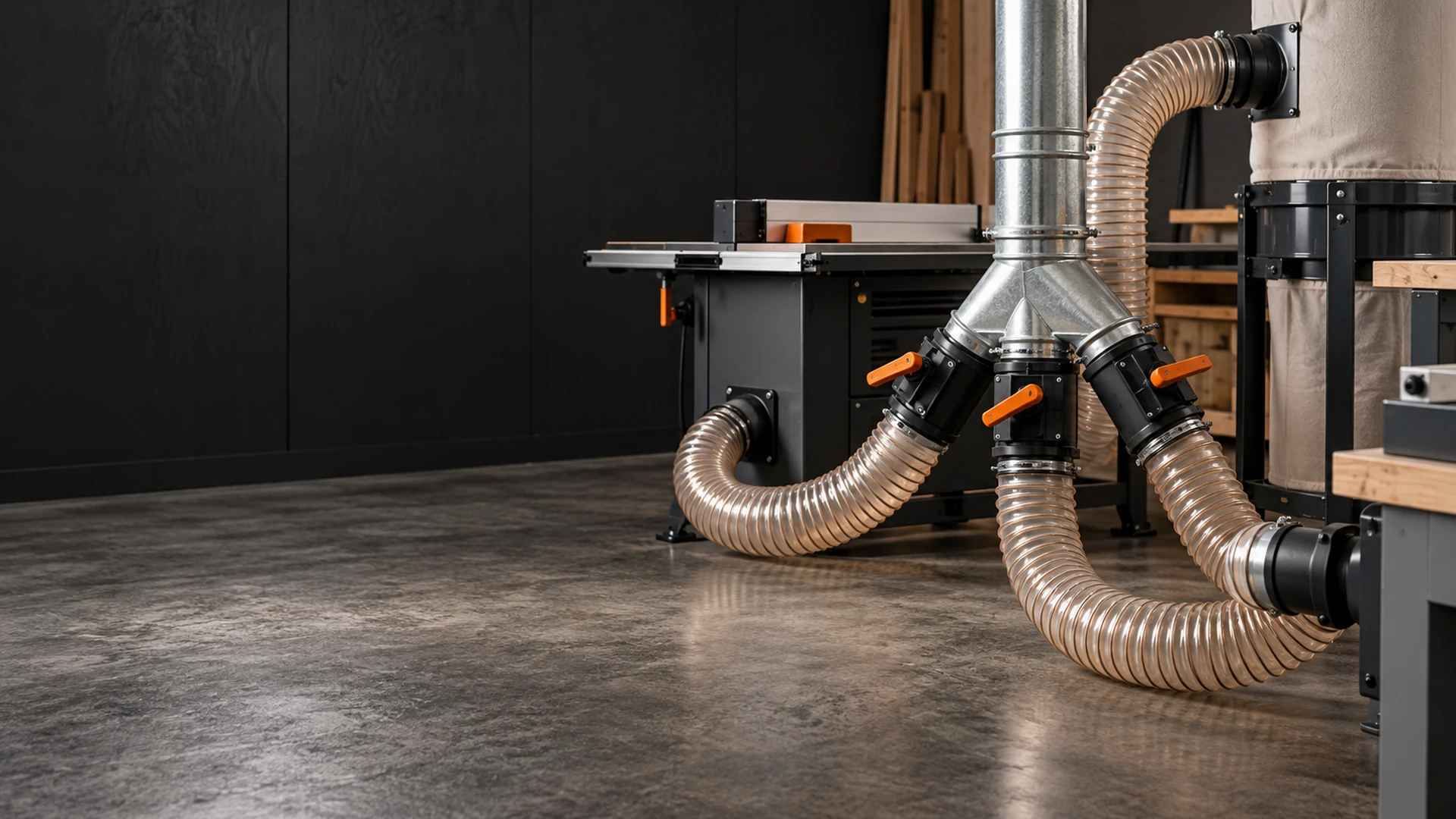
Check nominal and actual port diameters. Vacuum cuffs are not standardized across every brand.
Thin buckets can collapse under high vacuum; use a reinforced container with a gasketed lid.
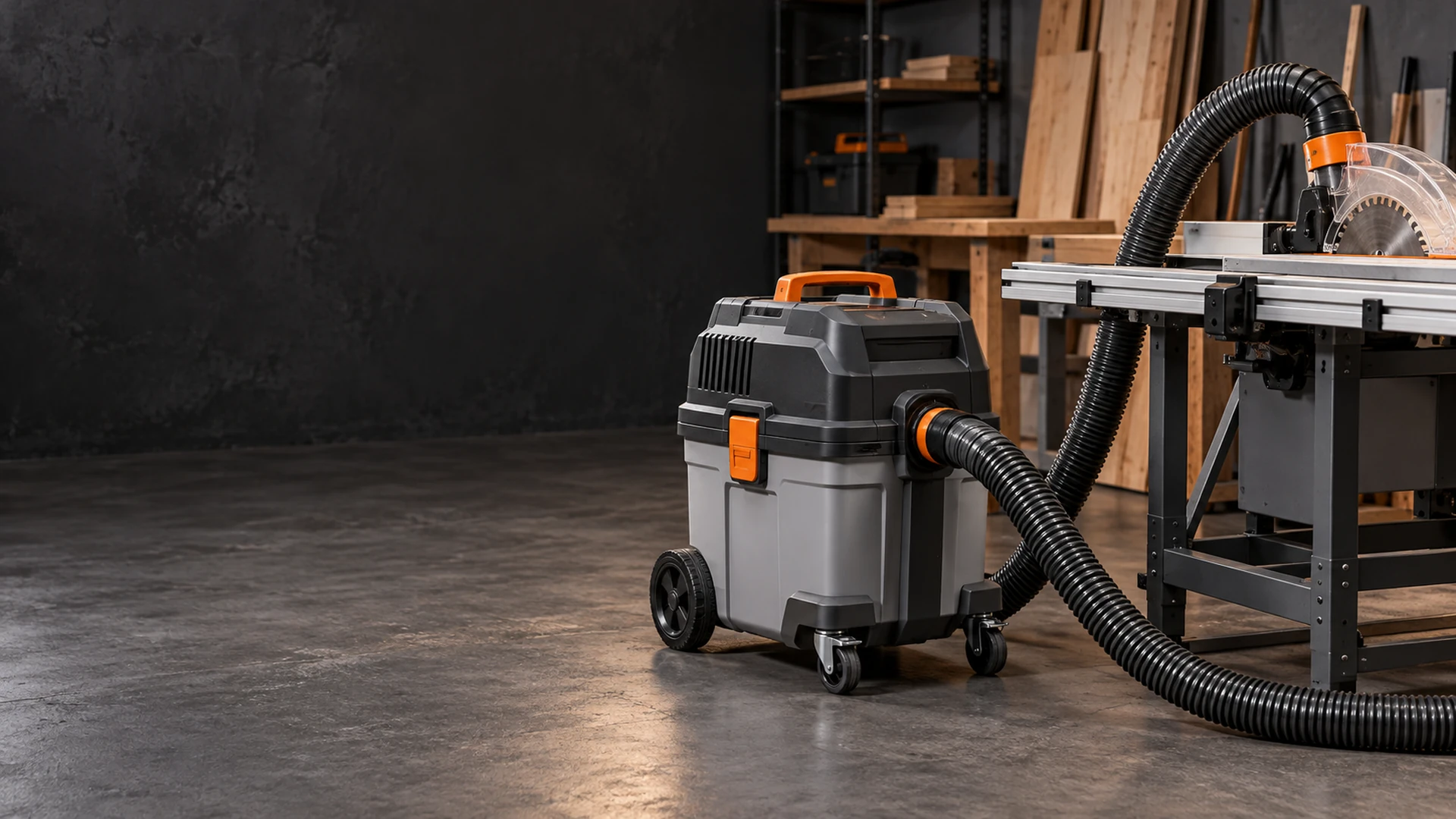
Cyclones pre-separate debris; the downstream vacuum still needs a suitable filter and safe exhaust.
Allow enough height to lift off the lid or release a drum clamp without disassembling hoses.
A top-heavy cyclone can overturn a lightweight bin; consider a wheeled base or vacuum tether.
Separate wood chips and dust upstream to reduce filter loading, not to eliminate filter maintenance.
How to choose a cyclone for your workshop
Start with your vacuum inlet
Confirm the inlet and hose cuffs before ordering. A 2.5-inch nominal port may need an adapter.
Choose a realistic collection capacity
Five gallons suits intermittent sanding and bench cleanup; ten- and seventeen-gallon drums reduce emptying.
Understand pressure losses and filtration
Each added hose, elbow and cyclone adds resistance. The vacuum still needs adequate airflow at the tool.
Plan for hoses, adapters and sealing
Account for container sealing, adapter costs, lid strength and where the vacuum and bin will park.
Compare current cyclone separator options
Compare complete cyclone kits and DIY components. Check the current model number, included drum and connection sizes before ordering.
Compare Shop VacsCompare Fine-Dust OptionsHow we evaluated cyclone separators
This guide compares manufacturer-listed port sizes, kit contents, collection capacity, installation footprint and material choices. It does not claim measured shop airflow or independently verified capture rates.
What manufacturer claims can establish
A quoted separation efficiency is a controlled manufacturer claim. Actual performance depends on particle size, airflow, leaks, hose geometry and the filter downstream.
This guide compares manufacturer-listed port sizes, kit contents, collection capacity, installation footprint and material choices. It does not claim measured shop airflow or independently verified capture rates.
What to verify on your own setup
- Tank capacity and ease of emptying.
- Hose diameter, reach and tool-port fit.
- Filter, bag and automatic-cleaning options.
- Wet/dry operating requirements and service parts.
- Expansion: compatible top chests and side cabinets where documented.
Three cyclone separator measurements to check
Match the separator to the vacuum inlet, not simply the tool port.
Bin capacity is a convenience metric; a larger drum does not increase vacuum suction.
Which cyclone setup fits your workshop?
The complete five-gallon kit is a straightforward choice for a small garage shop.
A wheeled five-gallon bucket and hose for smaller shops.
Read this reviewMount the cone to a reinforced sealed container.
Read this reviewLarge steel drum for high chip volumes.
Read this reviewA lower-profile option for under-bench layouts.
Review this configurationFive cyclone separator mistakes to avoid
Using a weak bucket that collapses under vacuum.
Assuming a cyclone is a HEPA filter or a substitute for safe dust controls.
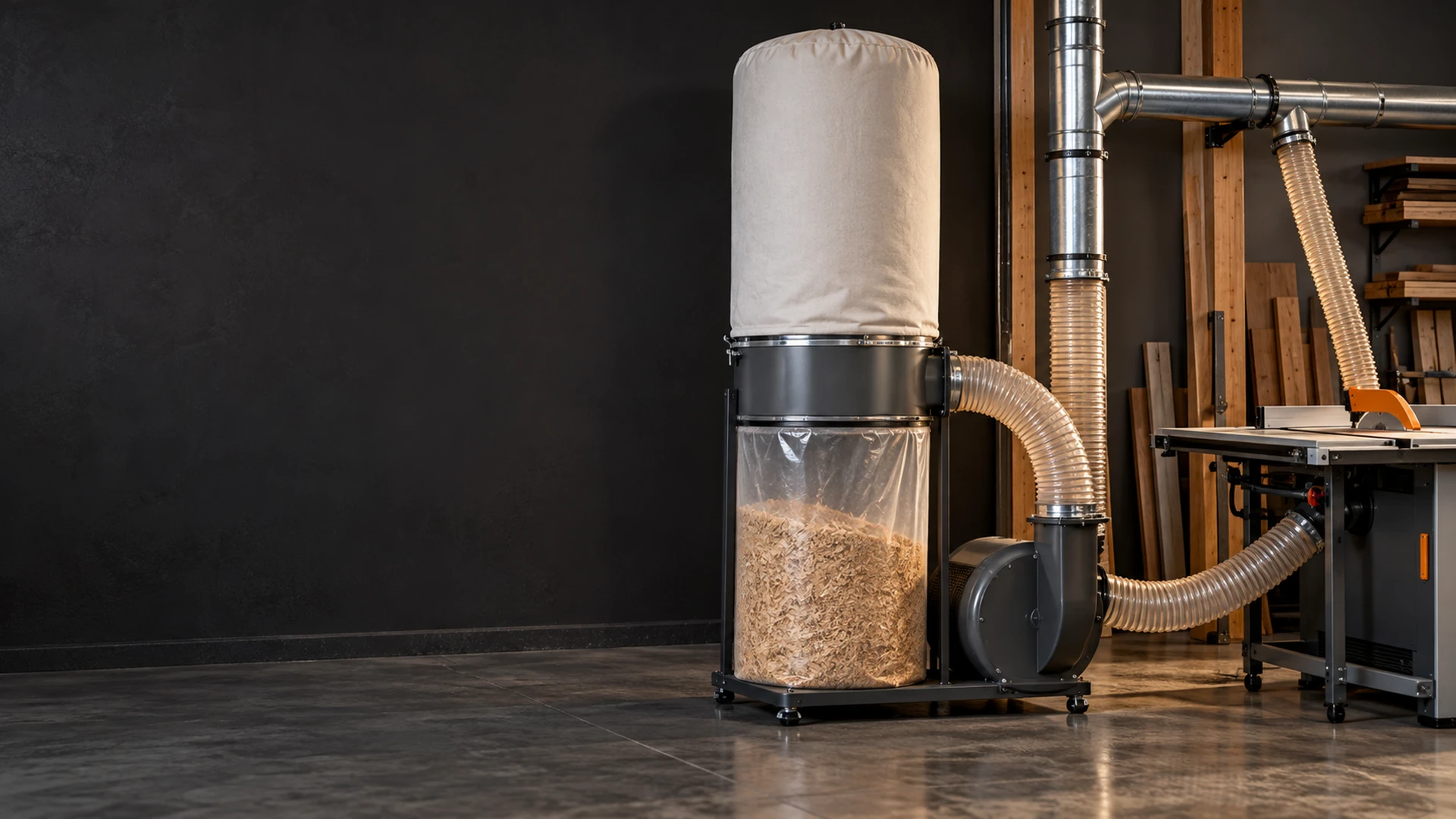
Connecting a small shop-vac cyclone to a four-inch low-pressure dust collector.
Ignoring air leaks and air leaks around the drum lid.
Buying a tall cyclone without measuring workshop clearance.
Cyclone dust separator questions answered
How does a cyclone separator work?
A cyclone spins incoming debris so heavier particles fall into a bin before air reaches the vacuum. It reduces filter loading but cannot guarantee all fine dust is captured.
Does a cyclone replace a HEPA filter?
No. A cyclone removes bulk debris upstream, while a HEPA-rated filter captures particles in the exhaust stream. Both can be useful together.
Can a 2.5-inch cyclone work with a four-inch dust collector?
Only if the separator and vacuum are designed for the required airflow and hose size. Small shop-vac cyclones are not direct substitutes for four-inch dust-collector cyclones.
What collection bucket should I use?
Choose a rigid airtight bucket or steel drum with a gasketed lid. Thin unreinforced buckets may collapse under suction.
Can I remove the shop vacuum filter after adding a cyclone?
No. Keep a suitable vacuum filter installed and follow the vacuum manufacturer instructions for hazardous dust.
Why does suction drop after adding a cyclone?
Leaks reduce useful suction and separation. Check lid seals, cuffs and elbows before assuming the vacuum is undersized.
When should I empty a cyclone bin?
Empty before debris reaches the cyclone outlet and clean the vacuum filter on the schedule appropriate to your materials.
Related workshop guides
Research notes & specification sources
Research uses primary Oneida Air Systems product documentation for each listed configuration. Manufacturer claims are identified as such; no independent dust-capture or airflow testing was performed.
Research uses primary Oneida Air Systems product documentation for each listed configuration. Manufacturer claims are identified as such; no independent dust-capture or airflow testing was performed.
- Oneida Dust Deputy 2.5 DIY product details
- Oneida Dust Deputy 2.5 Plus product details
- Oneida Dust Deputy 2.5 Deluxe 5-Gallon product details
- Oneida Dust Deputy 2.5 Deluxe 10-Gallon product details
- Oneida Dust Deputy 2.5 Deluxe 17-Gallon product details
- Oneida Dust Deputy Low-Pro product details
Research uses primary Oneida Air Systems product documentation for each listed configuration. Manufacturer claims are identified as such; no independent dust-capture or airflow testing was performed.