
Shop Vac vs Dust Extractor vs Dust Collector: Which Workshop System Fits?
Choose the right suction and airflow system for sanding, machine chips, and cleanup without confusing filter ratings or maximum CFM.
Compare dust-control systemsCompare dust-control systemsAffiliate disclosure: As an Amazon Associate, WorkshopGearGuide may earn from qualifying purchases made through qualifying links, at no additional cost to you. Retailer specification links below are provided for verification and are not represented as Amazon offers.
Quick answer
Choose by the tool and the material, not by the word “vacuum.” A shop vacuum is versatile for cleanup and small ports; a dust extractor adds tool controls and fine-dust filtration; a dust collector moves larger air volumes through wider ducts for stationary machines. A cyclone is an accessory, not a replacement for a filter.
Shop vac vs extractor vs collector: practical comparison
These six examples cover three system classes plus a vacuum cyclone accessory. Published maximum CFM figures use different test conditions and must not be treated as installed airflow at the tool.
| System / example | Rated airflow | Port / connection | Filtration approach | Shop Options |
|---|---|---|---|---|
| Wet/dry shop vacuum with fine-dust filter Floor cleanup and occasional single-tool use | Model-dependent | Usually small hose | Verify filter and bag | Check Prices |
| Bosch VAC090AH HEPA Dust Extractor Sanding, drilling and tool-triggered extraction | 150 CFM max | Tool hose and adapter | HEPA; automatic cleaning | Check Prices |
| Festool CT 26 EI HEPA Dust Extractor Frequent sanding and compatible handheld tools | 138 CFM max | Tool-focused hose | HEPA system | Check Prices |
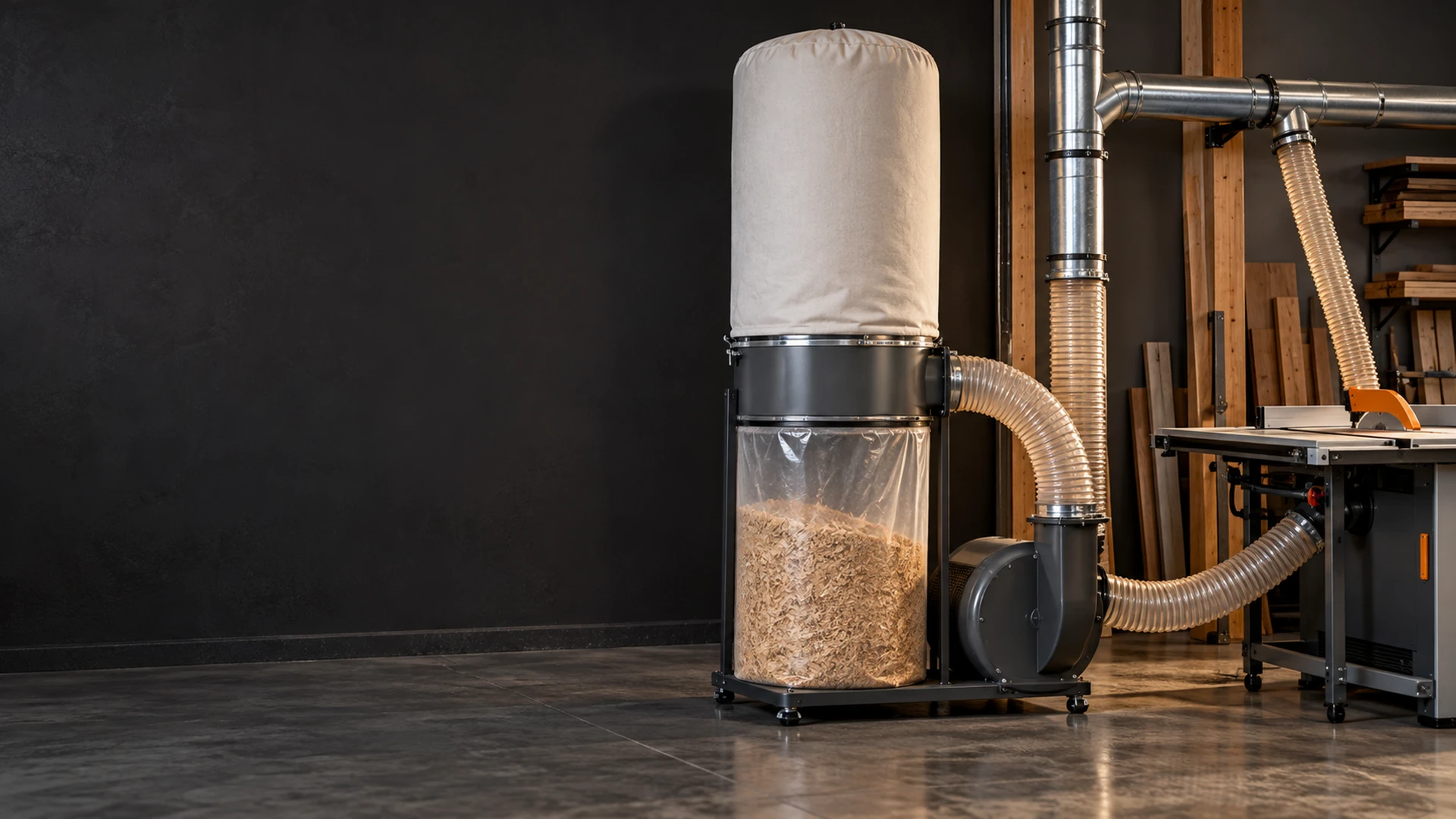
| JET DC-1100VX-5M Dust Collector Table saws and larger woodworking machines | 1,100 CFM max | 4-inch dual or 6-inch | 5-micron bag | Check Prices |
| JET DC-1100VX-CK Canister Collector High-volume machine capture with a canister | 1,100 CFM max | 4-inch dual or 6-inch | 2-micron canister | Check Prices |
| Oneida Dust Deputy Vacuum Cyclone Reducing debris reaching a shop-vac filter | Depends on vacuum | Small vacuum hose | Not a final filter | Check Prices |
Amazon links are product-category searches. Specific models sold by exclusive retailers may not be available on Amazon; verify model numbers before purchasing.
Detailed system and model evaluations
A wet/dry vacuum, a professional dust extractor and a woodworking dust collector solve different airflow problems. The examples below are not six interchangeable machines; one is explicitly a cyclone accessory.
Wet/dry shop vacuum with fine-dust filter
Example: Category example: standard wet/dry vacuum
Published configuration: Shop vacuum; Model-dependent; Verify filter and bag.
Compact, portable and adaptable for sweeping debris, but filtration depends on the exact filter, bag and seal. The appropriate selection depends on actual tool port diameter, hose length, filter maintenance and the type of debris produced.
Why consider it: Compact, portable and adaptable for sweeping debris, but filtration depends on the exact filter, bag and seal.
Trade-off: Small hoses restrict the volume needed at many large woodworking machines.
Best suited to: Floor cleanup and occasional single-tool use
Bosch VAC090AH HEPA Dust Extractor
Example: VAC090AH
Published configuration: Dust extractor; 150 CFM max; HEPA; automatic cleaning.
Bosch publishes 150 CFM maximum and 97 inches of water lift; automatic filter cleaning and tool activation are important for sustained fine-dust work. The appropriate selection depends on actual tool port diameter, hose length, filter maintenance and the type of debris produced.
Why consider it: Bosch publishes 150 CFM maximum and 97 inches of water lift; automatic filter cleaning and tool activation are important for sustained fine-dust work.
Trade-off: The 9-gallon gross canister and small tool hose do not replace a high-volume 4-inch machine collector.
Best suited to: Sanding, drilling and tool-triggered extraction
Festool CT 26 EI HEPA Dust Extractor
Example: CT 26 EI HEPA
Published configuration: Dust extractor; 138 CFM max; HEPA system.
Published 138 CFM maximum, 96-inch water lift and 6.9-gallon container make this a tool-oriented extraction option, not a machine ducting system. The appropriate selection depends on actual tool port diameter, hose length, filter maintenance and the type of debris produced.
Why consider it: Published 138 CFM maximum, 96-inch water lift and 6.9-gallon container make this a tool-oriented extraction option, not a machine ducting system.
Trade-off: Confirm hose and adapter fit with non-Festool tools; high-volume planer chips require a different setup.
Best suited to: Frequent sanding and compatible handheld tools
JET DC-1100VX-5M Dust Collector
Example: DC-1100VX-5M
Published configuration: Dust collector; 1,100 CFM max; 5-micron bag.
JET lists a 1.5 HP motor, 4-inch dual or 6-inch inlet arrangement, and 1,100 CFM maximum rated airflow for high-volume chip transport. The appropriate selection depends on actual tool port diameter, hose length, filter maintenance and the type of debris produced.
Why consider it: JET lists a 1.5 HP motor, 4-inch dual or 6-inch inlet arrangement, and 1,100 CFM maximum rated airflow for high-volume chip transport.
Trade-off: A 5-micron bag rating is not equivalent to HEPA filtration; maximum free-air flow is not delivered at the tool.
Best suited to: Table saws and larger woodworking machines
JET DC-1100VX-CK Canister Collector
Example: DC-1100VX-CK
Published configuration: Dust collector; 1,100 CFM max; 2-micron canister.
This JET configuration shares the published 1,100 CFM maximum rating and uses a 2-micron canister instead of the 5-micron bag option. The appropriate selection depends on actual tool port diameter, hose length, filter maintenance and the type of debris produced.
Why consider it: This JET configuration shares the published 1,100 CFM maximum rating and uses a 2-micron canister instead of the 5-micron bag option.
Trade-off: The micron rating alone does not establish HEPA performance or measured whole-system capture efficiency.
Best suited to: High-volume machine capture with a canister
Oneida Dust Deputy Vacuum Cyclone
Example: Original Dust Deputy separator
Published configuration: Pre-separator only; Depends on vacuum; Not a final filter.
The standard Dust Deputy is designed for high-pressure, low-flow wet/dry vacuums; it separates debris upstream of the vacuum. The appropriate selection depends on actual tool port diameter, hose length, filter maintenance and the type of debris produced.
Why consider it: The standard Dust Deputy is designed for high-pressure, low-flow wet/dry vacuums; it separates debris upstream of the vacuum.
Trade-off: Not a stand-alone extractor and not compatible as a substitute for a 4-inch high-flow dust collector cyclone.
Best suited to: Reducing debris reaching a shop-vac filter
Six checks before choosing dust extraction
Match the tool port diameter to the system hose before buying adapters.
Sanders favor sustained suction through a small hose; saws and planers need larger airflow.
Read maximum CFM alongside static pressure, hose diameter and system losses.
Use the specified dust bag and filter; a micron label alone does not establish HEPA performance.
Check automatic tool activation, filter cleaning and electrical circuit limits.
Plan for chip volume, collection-bin access and safe filter disposal.
Choose by the dust-producing task
Orbital sanding and small handheld ports
A dust extractor with a compatible hose, tool activation and an appropriate filter is the sensible starting point. Confirm the tool maker’s dust-control requirements.
Table saw, jointer and planer chip capture
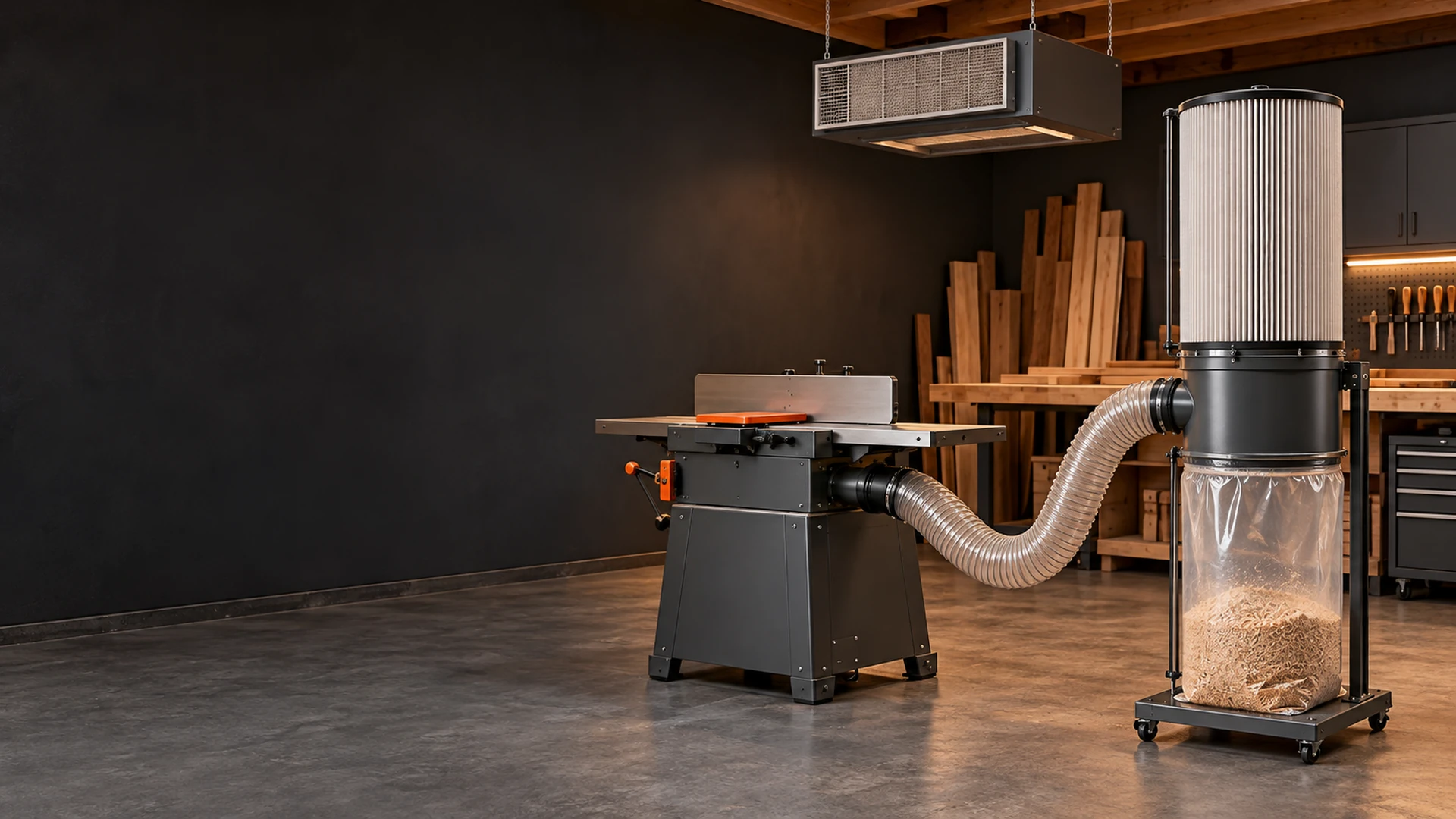
Large woodworking machines typically need high-volume flow through 4-inch or larger ducts. Compare installed system pressure losses rather than free-air ratings.
Occasional cleanup and general debris
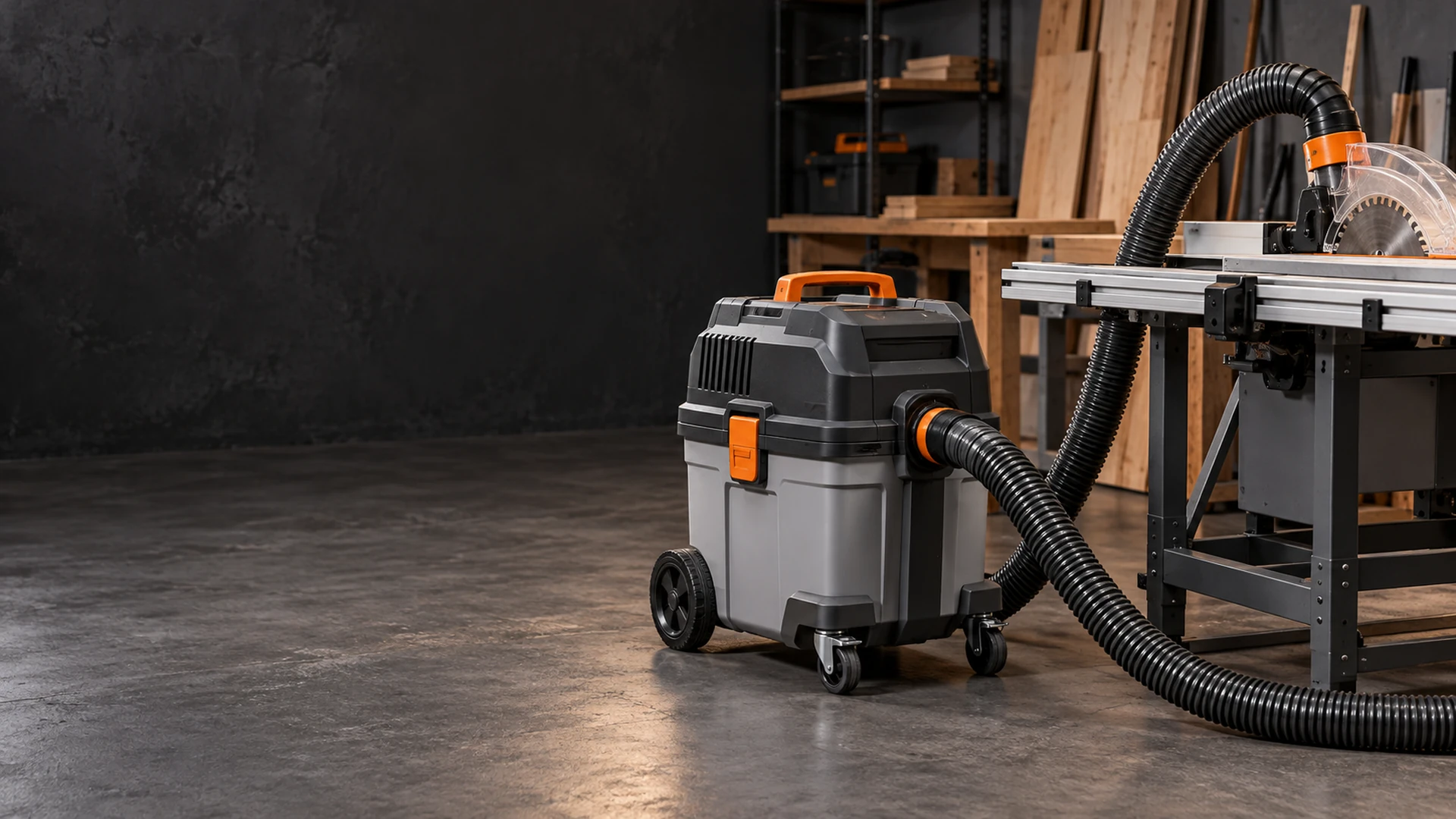
A shop vacuum can be sufficient for floors, benches and short-duration small-port pickup when fitted with the correct bag and filter for the dust.
Cyclone separator versus final filtration
A Dust Deputy pre-separator protects a vacuum filter from debris; a Super Dust Deputy belongs with a larger collector. Neither replaces suitable final filtration.
Compare workshop dust-control options
Use these searches to check current models, then verify the manufacturer’s exact filtration and hose requirements.
Compare dust extractorsCompare dust collectorsHow we compared dust-control systems
We compared manufacturer-stated airflow, suction, port geometry and filtration configurations. This is specification-based guidance, not a laboratory test of dust capture or exposure.
What we checked, and what we did not
We checked rated maximum CFM, static water lift when supplied, inlet geometry, collection configuration, filter maintenance and the work each machine is intended to do.
Not hands-on tested: we did not measure in-duct airflow, respirable dust exposure, filter efficiency, sound or pressure losses in an installed shop.
What matters most
- Small-port tool extraction: pressure and filter upkeep.
- Large-port machines: airflow and duct sizing.
- Filtration: manufacturer-rated configuration, not marketing labels.
- Operation: power-tool activation and cleaning needs.
- Expansion:hose, bag and filter compatibility with the exact machine.
Three specification numbers that matter
These are published maximum ratings from different system classes, not comparable measurements of installed capture at a tool.
The 1,100 CFM JET rating is a maximum collector specification, not proof of higher fine-dust capture than a HEPA extractor at a sander. Installed airflow changes with the tool hood, ductwork, hose length and filters.
Which dust-control system fits your shop?
Select the category by tool port and dust type first; choose a specific machine only after checking hose and filtration compatibility.
Choose a tool-compatible extractor with suitable fine-dust filtration and convenient tool-triggered operation.
Review this optionA high-flow collector and wide ducting are the usual starting point for table saws, planers and jointers.
Review this optionUse an appropriately filtered wet/dry vacuum for bench and floor debris; it may not serve large 4-inch machine ports.
Review this optionA compatible cyclone upstream of a vacuum can reduce debris loading; keep the final filter installed.
Review this optionFive dust-control buying mistakes to avoid
Published maximum ratings do not include every real-world hose, hood and filter loss.
Narrow adapters can sharply restrict the air volume needed for chip transport.
A pre-separator removes debris upstream but does not replace final filtration.
Check the exact filter, bag and sealed system; a HEPA filter component does not automatically certify the entire assembly.
Follow tool and material safety guidance; do not use ordinary woodworking systems for combustible metal dust or other hazardous material without a suitable engineered system.
Shop vac, extractor and collector FAQs
Can a shop vac replace a woodworking dust collector?
Not generally for large-port saws or planers. Shop vacuums prioritize pressure through smaller hoses; collectors prioritize higher airflow through wider ducting.
Is a dust extractor always HEPA rated?
No. Verify the exact model, filter and system designation. Different extractor variants have different filtration packages.
Why is a dust collector rated for much higher CFM?
Its fan and duct geometry are designed to move a larger air volume at relatively low static pressure; maximum ratings do not represent tool-end flow.
Will a cyclone improve suction?
A correctly matched separator can reduce debris reaching the filter, but adds resistance and does not guarantee higher airflow. Match cyclone size to the vacuum or collector.
Which is better for an orbital sander?
A compatible dust extractor or appropriately filtered vacuum with a small hose is usually more practical than a large 4-inch chip collector.
Can I use a 2-inch hose on a 4-inch dust collector?
A narrow hose can substantially reduce airflow. Use the tool and collector makers’ guidance for minimum duct diameter and pressure loss.
Does a 2-micron canister equal HEPA filtration?
No. A stated micron rating and a HEPA filtration designation are not interchangeable. Check test method, system sealing and the manufacturer’s claims.
Related workshop guides
Research notes & specification sources
Research approach: This is an independent editorial comparison based on published manufacturer documentation, not hands-on dust testing. Maximum airflow and filtration ratings are not directly interchangeable. Verify exact model and current documentation before purchase.
Primary manufacturer references and application guidance:
- Bosch VAC090AH technical data
- Festool CT 26 EI HEPA technical data
- JET DC-1100VX-5M published specifications
- JET DC-1100VX-CK published specifications
- Oneida Dust Deputy technical FAQ
- Oneida Super Dust Deputy system compatibility
External source links are informational. Affiliate buttons on this page link to Amazon searches and may show alternative products rather than the exact retailer-exclusive model discussed.