
Track Saw vs Table Saw for Small Workshops
Choose between a portable guide-rail saw and a stationary rip-fence saw by material handling, repeatability, floor space and total setup cost.
Compare Saw SetupsExplore Compact SawsAffiliate disclosure: As an Amazon Associate, WorkshopGearGuide may earn from qualifying purchases made through qualifying links, at no additional cost to you. Retailer specification links below are provided for verification and are not represented as Amazon offers.
Track saw and table saw setups compared
These four real tools illustrate two workflows, not four interchangeable products. Compare how material moves, not just blade diameter or motor power.
| Example system | Published specification | Best workflow | Main limitation | Shopping |
|---|---|---|---|---|
| Makita XPS01Z Track Saw Breaking down plywood on foam or a portable bench | 2-3/16 in at 90° | Cordless plunge saw on guide rail | Guide rail, batteries and charger may be additional purchases depending on kit. | See Prices |
| Festool TS 60 K Track Saw Panel breakdown and deeper guided cuts | 2-7/16 in at 90° | Corded plunge saw on guide rail | Rail length, dust extractor and power cord management matter in tight spaces. | See Prices |
| SawStop Compact Table Saw Repeat narrow rips and small-part production | 24-1/2 in right rip capacity | Portable table saw with rip fence | Requires safe infeed/outfeed clearance; full sheets are awkward without support. | See Prices |
| SawStop Jobsite Saw Pro Frequent repeat cuts with room for a rolling setup | Verify model-specific rip capacity | Mobile table saw with rolling stand | Occupies floor space while cutting and needs clear material-feed zones. | See Prices |
Cutting depth and rip capacity describe different limits. A table saw rip-capacity figure is not comparable to a track saw depth-of-cut figure.
Four saw setups that illustrate the tradeoffs
The question is which cutting workflow you use most, not which saw is universally better.
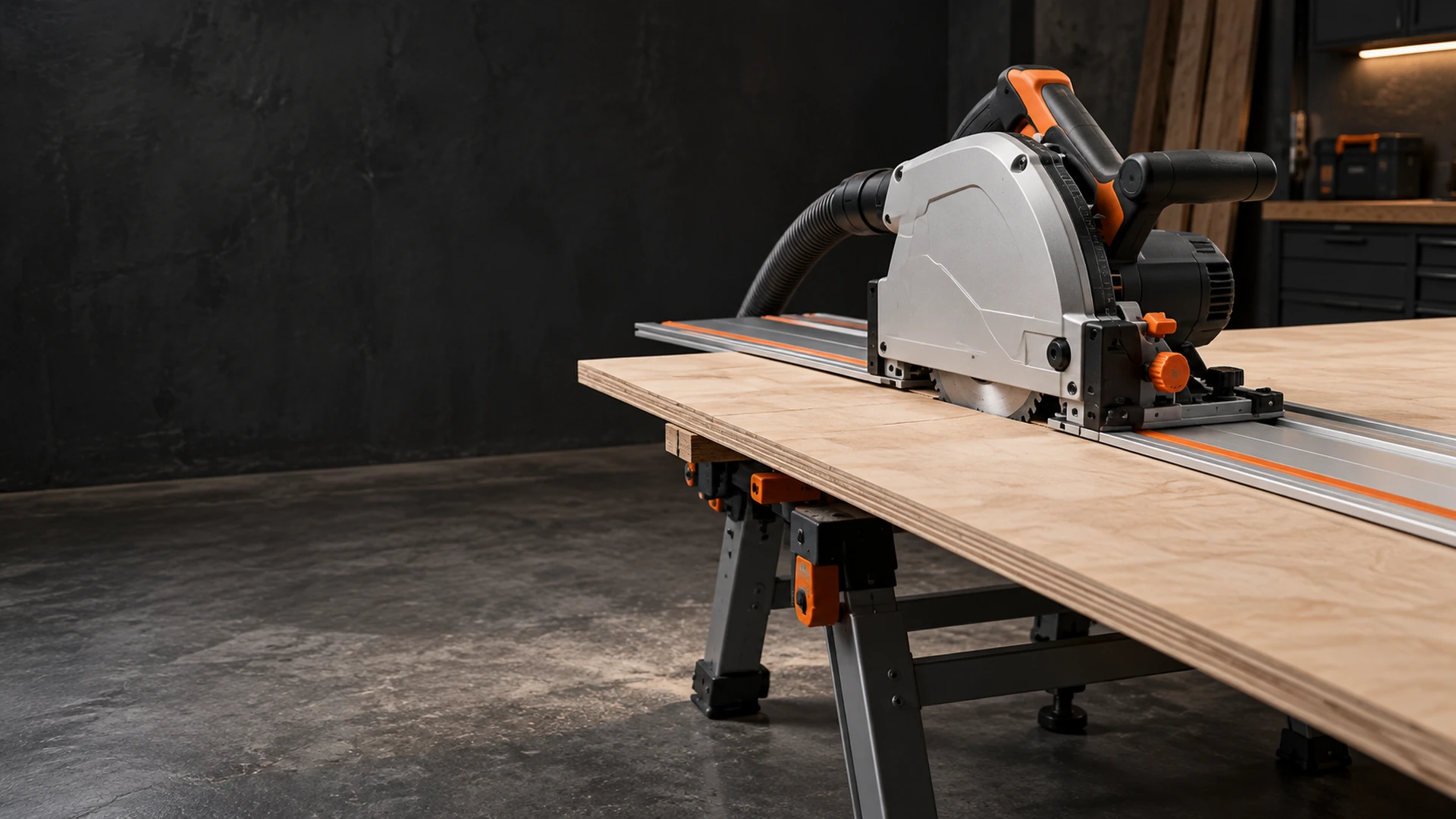
Makita XPS01Z Track Saw
Best fit: Breaking down plywood on foam or a portable bench
Best for: Breaking down plywood on foam or a portable bench.
Makita lists a 6-1/2-inch blade, 2-3/16-inch maximum 90-degree depth and 1-9/16-inch maximum 45-degree depth for XPS01Z. The tool uses two 18V LXT batteries. The rail is sold separately with the bare-tool version. A track saw is convenient when a full plywood sheet is difficult to maneuver across a table, but it needs a properly supported cutting surface and careful rail placement.
Strength: Take the saw to the sheet; guide rail can be packed away.
Tradeoff: Guide rail, batteries and charger may be additional purchases depending on kit.
Verify: Exact model and kit contents, blade and rail compatibility, support area, guards and dust collection.
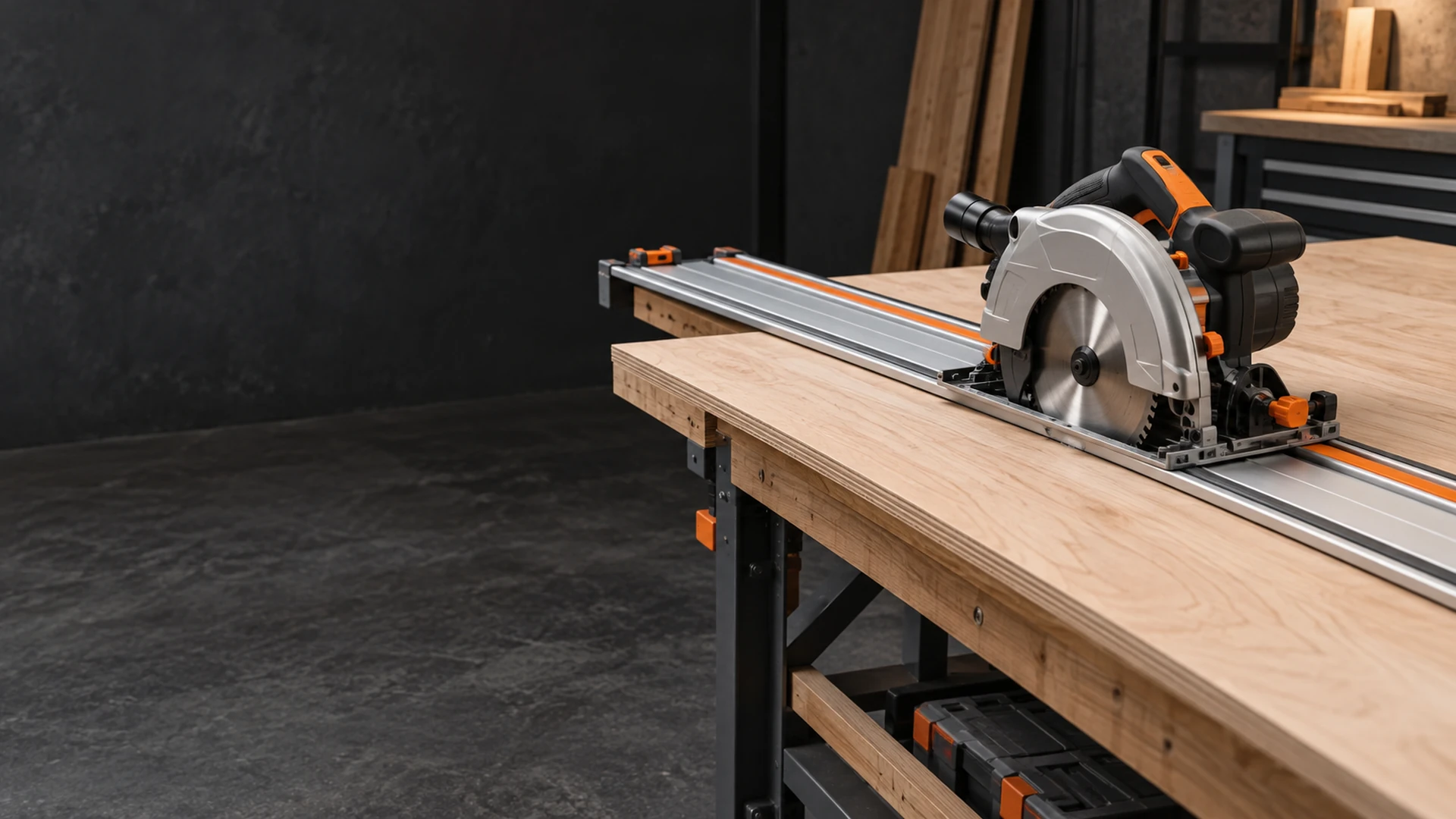
Festool TS 60 K Track Saw
Best fit: Panel breakdown and deeper guided cuts
Best for: Panel breakdown and deeper guided cuts.
Festool publishes 2-7/16 inches (62 mm) of cutting depth and a 1,500-watt motor for TS 60 K. It can work with compatible FS guide rails and FSK crosscutting rails, but the supplied accessories depend on the purchased variant. This is a portable precision-cutting platform, not a stationary ripping machine with a parallel fence.
Strength: Deep guided cutting capacity and a compact storage footprint.
Tradeoff: Rail length, dust extractor and power cord management matter in tight spaces.
Verify: Exact model and kit contents, blade and rail compatibility, support area, guards and dust collection.
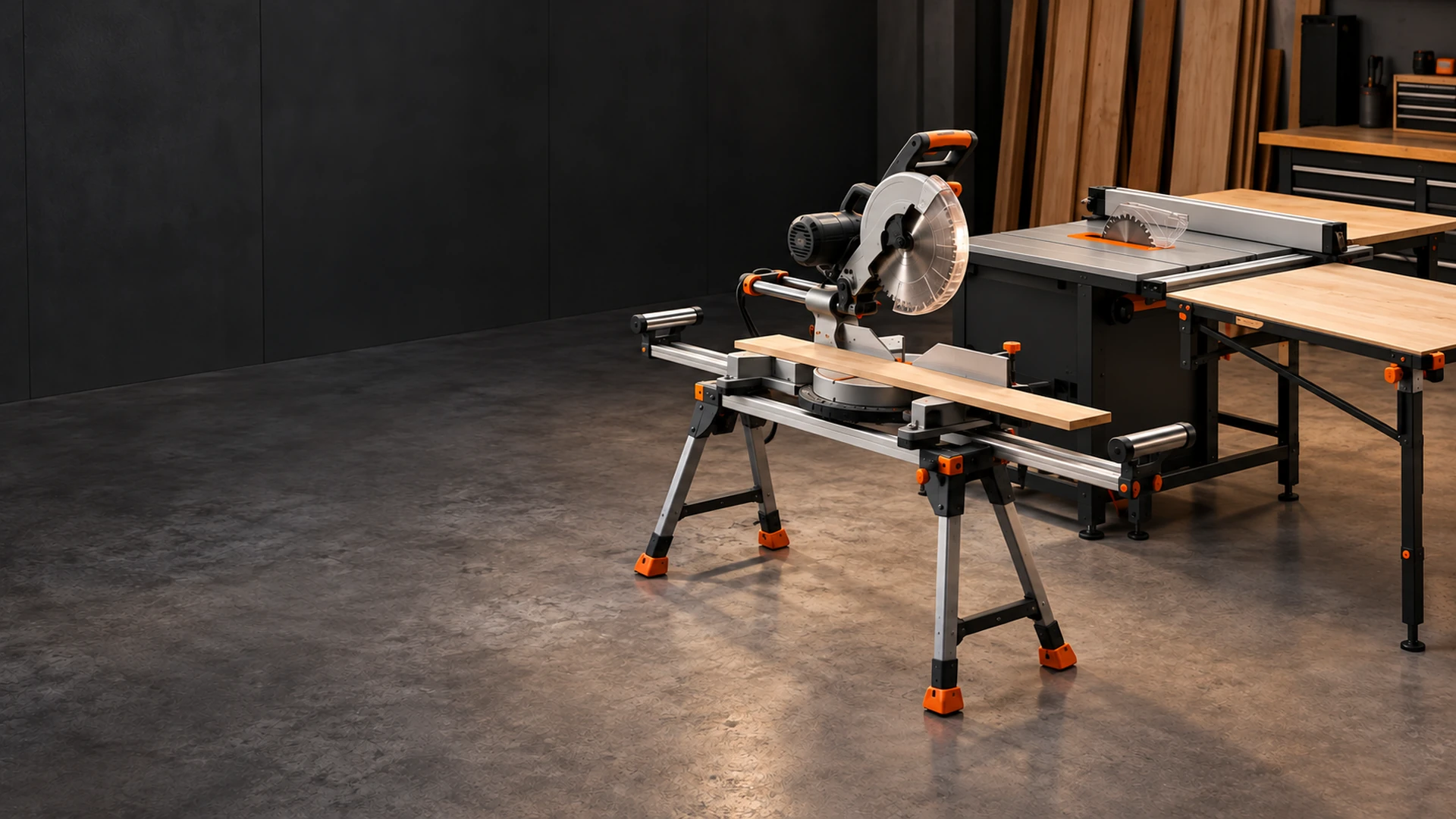
SawStop Compact Table Saw
Best fit: Repeat narrow rips and small-part production
Best for: Repeat narrow rips and small-part production.
The SawStop CTS-120A60 is listed with a 24-1/2-inch maximum rip capacity to the right of the blade, a 10-inch blade and a 68-pound saw weight. A compact table saw makes repeated fence-set rips easier than resetting a guide rail, but requires a clear feed path and safe workpiece support. Its published maximum rip capacity is not the maximum length of a board.
Strength: Fence-based repeatability for repeated strips and narrow boards.
Tradeoff: Requires safe infeed/outfeed clearance; full sheets are awkward without support.
Verify: Exact model and kit contents, blade and rail compatibility, support area, guards and dust collection.
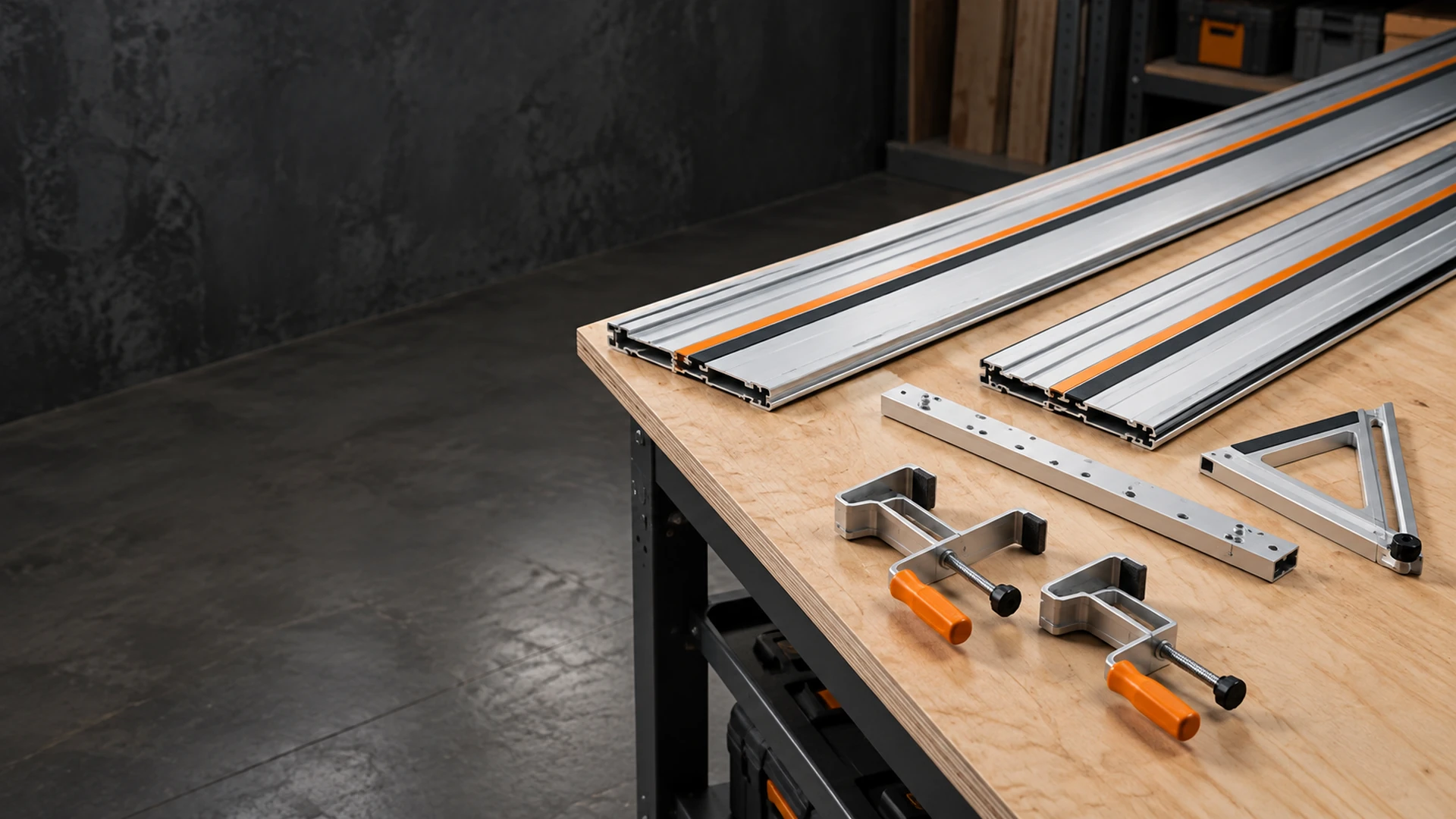
SawStop Jobsite Saw Pro
Best fit: Frequent repeat cuts with room for a rolling setup
Best for: Frequent repeat cuts with room for a rolling setup.
The Jobsite Saw Pro is a mobile table-saw alternative when repeated ripping and a fence are priorities. Check the exact current package for its stand, rip capacity and power requirements. A rolling table saw does not remove the need for safe support of large panels, and a garage workshop may still benefit from a track saw for initial sheet breakdown.
Strength: A dedicated fence and mobile base can speed repeated workshop cuts.
Tradeoff: Occupies floor space while cutting and needs clear material-feed zones.
Verify: Exact model and kit contents, blade and rail compatibility, support area, guards and dust collection.
Six questions to settle before choosing
How to choose a primary saw for a small workshop
1. Start with your largest workpiece
If full plywood sheets dominate, moving a guided saw across the panel may be easier than moving the panel across a blade.
2. Count repeat rips per project
Cabinet parts and repeated strips often reward a fixed fence setting, provided the table saw has safe stock support.
3. Measure the real working footprint
A table saw needs material-feed clearance; a track saw needs a support table or foam sheet and room for the rail.
4. Budget for the complete cutting system
Compare blade, guide rails, clamps, dust extraction, stand, batteries and any needed outfeed support—not just the saw price.
Compare complete saw systems
Shop by the work you actually do: full-sheet breakdown or repeated fence-guided ripping.
Explore Track SawsExplore Table SawsHow this saw comparison was researched
This is a practical workflow comparison supported by published specifications, not a controlled head-to-head cut test.
Cutting workflow and manufacturer specifications
We compared official Makita, Festool and SawStop documentation to distinguish depth of cut, rip-fence capacity, tool weight, power requirements and accessory needs. We also considered the handling differences between moving a guided saw and moving stock past a stationary blade.
Not independently tested: cut-edge quality, dust capture, setup speed, fence accuracy and long-term reliability. We do not infer those outcomes from manufacturer specifications.
Decision factors
- Full-sheet versus narrow-board cutting frequency.
- Repeatable fence settings versus movable guide rails.
- Available floor and material-feed clearance.
- Complete kit and accessory cost.
- Manufacturer safety guidance and workpiece support.
Three specifications that illustrate the difference
These values measure different capabilities and must not be treated as a single performance ranking.
Track-saw cutting depth and table-saw rip width are not equivalent measurements; always confirm the current manual and configuration.
Which saw should you buy first?
Choose the workflow that removes the biggest bottleneck in your existing projects.
Guide the saw across supported sheet goods.
See workflow detailsCorded guided cutting with published 62 mm depth.
See workflow detailsUse a rip fence for repeated widths.
See workflow detailsRolling stand and repeatable fence workflow.
See workflow detailsFive mistakes when choosing between saw types
A 24-inch rip capacity is not a 24-inch cutting depth.
A full panel can be difficult to balance on a small table saw without adequate support.
A guide rail is precise when set correctly but repeated identical rips may take more setup.
Rails, clamps, stands, batteries, blades and extraction can change the total cost.
A small table saw still needs clear infeed and outfeed space; a track saw needs safe panel support.
Track saw vs table saw FAQs
Is a track saw better than a table saw for plywood?
For breaking down full sheets in a small space, a track saw can be easier because the sheet stays supported. A table saw can be faster for repeated fence-guided cuts when there is enough clearance.
Can a track saw replace a table saw completely?
For some panel-focused projects, yes. Frequent narrow rips, small repetitive parts and certain joinery operations may still favor a table saw or another appropriate tool.
Which saw needs less permanent floor space?
A track saw and rail can be stored compactly, but still require a safe cutting surface. A compact table saw may store vertically or on a stand, yet needs feed clearance while operating.
What does table saw rip capacity mean?
It is the maximum width the fence can be set from the blade on the specified side, not the depth of cut or maximum board length.
Do I need a guide rail for a track saw?
A compatible guide rail is central to accurate guided cuts; confirm whether the specific tool package includes it.
Which is easier for repeated cabinet-part widths?
A table saw fence can simplify repeated rips once set, although a track saw with stops or parallel guides can also produce repeatable panel parts.
Is one saw automatically safer?
No. Each has distinct hazards. Use manufacturer-required guards, workpiece support, dust controls and safe cutting procedures; neither tool eliminates kickback risk.
Related workshop guides
Official saw specifications and buying research
Research approach. Official manufacturer product pages and published specifications were reviewed for this review. The recommendations describe use cases rather than untested performance rankings.
Primary product sources:
- Makita XPS01Z specifications
- Festool TS 60 K official details
- SawStop Compact Table Saw specifications
- SawStop Jobsite Saw Pro product information
Consult the current manual for each saw and accessory. Use blade guards, suitable workpiece support, correct blades and appropriate dust collection.