
Best Workbench Holdfasts and Bench Hold-Downs
Compare traditional tap-set holdfasts with screw-adjusted bench hold-downs by dog-hole size, bench thickness and reach.
Compare Current OptionsCompare Bench HoldfastsAffiliate disclosure: As an Amazon Associate, WorkshopGearGuide may earn from qualifying purchases made through qualifying links, at no additional cost to you. Retailer specification links below are provided for verification and are not represented as Amazon offers.
Quick answer
Start with the dog-hole diameter and bench thickness. Gramercy works in 3/4-inch holes on sufficiently thick benches, while Crucible needs a 1-inch hole. Veritas and Leigh offer screw-adjusted pressure rather than a mallet strike. These are different workholding mechanisms, not interchangeable fittings.
Compare bench holdfasts by hole size and mechanism
Dog-hole diameter, benchtop thickness and release method matter more than a broad best-overall label.
| Holdfast / best use | Dog-hole fit and reach | Bench fit / mechanism | Distinct advantage | See prices |
|---|---|---|---|---|
| Gramercy Tools Holdfast Hand-planing and carving | 3/4 in hole / 6-1/2 in reach | 1-3/4 in minimum bench top / tap to lock | Fast mallet-set grip without a screw; sold individually or in pairs. | See Prices |
| Crucible Holdfast Heavy traditional workbenches | 1 in hole / 6-5/8 in reach | 2-8 in bench thickness / 17 in post | Long textured post accommodates thick benches where many smaller holdfasts struggle. | See Prices |
| Veritas Hold-Down Delicate or precise clamping | 3/4 in hole / 8 in throat | 10 in post / 8 in clamping capacity | Brass screw knob lets users adjust pressure rather than striking with a mallet. | See Prices |
| Leigh BHDC1 Bench Clamp Benches needing screw hold-downs | 3/4 in hole / threaded clamp | Up to 4-1/4 in bench thickness | Threaded rod and speed nut accommodate varying bench thicknesses. | See Prices |
Traditional holdfasts wedge by impact; screw-type hold-downs use adjustable pressure. Measure existing dog holes before ordering.
Detailed workbench holdfast reviews
Four documented workholding designs, including two traditional holdfasts and two screw-type alternatives. No hands-on force testing was performed.
Gramercy Tools Holdfast
Fit: Hand-planing and carving
Published fit: 3/4 in hole / 6-1/2 in reach; 1-3/4 in minimum bench top / tap to lock.
Tools for Working Wood specifies a 3/4-inch dog hole and a benchtop at least 1-3/4 inches thick. Its 6-1/2-inch reach and 7-1/4-inch maximum clamping height in a 2-inch bench make it useful for repeated hand-tool work. Tap the arm to lock and the stem to release.
Why consider it: Fast mallet-set grip without a screw; sold individually or in pairs.
Trade-off: Needs adequate benchtop thickness and access below the dog hole.
Best suited to: hand-planing and carving when dog-hole fit has been confirmed.
Published product specifications for Gramercy Tools Holdfast. Verify current configuration before buying.
Crucible Holdfast
Fit: Heavy traditional workbenches
Published fit: 1 in hole / 6-5/8 in reach; 2-8 in bench thickness / 17 in post.
Lee Valley documents a 17-inch post and 5-pound ductile-iron construction for benches 2 to 8 inches thick. Its roughly 6-5/8-inch reach is not an indication of vertical capacity. The maker notes the 1-inch hole may need slight reaming because castings vary.
Why consider it: Long textured post accommodates thick benches where many smaller holdfasts struggle.
Trade-off: Requires a 1-inch hole, not a common 3/4-inch dog hole; individual fit may vary.
Best suited to: heavy traditional workbenches when dog-hole fit has been confirmed.
Published product specifications for Crucible Holdfast. Verify current configuration before buying.
Veritas Hold-Down
Fit: Delicate or precise clamping
Published fit: 3/4 in hole / 8 in throat; 10 in post / 8 in clamping capacity.
The Veritas hold-down is a screw-adjusted alternative to a classic strike-set holdfast. Its independent pivoting arm and barbed post fit 3/4-inch holes, with a published 8-inch throat and clamping capacity. A shorter post is sold separately for restricted clearance.
Why consider it: Brass screw knob lets users adjust pressure rather than striking with a mallet.
Trade-off: Slower than a tap-set holdfast and costs more; needs clearance for its post.
Best suited to: delicate or precise clamping when dog-hole fit has been confirmed.
Published product specifications for Veritas Hold-Down. Verify current configuration before buying.
Leigh BHDC1 Bench Clamp
Fit: Benches needing screw hold-downs
Published fit: 3/4 in hole / threaded clamp; Up to 4-1/4 in bench thickness.
Leigh describes the BHDC1 as a bench hold-down clamp for 3/4-inch dog holes. Its long 3/8-inch threaded rod and speed nut allow installation in benches up to 4-1/4 inches thick. It is included as a screw-type alternative, not as an identical traditional holdfast.
Why consider it: Threaded rod and speed nut accommodate varying bench thicknesses.
Trade-off: Not a tap-set traditional holdfast; requires threaded adjustment.
Best suited to: benches needing screw hold-downs when dog-hole fit has been confirmed.
Published product specifications for Leigh BHDC1 Bench Clamp. Verify current configuration before buying.
Six checks before buying a holdfast
Do not assume 3/4-inch and 1-inch accessories interchange.
Wedge-style holdfasts need enough depth to cant and grip.
Long posts may hit an underside brace or support beneath the top.
Add a wood or leather pad under the pressure point.
Tap-set tools release by striking the stem; screw clamps loosen by turning.
Very soft or thin tops may require reinforcement or different workholding.
How to choose a workbench holdfast
Dog-hole diameter is the first filter
Most common bench accessories use 3/4-inch holes, but the Crucible holdfast requires a 1-inch hole. Do not enlarge a finished bench without checking your entire workholding system.
Benchtop thickness changes grip
Impact-set holdfasts wedge against the sides of the hole. Thin tops may not give enough bearing length; very thick tops can require clearance adjustments.
Reach is not vertical capacity
Horizontal reach is the distance from the post to the clamping point. Maximum workpiece height is a separate specification.
Impact versus screw pressure
Mallet-set holdfasts are fast for repeated handwork. Screw-adjusted hold-downs make gradual pressure easier on fragile workpieces.
Compare workbench holdfast options
Confirm dog-hole size, bench thickness and clamping method before choosing a model.
Compare Current OptionsReview Holdfast ComparisonHow we evaluated holdfasts
Manufacturer and retailer technical descriptions were compared for dog-hole fit, post dimensions and mechanism; we did not perform grip-force testing.
Published bench-fit requirements
We reviewed Tools for Working Wood, Lee Valley and Leigh product documentation.
A 3/4-inch dog hole is not equivalent to a 1-inch hole; bench thickness also affects fit.
What specifications cannot prove
- Check hole diameter before purchase.
- Measure benchtop thickness and underside clearance.
- Protect finished work with a pad.
- Avoid striking screw-adjusted hold-downs.
- Release the tool using its specified mechanism.
Three published holdfast fit benchmarks
Manufacturer dimensions help rule out incompatible bench setups before purchase.
Manufacturer-published fit dimensions; not independently measured clamping performance.
Which holdfast fits your bench?
Choose by the existing hole pattern, workpiece and desired pressure control.
Quick mallet engagement for repetitive planing on suitable 3/4-inch-hole benches.
Review GramercyLong post supports thicker benches, but requires a 1-inch hole.
Review CrucibleScrew-adjusted clamping for delicate work in 3/4-inch holes.
Review VeritasBench-hole hold-down with threaded rod for adjustable setups.
Review LeighFive holdfast mistakes to avoid
A 1-inch Crucible post will not fit an unmodified 3/4-inch hole.
An impact-set holdfast may not wedge reliably in a very thin benchtop.
A long horizontal arm does not guarantee high vertical clamping capacity.
Follow the adjustment method for Veritas or Leigh instead of using a mallet.
Protect soft wood with a sacrificial pad and check pressure.
Workbench holdfast FAQs
What size dog holes do most bench holdfasts need?
Many models use 3/4-inch holes, including Gramercy and Veritas. Crucible uses a 1-inch hole, so check the exact tool.
Why does benchtop thickness matter for a holdfast?
Traditional holdfasts wedge by canting against the dog-hole wall; too little bearing length can reduce grip.
How do you tighten a traditional holdfast?
Position its pad over the workpiece and strike the arm with a wooden mallet according to the maker instructions.
How do you release a mallet-set holdfast?
Strike the side or back of the post as specified by its maker; do not pry against the workpiece.
Is a screw-type bench hold-down the same as a holdfast?
No. It serves a similar workholding purpose but uses adjustable screw pressure instead of a wedging impact.
Can a 1-inch holdfast fit a 3/4-inch workbench hole?
No. A 1-inch post requires an appropriately sized hole. Changing the bench can affect compatibility with other accessories.
Do holdfasts replace a woodworking bench vise?
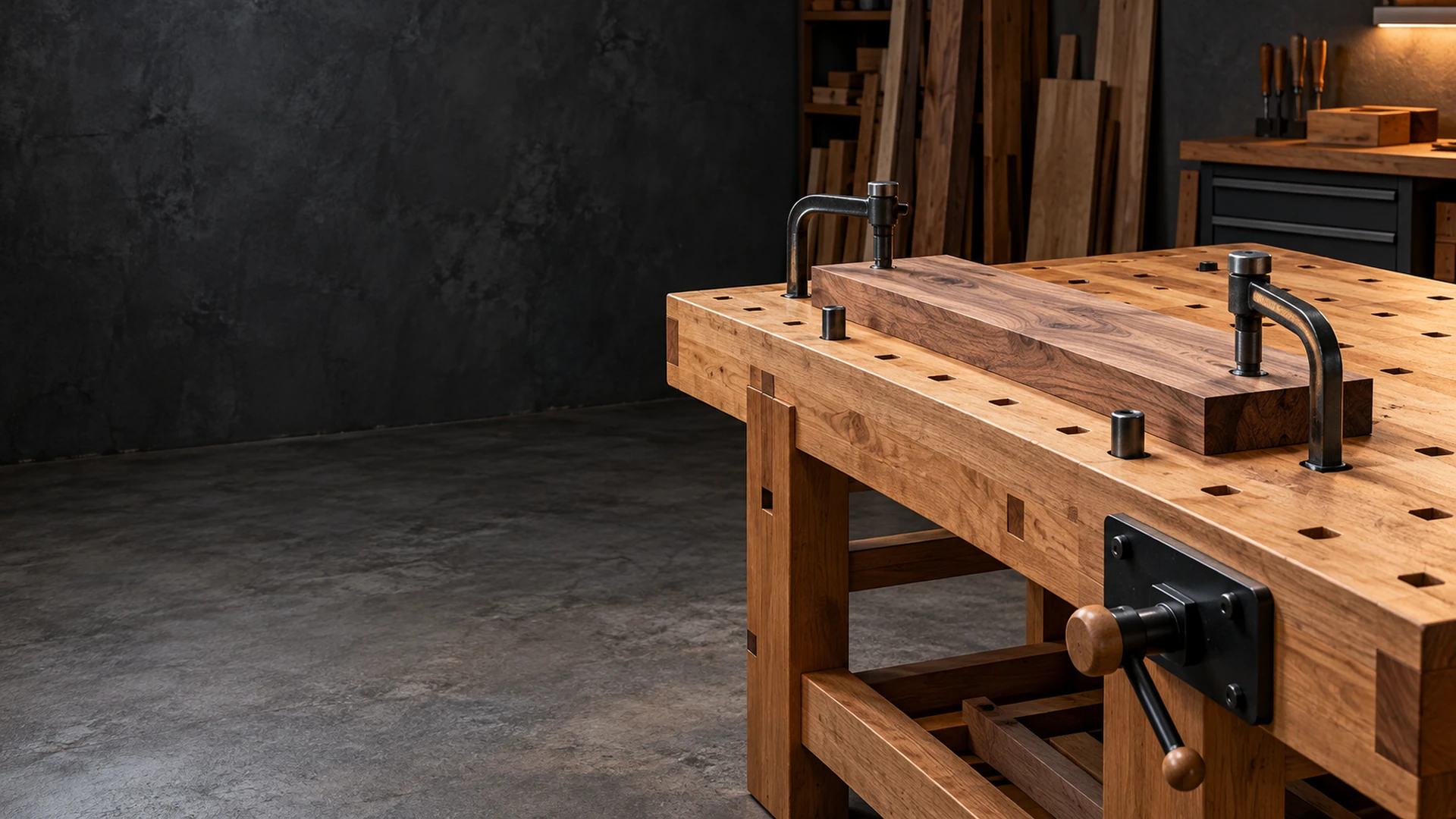
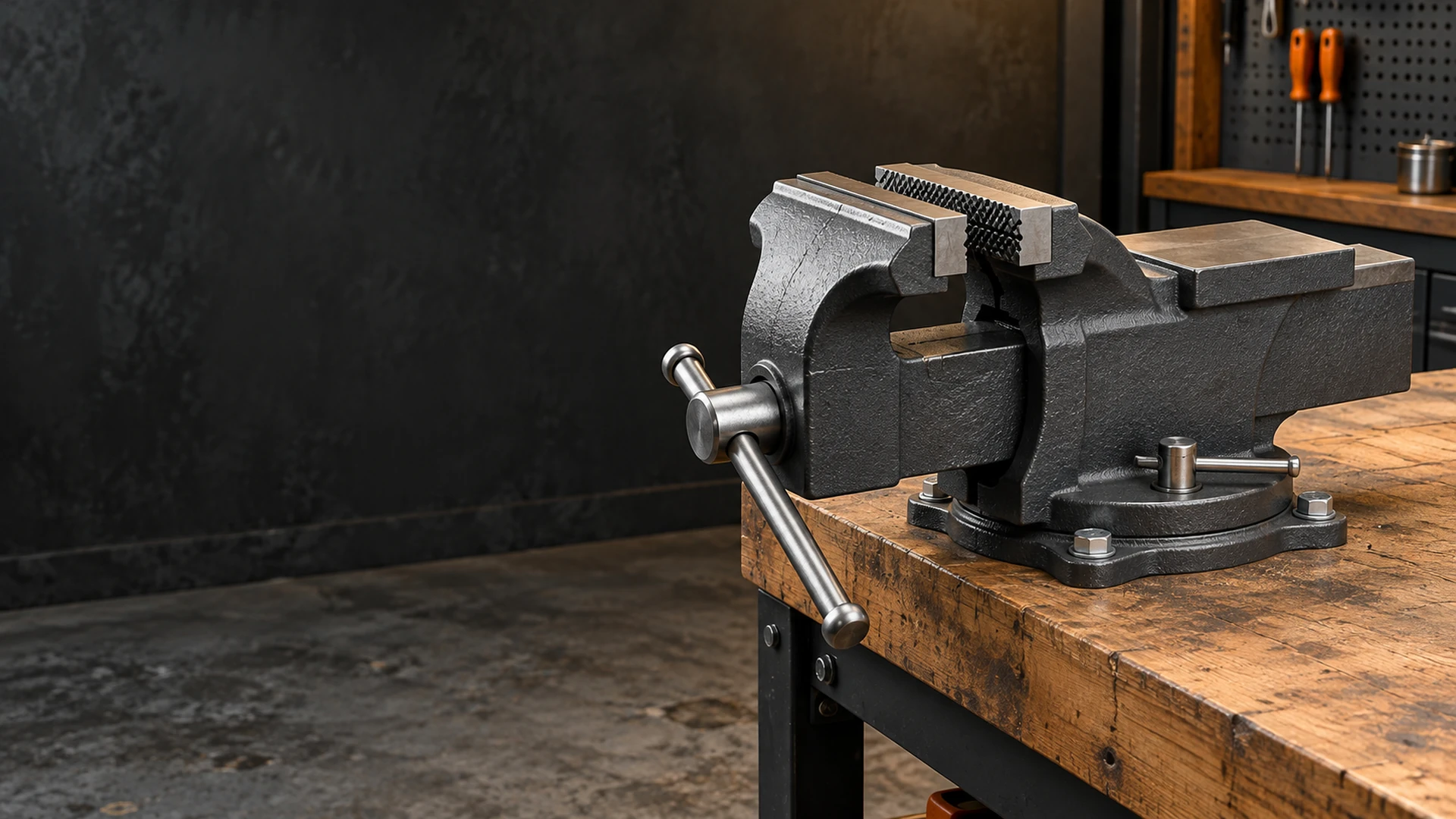
Not completely. They excel at holding stock to the bench top, while a vise can secure edges and vertical work.
Related workshop guides
Research notes & specification sources
Research method: We compared manufacturer and authorized-retailer published bench-fit and clamping specifications. No hands-on grip-force testing was performed.
Important limitation: Different dog-hole diameters and pressure mechanisms are not interchangeable.
- Product specifications: Gramercy Tools Holdfast
- Product specifications: Crucible Holdfast
- Product specifications: Veritas Hold-Down
- Product specifications: Leigh BHDC1 Bench Clamp
Affiliate buttons link to product searches; source links provide technical documentation.