
Best Rolling Tool Chests for Home Garages & Workshops
Compare six real cabinet configurations—from compact five-drawer storage to full-height chest combos—and choose the layout that actually fits your tools and floor space.
Browse Rolling Tool ChestsCompare Six OptionsAffiliate disclosure: As an Amazon Associate, WorkshopGearGuide may earn from qualifying purchases made through qualifying links, at no additional cost to you. Retailer specification links below are provided for verification and are not represented as Amazon offers.
Quick answer
Start with footprint and tool layout, not drawer count alone. The Husky 27-inch cabinet is the space-saving option; the 46-inch Husky mobile workbenches add a usable top; U.S. GENERAL Series 3 cabinets prioritize dedicated storage; and the Husky 52-inch combo is for buyers who want stacked drawers. These are use-case recommendations based on published specifications, not hands-on test results.
Compare rolling tool chests
These are distinct cabinet types, not interchangeable models. “Capacity” figures refer to different published measures: total cabinet load, drawer-slide load, or internal volume. Never compare them as though they are the same rating.
| Cabinet / best fit | Width × depth | Drawers | Published strength detail | Shop Options |
|---|---|---|---|---|
| Husky 27-inch 5-Drawer Rolling Cabinet Compact garage | 27 in × 18 in | 5 | Check model listing | Check Prices |
| Husky 46-inch 9-Drawer Mobile Workbench (18-inch depth) Narrow worktop | 46 in × 18.1 in | 9 | 100 lb drawer slides | Check Prices |
| Husky 46-inch 9-Drawer Mobile Workbench (24.5-inch depth) Deep workbench | 46 in × 24.5 in | 9 | 1,200 lb total; 100 lb slides | Check Prices |
| U.S. GENERAL Series 3 42-inch Roll Cab Dedicated tool cabinet | 42 in × 22 in | 10 | 2,600 lb cabinet; 120 lb slide pairs | Check Prices |
| U.S. GENERAL Series 3 56-inch Roll Cab Large capacity | 56 in × 22 in | 8 | 4,400 lb cabinet; 120 lb slide pairs | Check Prices |
| Husky 52-inch 15-Drawer Chest and Cabinet Combo Top-chest combo | 52.4 in × 20.2 in | 15 | 2,500 lb total; 120 lb slides | Check Prices |
Amazon links are product-category searches. Specific models sold by exclusive retailers may not be available on Amazon; verify model numbers before purchasing.
Detailed product evaluations
Each evaluation separates confirmed manufacturer/retailer specifications from our practical buying analysis. We have not physically tested these cabinets.
Husky 27-inch 5-Drawer Rolling Cabinet
Model: H27TR5BLK
Published configuration: Five drawers; compact 27-inch footprint; rolling lockable cabinet.
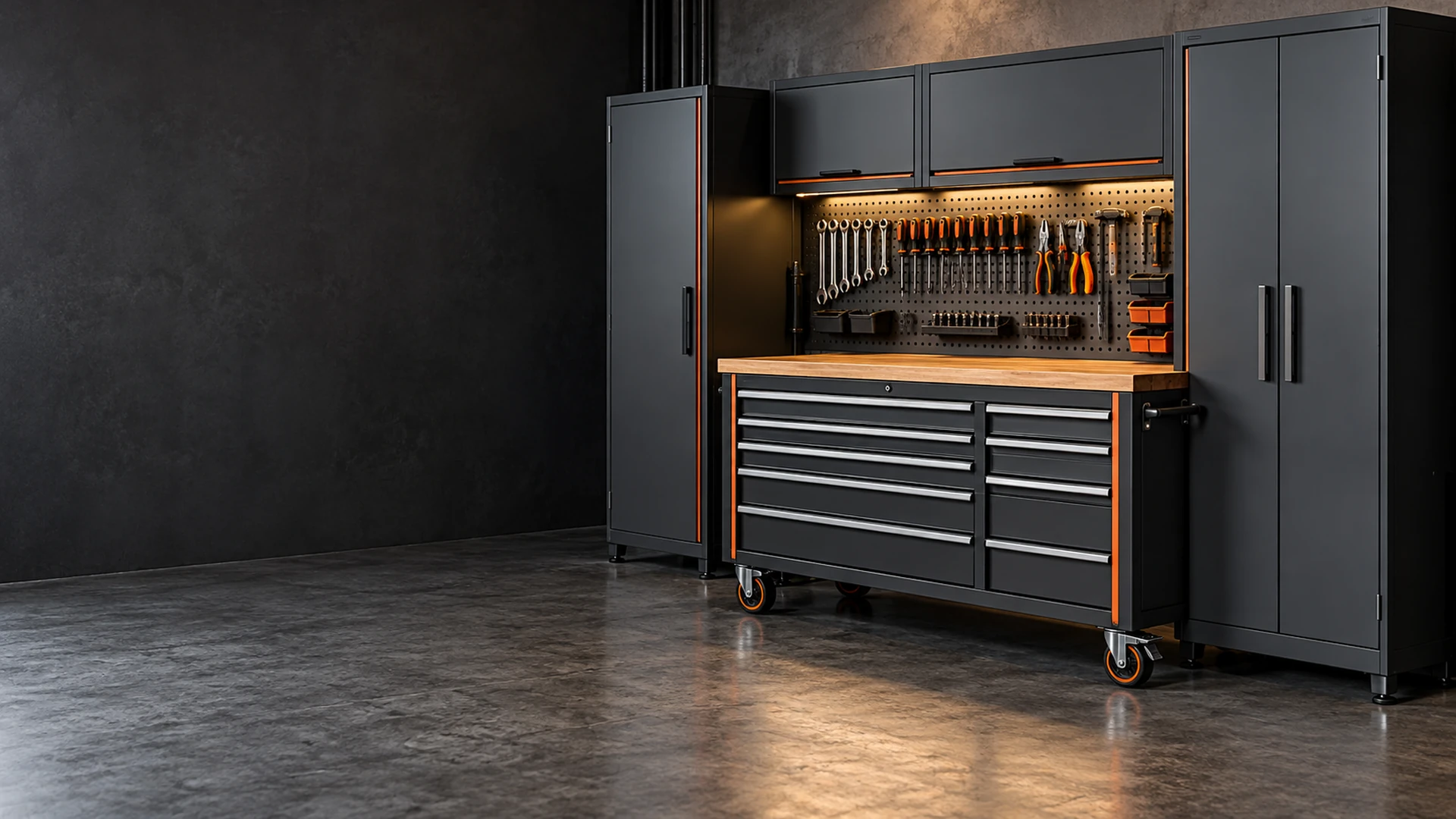
This is the footprint-first choice. A 27-inch cabinet can sit beside a workbench without dominating a one-car garage, but five drawers fill quickly when you store impact drivers, chargers and bulky sockets. Lay out your longest tools before buying; nominal width does not equal usable drawer width.
Why consider it: Useful where wall space is tight; separates hand tools into dedicated drawers.
Trade-off: Less room for bulky power tools; verify drawer depths before buying.
Best suited to: Apartment garages and compact home shops.
Husky 46-inch 9-Drawer Mobile Workbench (18-inch depth)
Model: H46X18MWC9BLK
Published configuration: 21-gauge welded steel; solid wood top; six outlets and two USB ports.
Its shallow profile is the main advantage, not a substitute for checking drawer capacity. Compared with the 24.5-inch-deep Husky, it gives up substantial front-to-back storage to preserve floor space. The built-in outlets are convenient only when the unit is placed near a suitable wall receptacle.
Why consider it: Provides a usable top surface with nine drawers while limiting front-to-back intrusion.
Trade-off: 18-inch depth restricts oversized tool cases and deep organizers.
Best suited to: Garages that need both a work surface and shallow storage.
Husky 46-inch 9-Drawer Mobile Workbench (24.5-inch depth)
Model: H46MWC9V2-C
Published configuration: 19,650 cu in; 21-gauge steel; solid wood top; locking soft-close drawers.
The extra depth is a real practical distinction: it can fit tool layouts that are awkward in an 18-inch cabinet. It also makes a narrow garage feel crowded. Measure the space with the drawers fully extended and include clearance for the handle and caster swivel, not just the nominal cabinet footprint.
Why consider it: Deeper drawers accommodate larger organizers; worktop can support assembly tasks.
Trade-off: Needs more aisle clearance; not the same model as the shallower 46-inch cabinet.
Best suited to: Home workshops with adequate walking space and mixed-size tools.
U.S. GENERAL Series 3 42-inch Roll Cab
Model: Series 3 / SKU 70373 (white)
Published configuration: 16,700 cu in; full-extension drawers; latches; five-inch casters.
This is a storage-first roll cab rather than a workbench. The full-width latches are useful when rolling a loaded cabinet, and the Series 3 ecosystem makes future expansion possible. Confirm exact accessory fit and total cabinet weight before placing it on uneven floors or moving it over thresholds.
Why consider it: More drawer separation than nine-drawer workbenches; modular Series 3 expansion.
Trade-off: No built-in wood worktop; cabinet and accessories may be retailer-specific.
Best suited to: Mechanics prioritizing organized tool access.
Check published specifications for Series 3 / SKU 70373 (white)
U.S. GENERAL Series 3 56-inch Roll Cab
Model: Series 3 / SKU 70384 (white)
Published configuration: 23,500 cu in; wide drawers; in-drawer power; six-inch casters.
The key reason to step up is long, bulky tools—not simply a bigger number on a specification sheet. Eight drawers spread across 56 inches favor wide layouts over many narrow compartments. Check delivery access, floor loading, door openings and where you will safely connect the integrated charging system.
Why consider it: Wide drawers accommodate long tools and larger trays; substantial storage volume.
Trade-off: Eight wide drawers are not necessarily better for small-part organization; large and heavy.
Best suited to: Established workshops with extensive tool collections.
Check published specifications for Series 3 / SKU 70384 (white)
Husky 52-inch 15-Drawer Chest and Cabinet Combo
Model: H52CH6TR9
Published configuration: 35,757 cu in advertised; top till; power outlets and USB; six casters.
This is the clearest alternative to a single rolling base cabinet. The tall chest provides more separated drawers and a lockable top area, but the top compartments can be inconvenient for shorter users and are not a substitute for a work surface. Plan for its 64.3-inch overall height and verify overhead clearance.
Why consider it: Lots of divided storage and top-till space; suited to hand-tool collections.
Trade-off: Tall configuration makes top compartments less convenient; heavier and more complex to move.
Best suited to: Buyers who want a full-height chest-and-cabinet station.
Six buying checks that matter more than marketing labels
Include caster swing, side handle, drawer extension and enough aisle clearance to stand in front of an open drawer.
Count long breaker bars, sockets, organizers, cordless tools and cases. A high drawer count does not guarantee useful depth.
Cabinet working load, drawer-slide capacity and storage volume are different. Confirm how each manufacturer defines them.
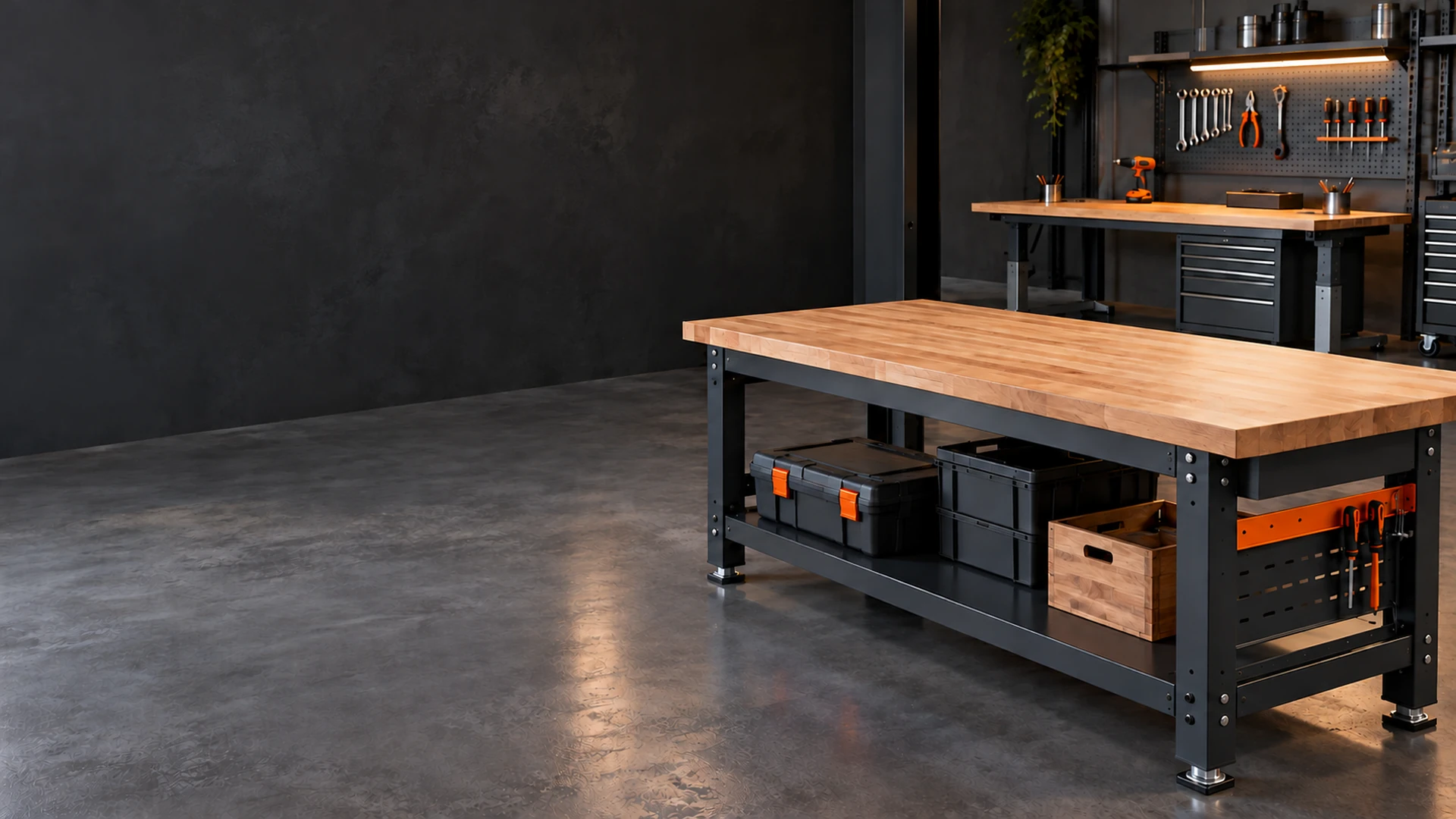
A solid wood worktop supports light assembly; a roll cab may be better under a separate bench; a top chest adds height.
Check shipping weight, ramps, doorways, floor level and caster locks. Heavy loaded cabinets are not meant to be casually pushed around.
Compare lock replacement, drawer slides, warranty, compatible top chests and local parts availability before committing.
How to choose the right configuration
Small garage: 27-inch cabinet or shallow mobile workbench?
Choose a 27-inch rolling cabinet if you already have a good bench and simply need drawer storage. Choose a shallow 46-inch workbench if your garage lacks a horizontal work surface. The extra width is useful only if it does not block parking or access to doors.
Deep drawers versus more drawers
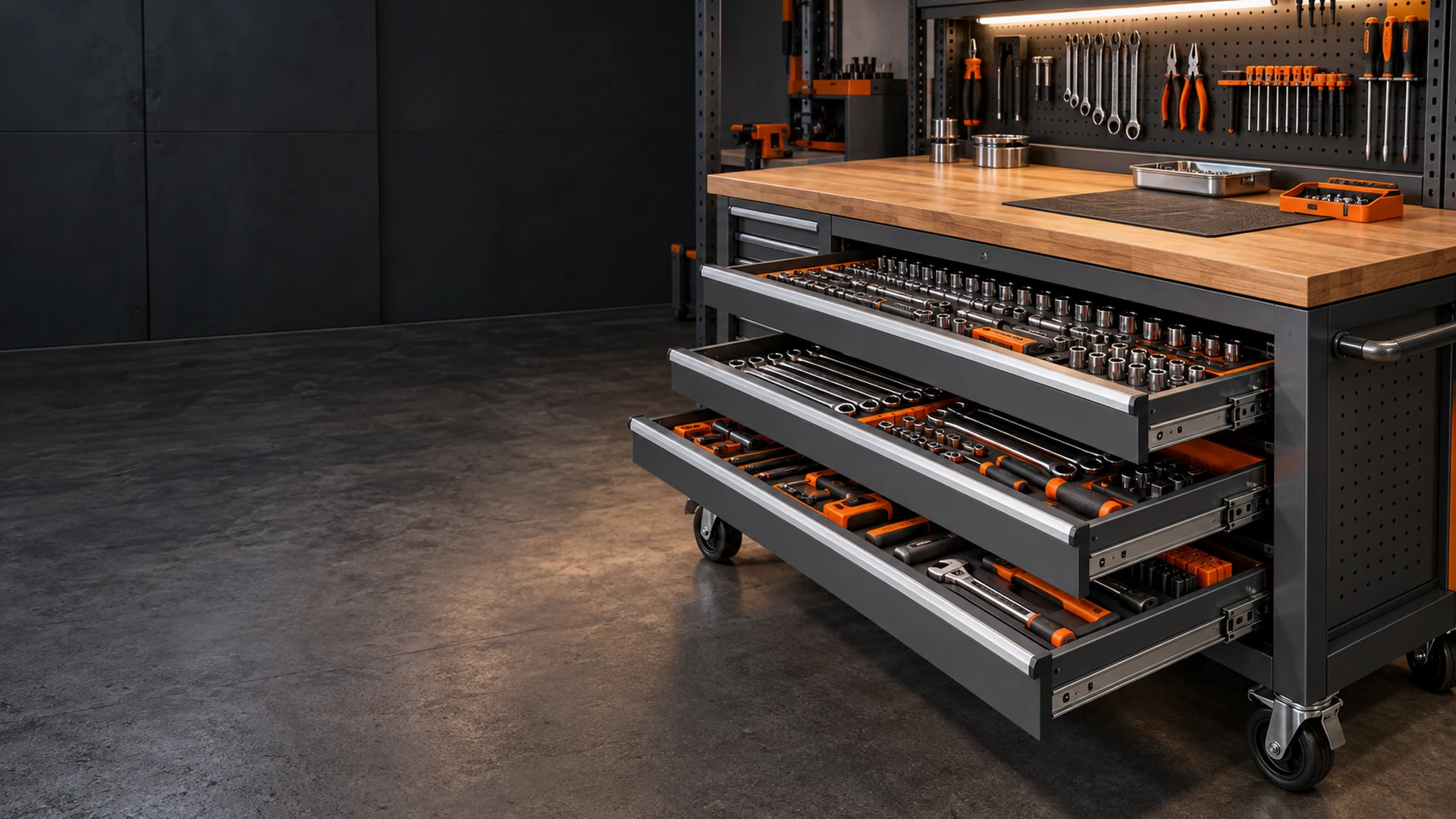
Deep drawers suit cordless tools, cases and bulky accessories. Numerous shallow drawers work better for sockets, pliers, drivers and measuring tools. Measure your largest organizers before deciding; a product overall depth is not its internal drawer depth.
Chest-and-cabinet combo versus single roll cab
A stacked combo separates small hand tools into more drawers, but it puts some tools higher and eliminates a convenient bench-height worktop. A wide roll cab keeps everything lower, but large drawers may need dividers to prevent small items from becoming cluttered.
Why published capacities can mislead
For example, a 2,600-pound cabinet rating is not permission to put that weight in a single drawer. Drawer-slide limits apply to individual slide pairs, and floor, caster and distribution limits still matter. Follow the manufacturer loading and moving instructions.
Compare current rolling storage options
Browse current configurations and pricing, then cross-check exact model numbers and dimensions against the source specifications above.
Compare rolling cabinetsCompare drawer organizersHow we compared these rolling cabinets
We assessed published product information rather than pretending to have tested cabinets in person. The comparison focuses on whether a configuration fits a real garage, stores the right tools, and can be moved safely.
What we checked, and what we did not
Our selection considers external dimensions, drawer count and arrangement, stated load limits, slide construction, caster layout, worktop availability, and the ability to add compatible storage.
Not hands-on tested: We did not measure drawer deflection, steel gauge, real-world caster durability, noise, or long-term reliability. Manufacturer claims are not independent performance test results.
What matters most
- Fit: footprint, depth, and drawer-opening clearance.
- Tool access: useful drawer widths and depths, not just drawer count.
- Loading: cabinet ratings and individual slide ratings treated separately.
- Mobility: caster layout, latches, floor condition, and thresholds.
- Expansion: compatible top chests and side cabinets where documented.
Three numbers that change the buying decision
A few calculations reveal more than a drawer-count headline. These are derived from published external dimensions, not measurements of usable drawer space.
The 42-inch cabinet occupies roughly 1.90 times the floor area of the 27-inch cabinet before allowing space for drawers, handles, people, and walkways. Capacity-per-footprint should only be compared across products when their volume definitions are comparable. Source: published U.S. GENERAL Series 3 specifications and Husky nominal dimensions.
Which rolling tool chest actually fits your workshop?
The right choice depends on what is going inside and what must remain accessible around it. Start with your use case, then check the exact model's dimensions and drawer layout.
A 27-inch cabinet is the sensible starting point if parking space and walkways matter more than expansion. Check whether your longest tools fit the drawers.
Review the compact Husky configurationConsider a 46-inch mobile workbench when a usable top is more valuable than stacking a top chest. Verify top material, depth, and working height.
Compare mobile workbench optionsA 42-inch Series 3 roll cab prioritizes organized access and future modular storage. Budget floor space for opening its drawers and moving the cabinet.
Review the 42-inch Series 3Compare 56-inch cabinets with stacked chest combinations based on tool shape and vertical reach. More overall volume is not always easier to use.
Review the large-capacity cabinetFive costly buying mistakes to avoid
Five deep drawers can be more useful than ten shallow ones for power tools. Make a list of your largest tools and check internal dimensions where published.
A 100-lb drawer-slide rating is not the same as the cabinet's total working load. Neither tells you how much weight a single shelf or top can safely support.
External width and depth are only the beginning. Leave room to open the longest drawer, stand in front of it, and move around a parked vehicle.
Top chests, side lockers, handles, and accessories may vary by product generation. Verify compatibility by exact model number before planning an expansion.
Loaded cabinets can be difficult to control over thresholds, sloped driveways, or damaged floors. Follow the manufacturer's moving instructions and avoid tip hazards.
Rolling tool chest FAQs
Is a rolling tool chest the same as a mobile workbench?
No. A mobile workbench generally adds a worktop intended for tasks; a rolling tool cabinet is primarily storage. Confirm whether a top chest can be added before buying.
Is 18-inch or 24-inch depth better?
Eighteen inches saves aisle space. Around 24 inches gives more room for bulky tools and drawer organizers. The better choice depends on your garage clearance and actual drawer dimensions.
Are more drawers always better?
No. More drawers improve separation of small tools, but fewer wider drawers can store long or bulky equipment more efficiently.
Can I move a fully loaded cabinet?
Only within the maker’s instructions and on suitable level surfaces. Lock drawers, avoid slopes, control heavy loads and use help or equipment for thresholds.
Should I choose soft-close drawers?
Soft-close is convenient, but drawer-slide rating, latch security, replacement parts and overall build quality are more important for long-term use.
Can I buy every model in this comparison on Amazon?
Not necessarily. Some cabinets are retailer-exclusive. Amazon buttons lead to relevant searches, not a claim that an exact listed model is available there.
How should I compare warranty coverage?
Check the exact model and written warranty, including what is covered for slides, casters, locks and finish. Do not assume every cabinet from the same brand has the same warranty.
Related workshop guides

Research notes & specification sources
Research approach. This guide is an editorial comparison of publicly available specifications. It is not based on personal ownership, instrumented tests, or manufacturer sponsorship. Specifications can change; check the exact model number and current seller documentation before purchasing.
Representative primary sources used for the comparisons and calculations:
- Husky H27TR5BLK — 27-inch rolling cabinet listing (dimensions, drawer-slide details).
- U.S. GENERAL Series 3 42-inch cabinet (dimensions, rated volume, load, and slides).
- Google's high-quality reviews guidance (editorial standards, not product specifications).
External source links are informational. Affiliate buttons on this page link to Amazon searches and may show alternative products rather than the exact retailer-exclusive model discussed.